Nat bij regen
Defilé tweeduizendzesentwintig
NL
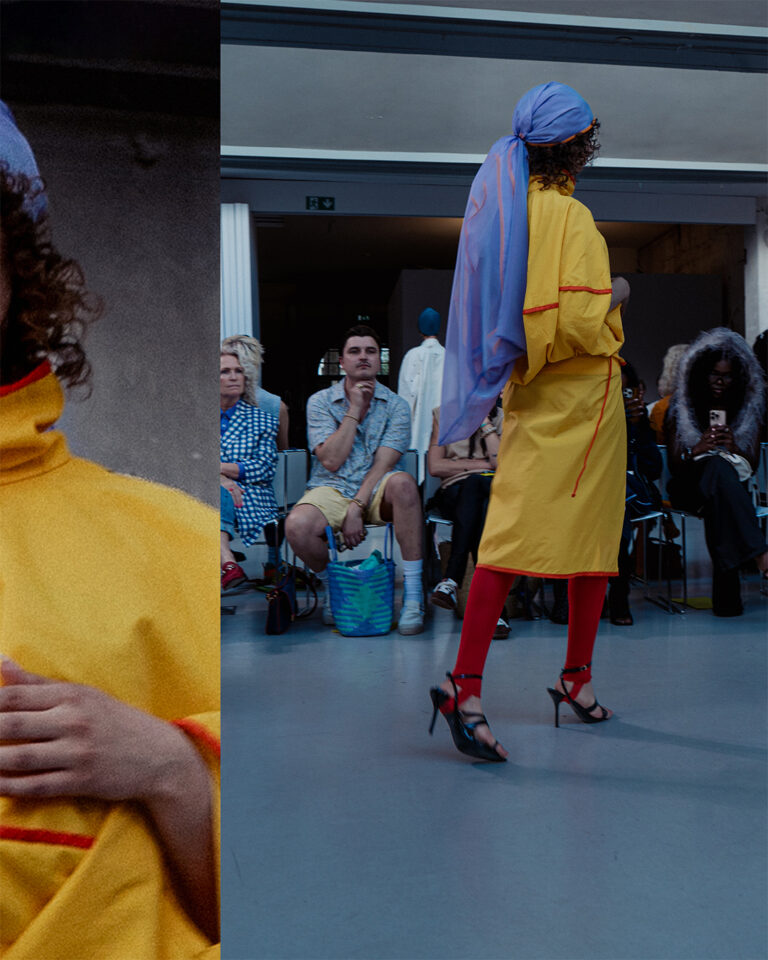
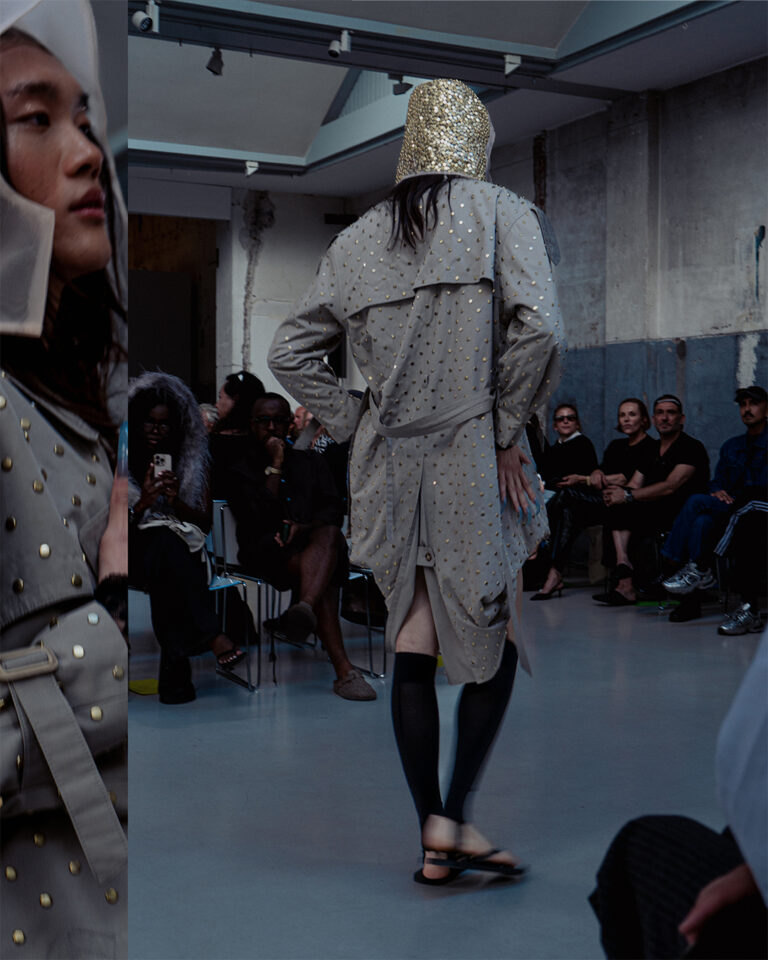
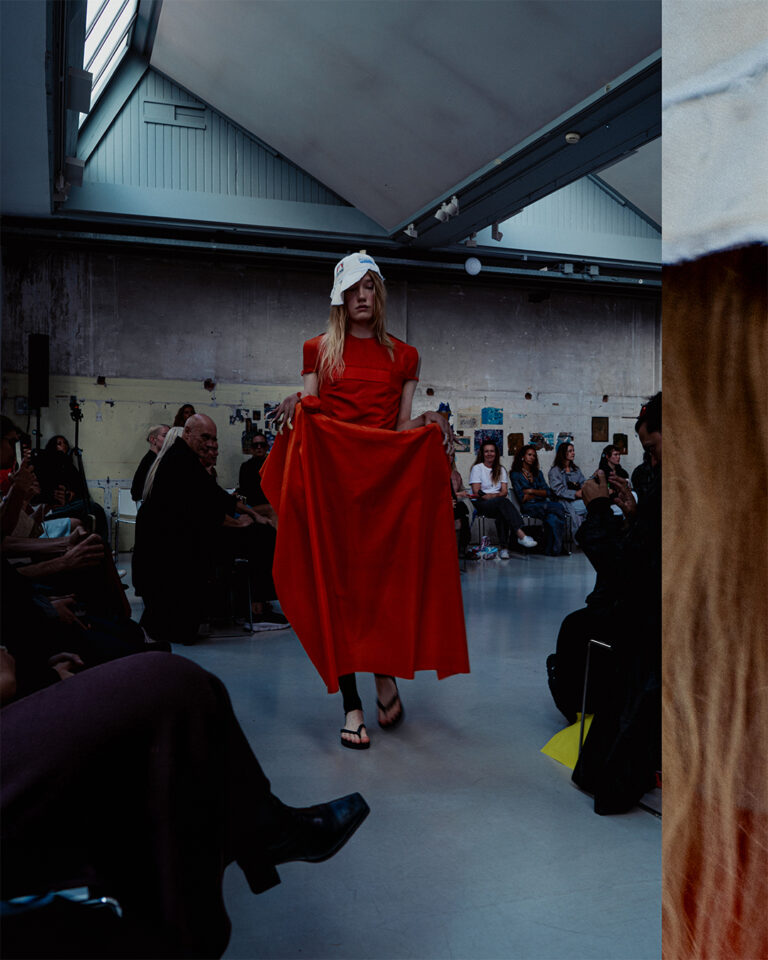
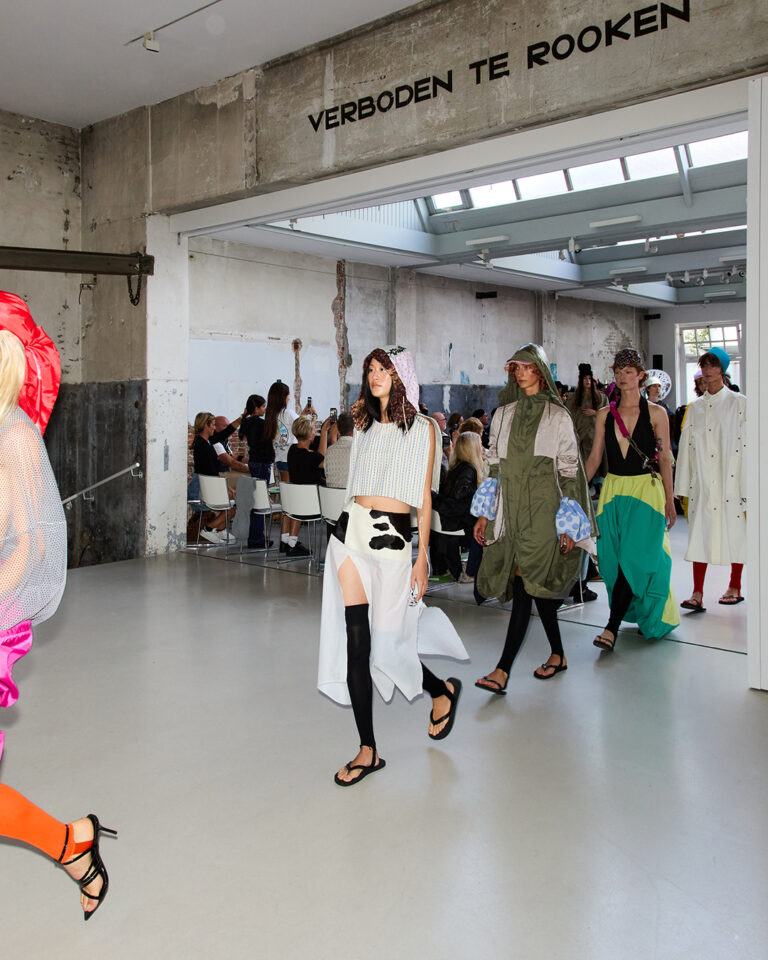
Op zaterdag 5 september 2026, tijdens Amsterdam Fashion Week presenteert Pablo Salvador Willemars een kletsnat defilé van mode- en hoofdcreaties.
EN
On Saturday september 5th 2026, during Amsterdam Fashion Week Pablo Salvador Willemars presents a drenched défilé of garments and headpieces.


een,
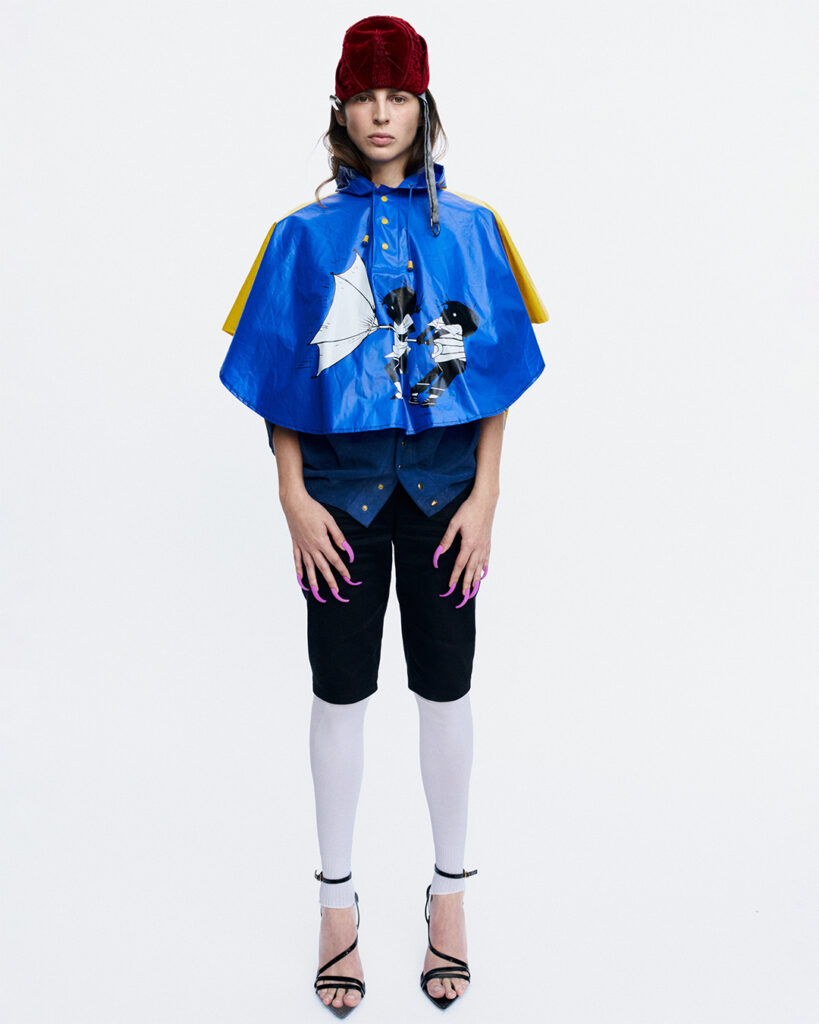
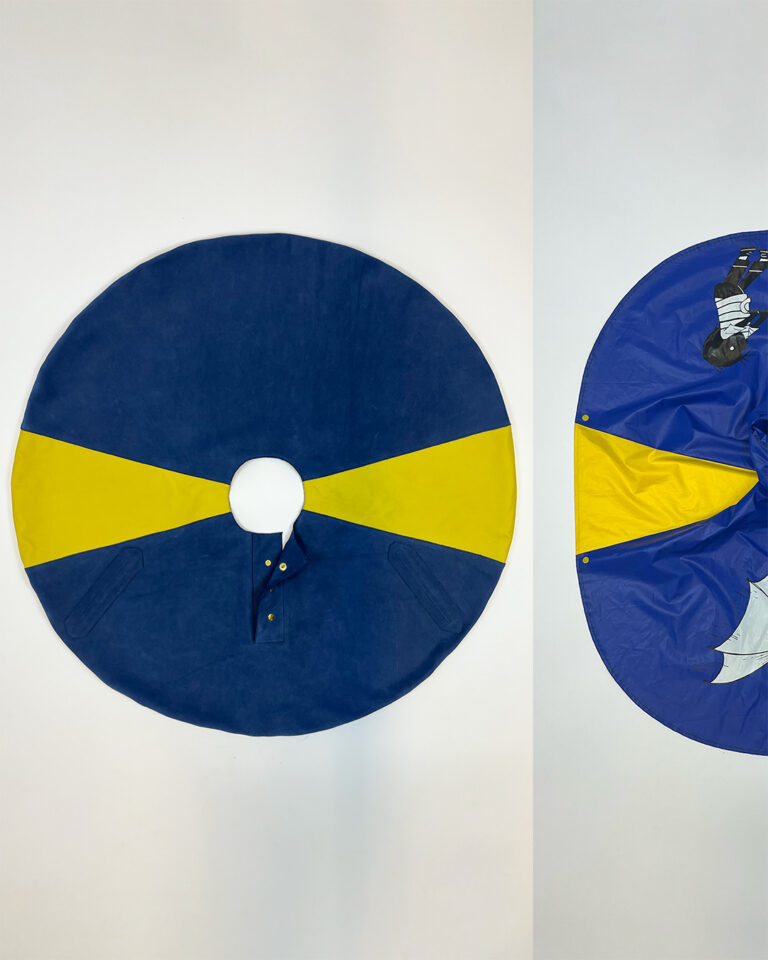
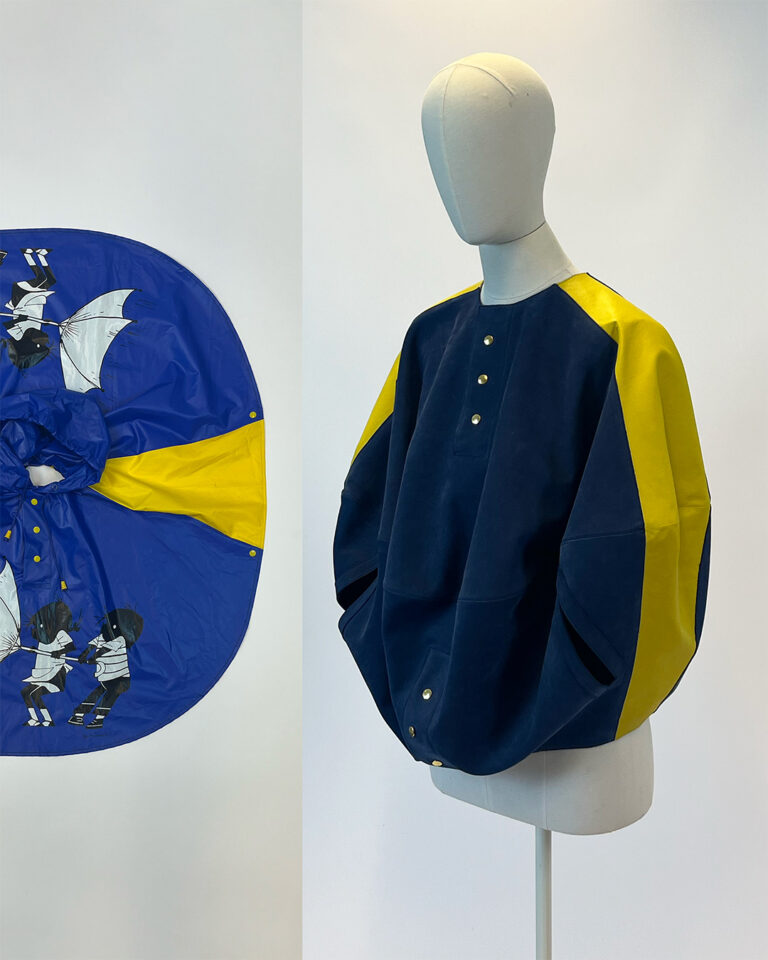
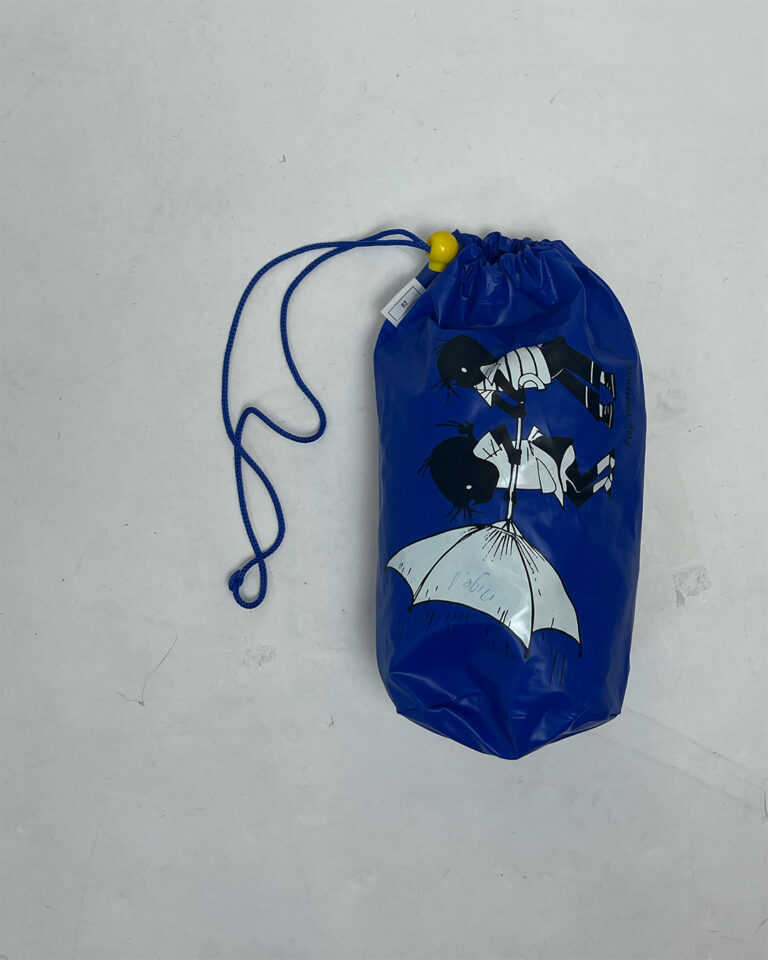
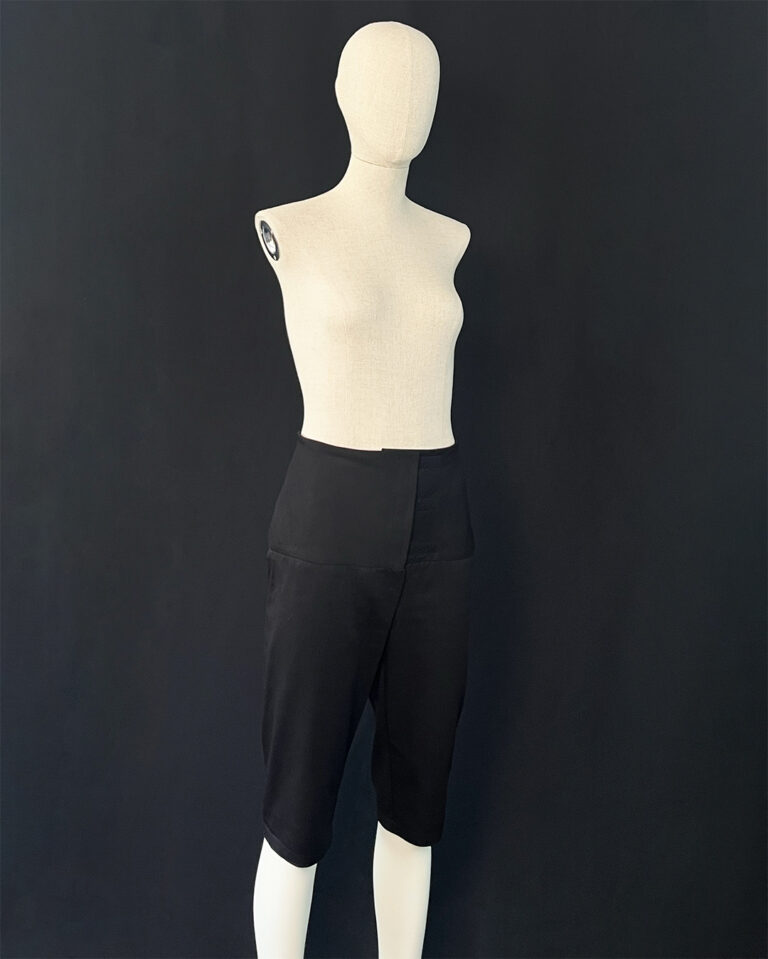
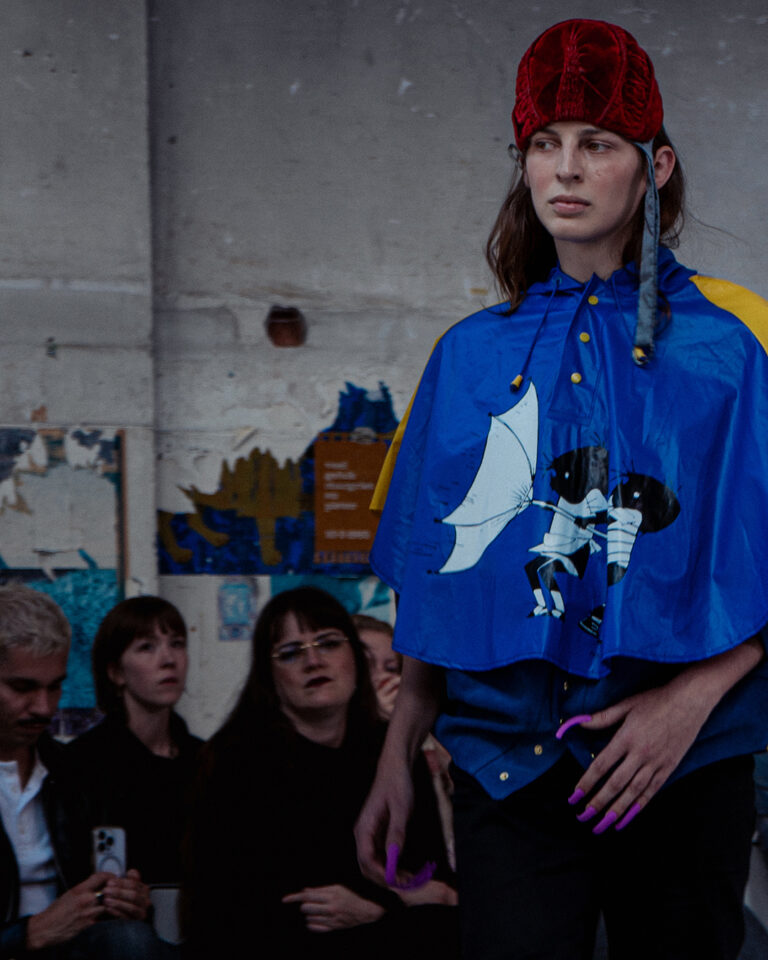
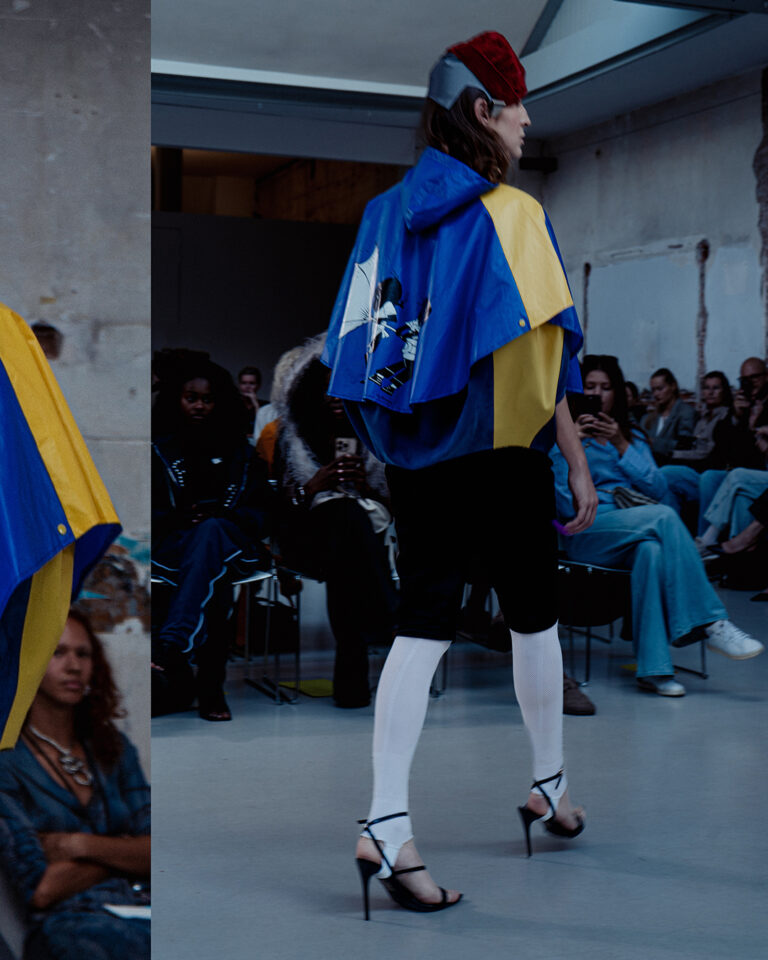
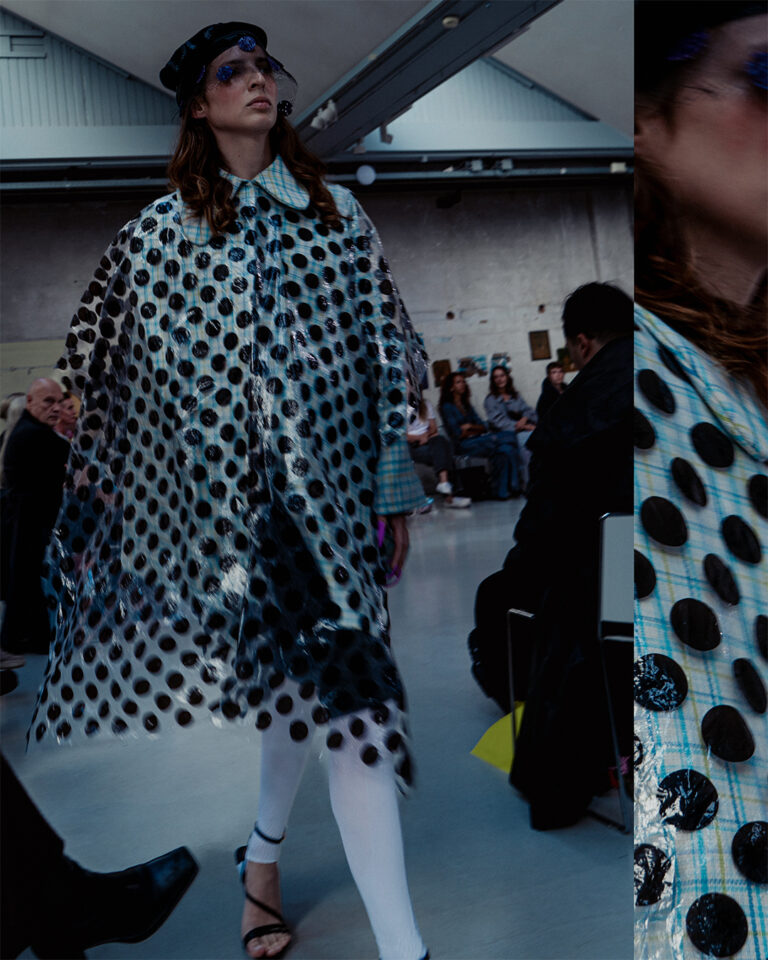
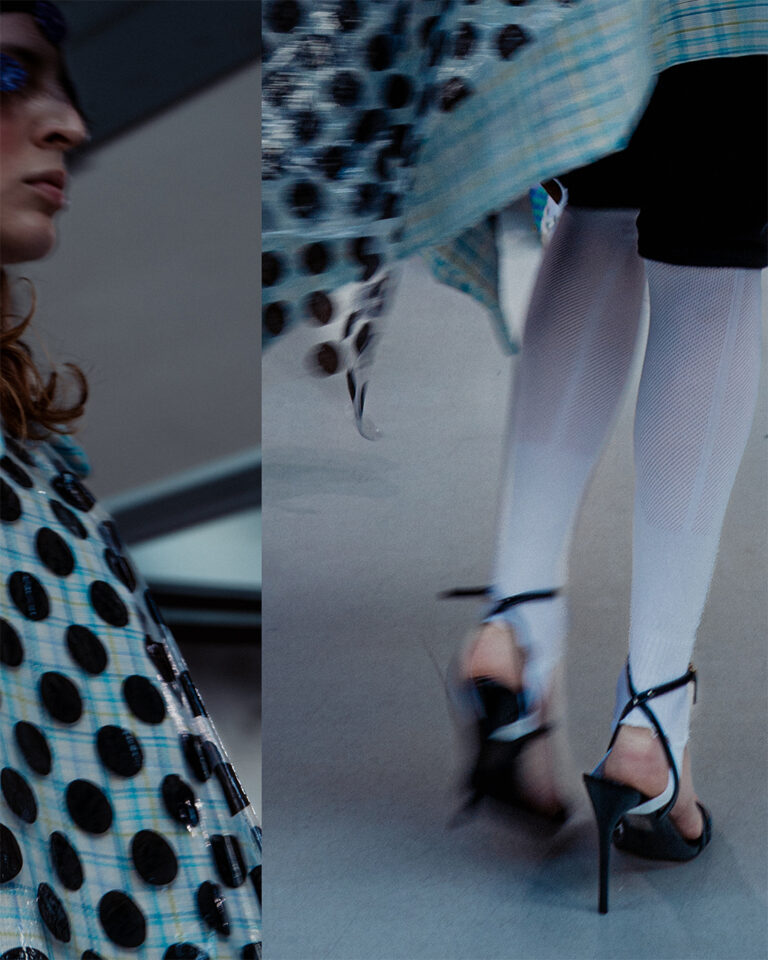
Bella wears Jip en Janneke HEMA 92 rain poncho, blue and yellow cirkel jacket made out of discarded leather, Chapeau parisien, and black cotton capri shorts


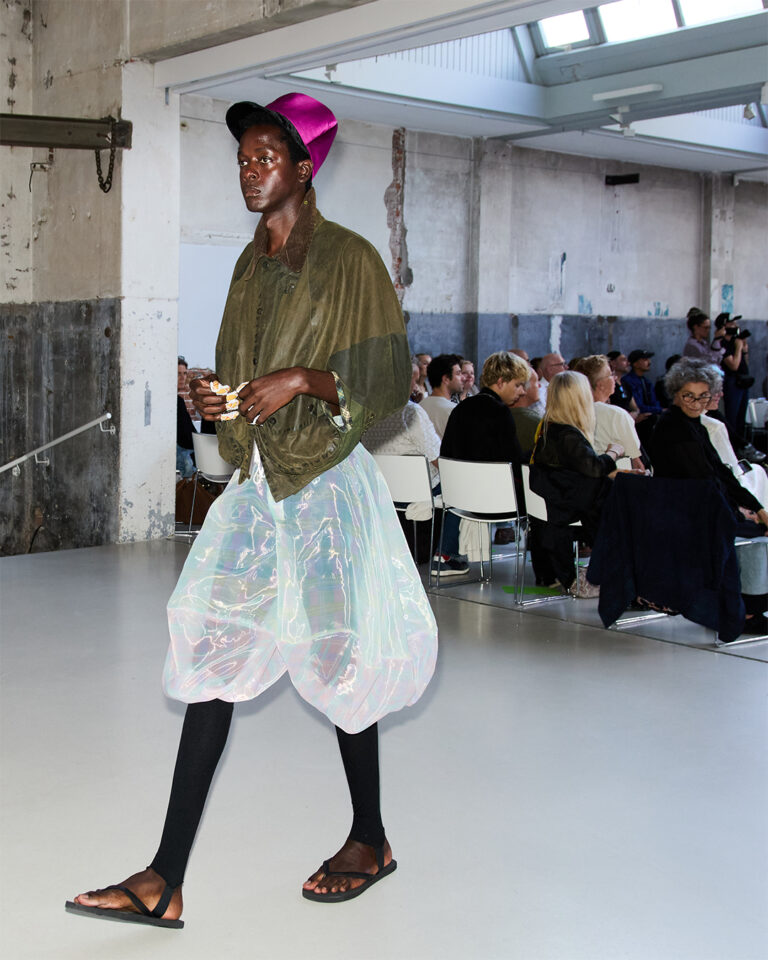
twee,
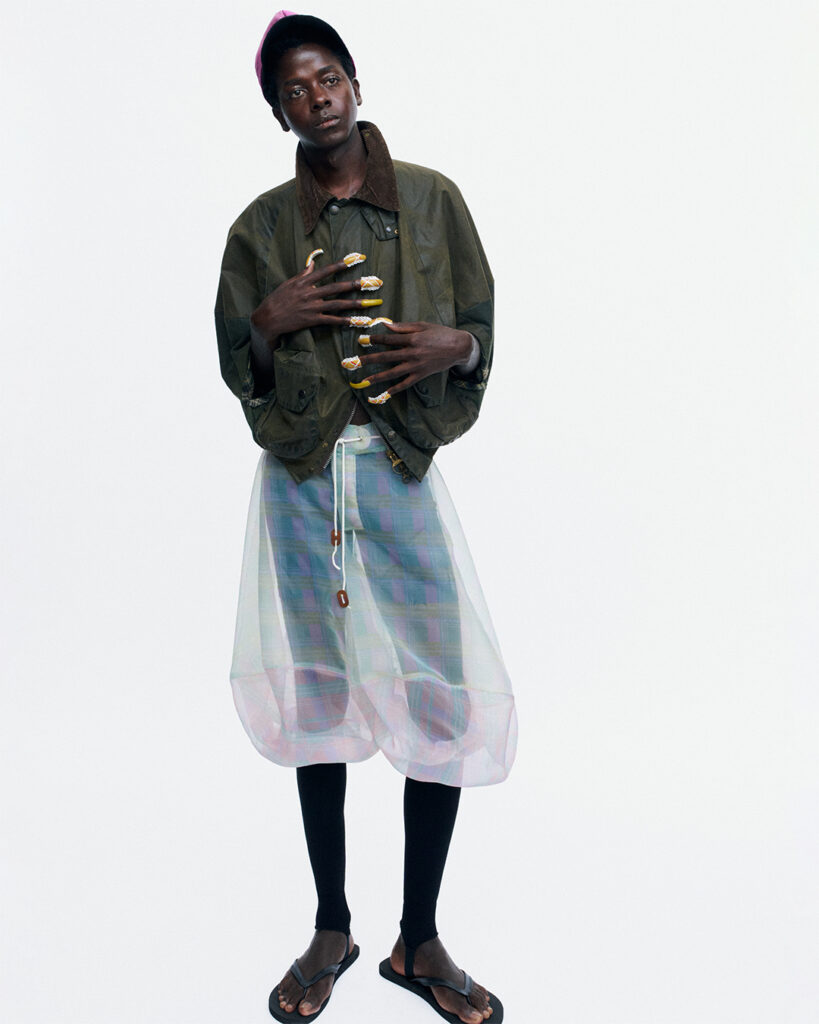
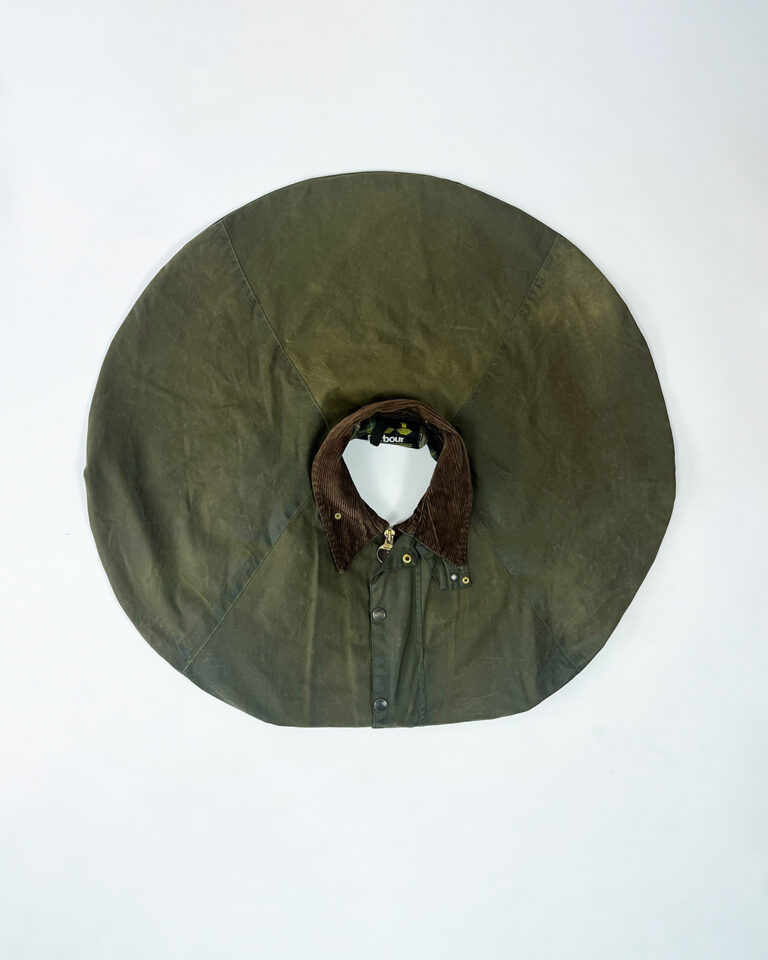
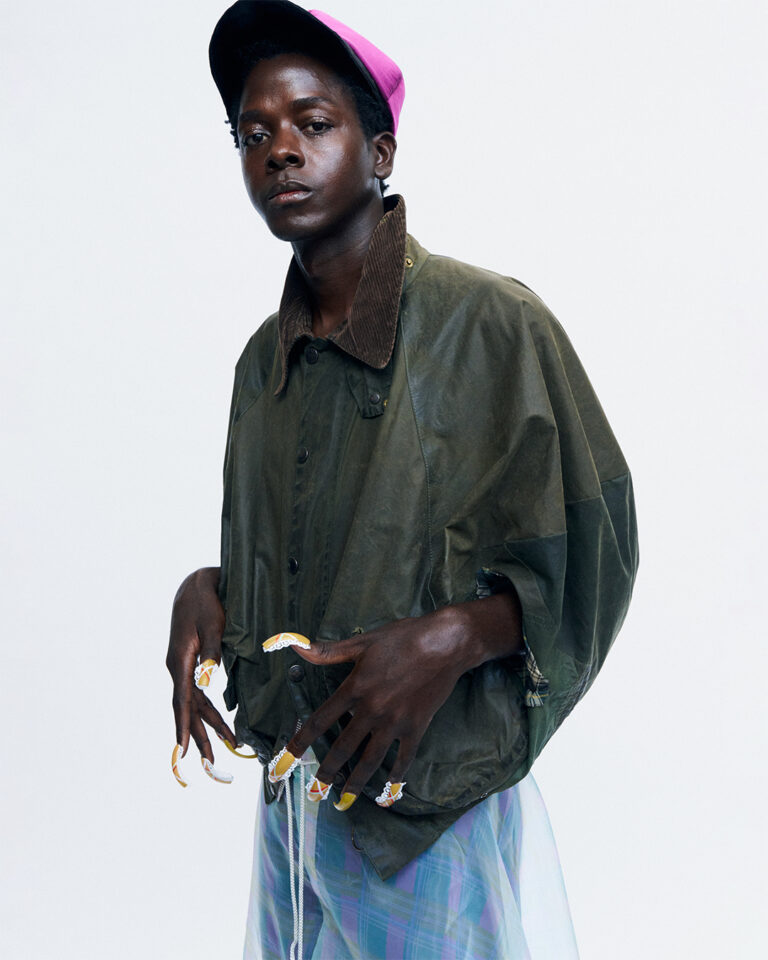
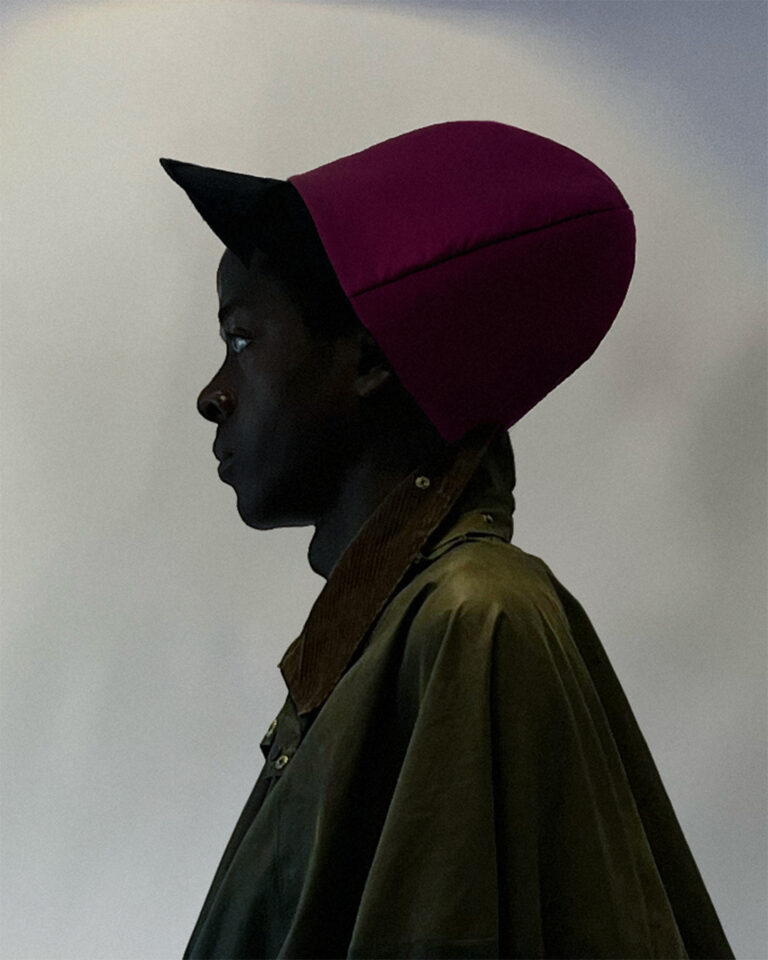
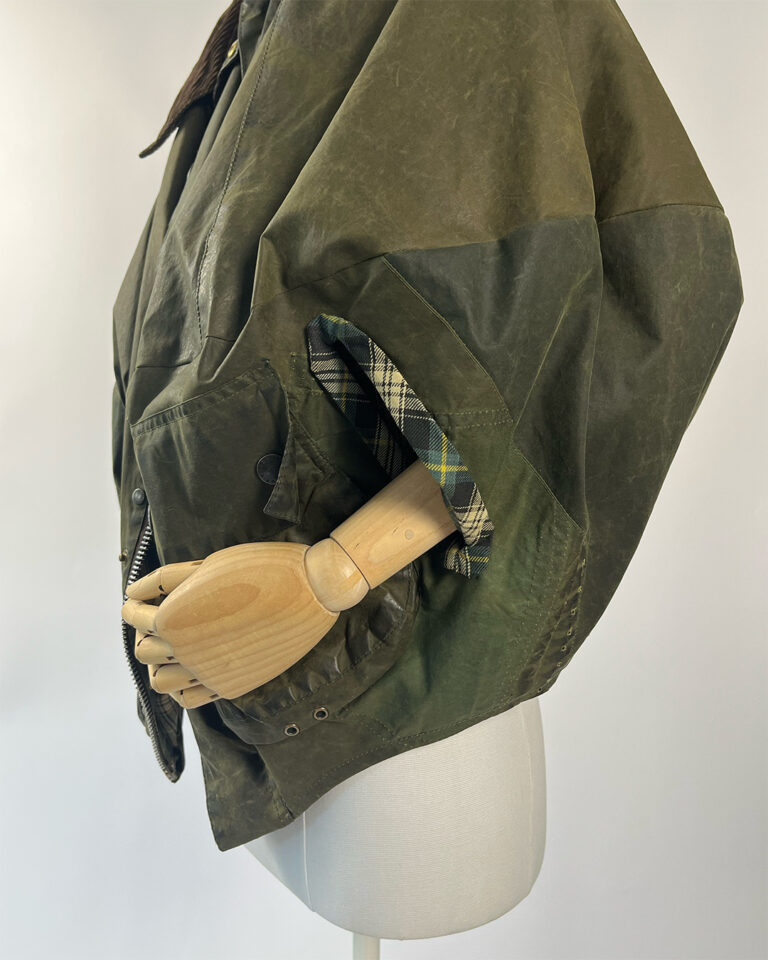
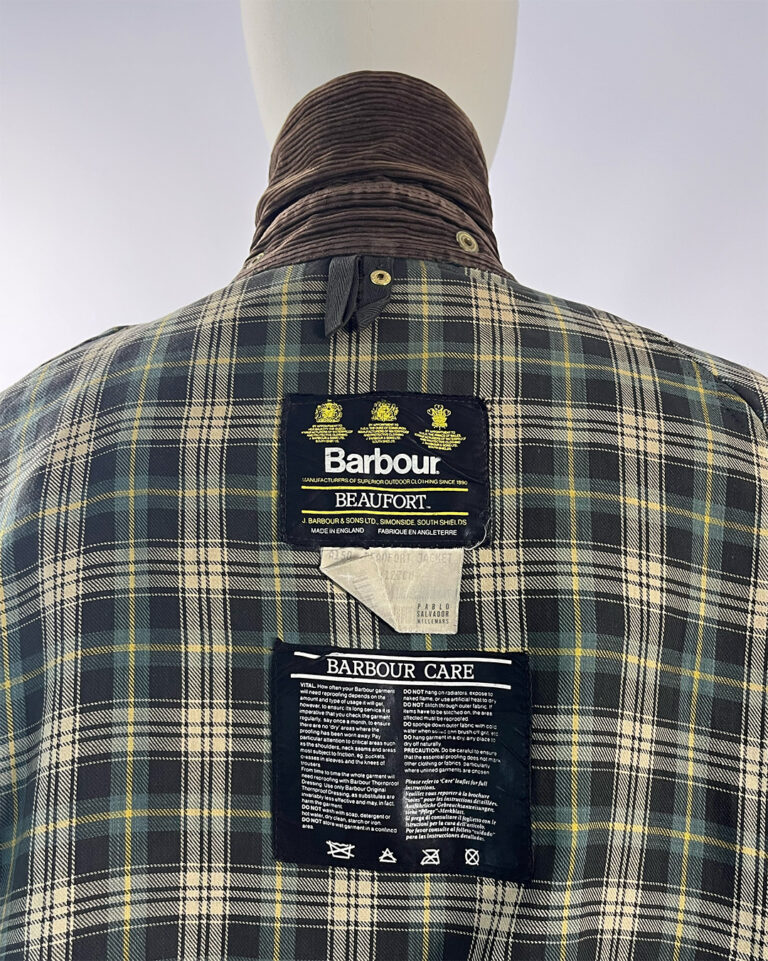
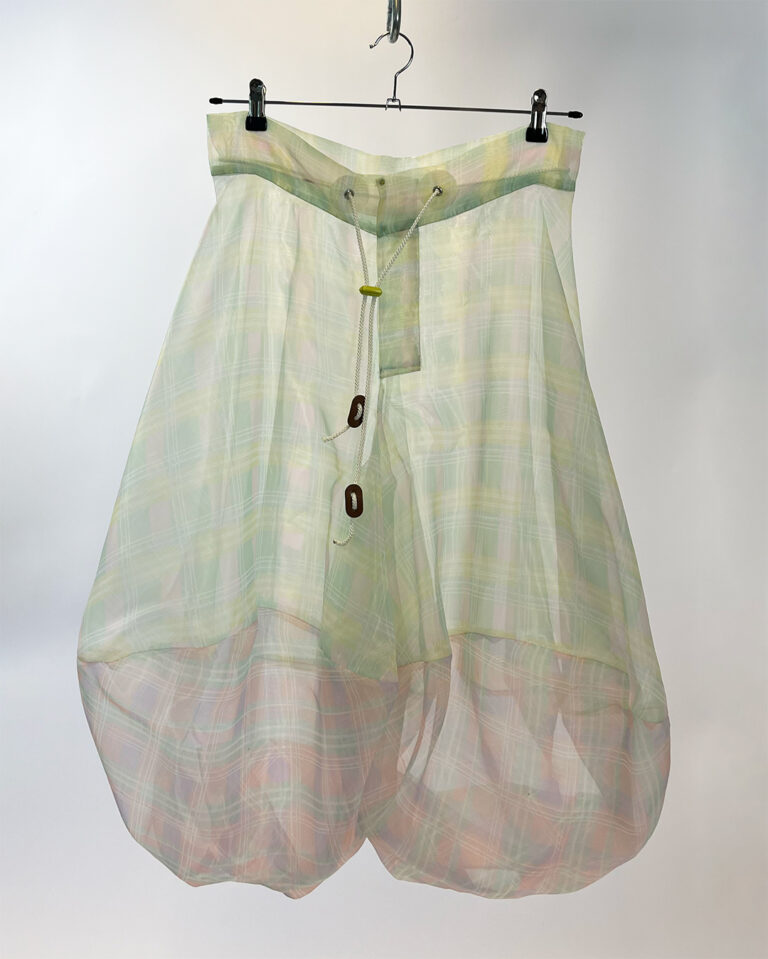
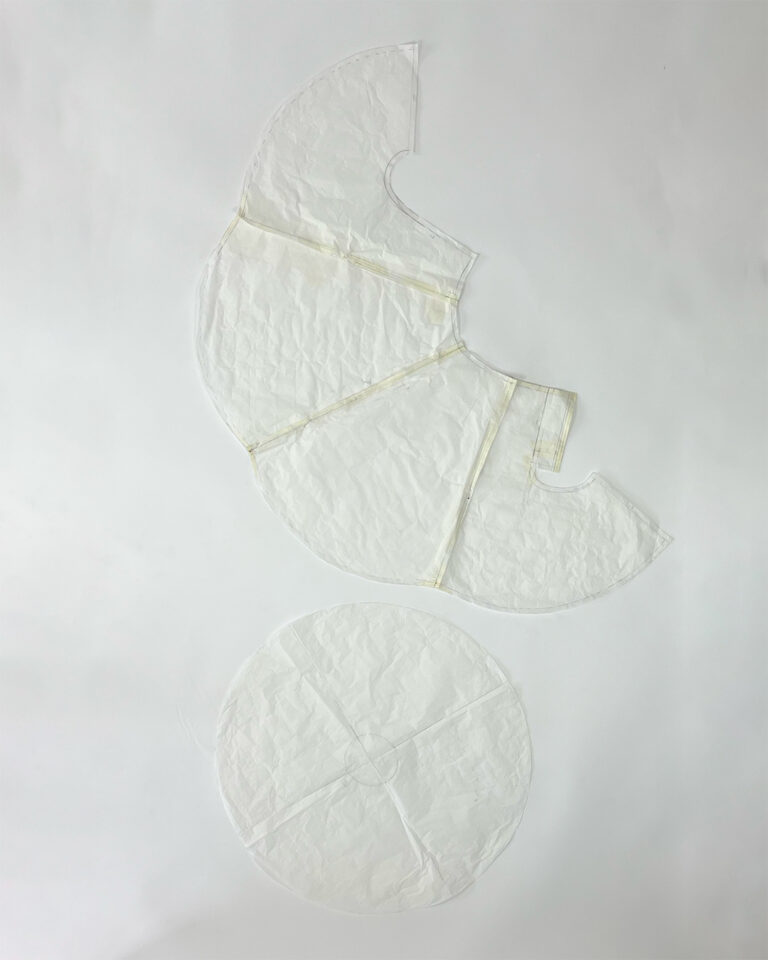
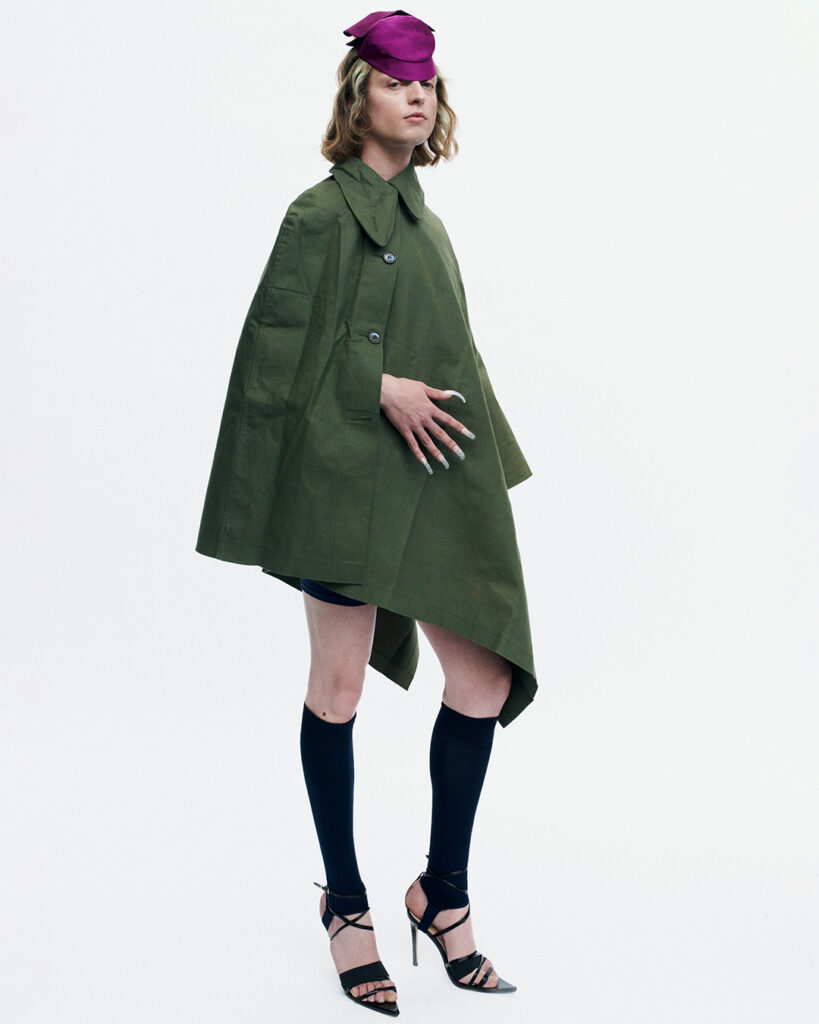
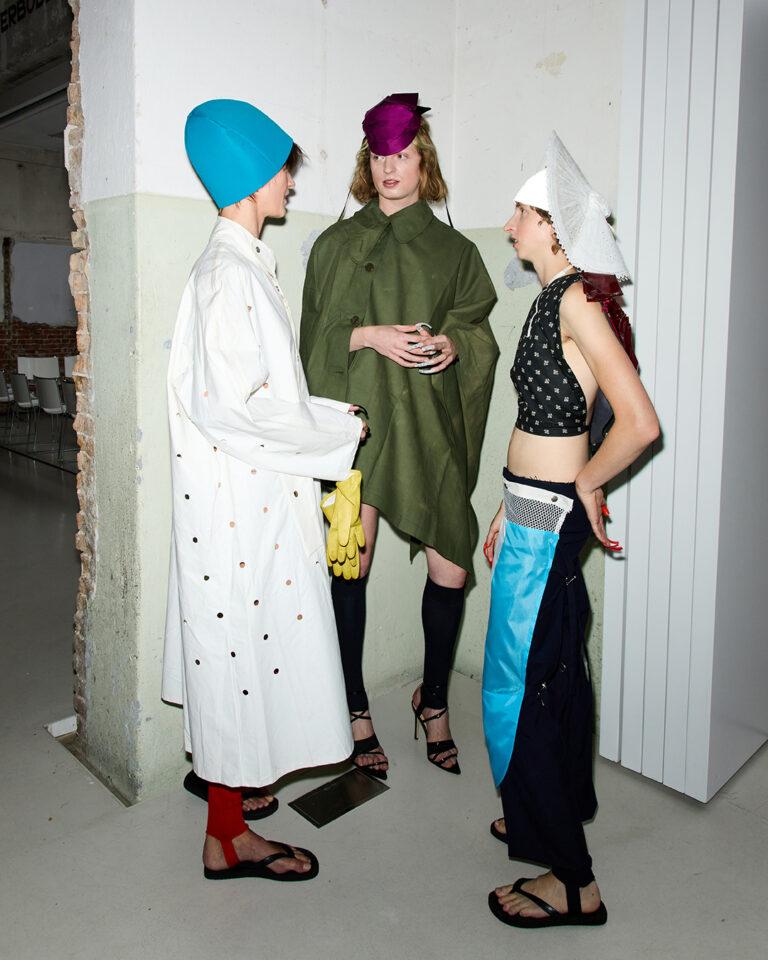
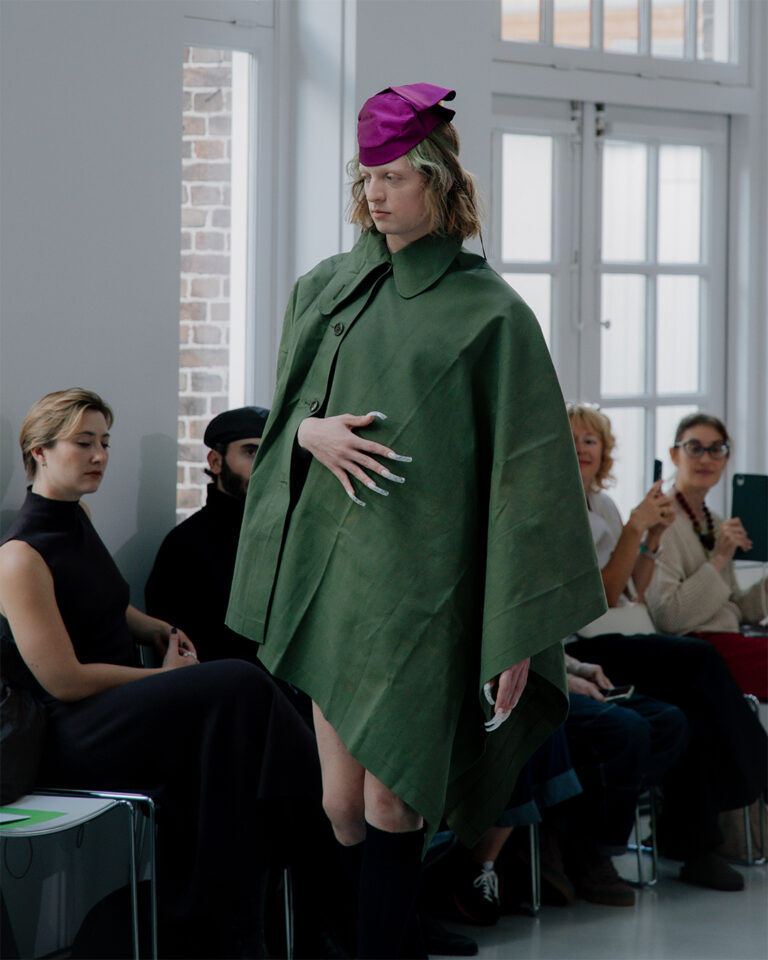
Ivan wears cirkel Barbour Beaufort waxed cotton jacket, purple silk and black cowhide Pluk van de Petteflet-pet, and sheer checkered green & pink polyester cirkel fisher shorts


drie,
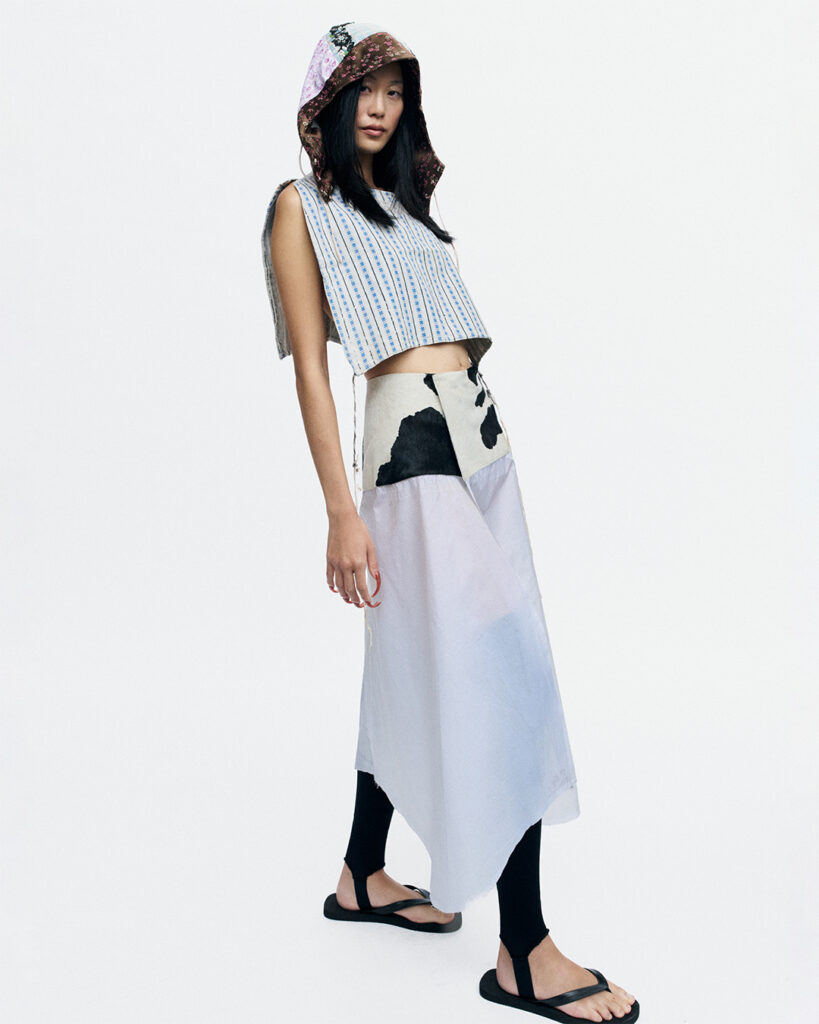
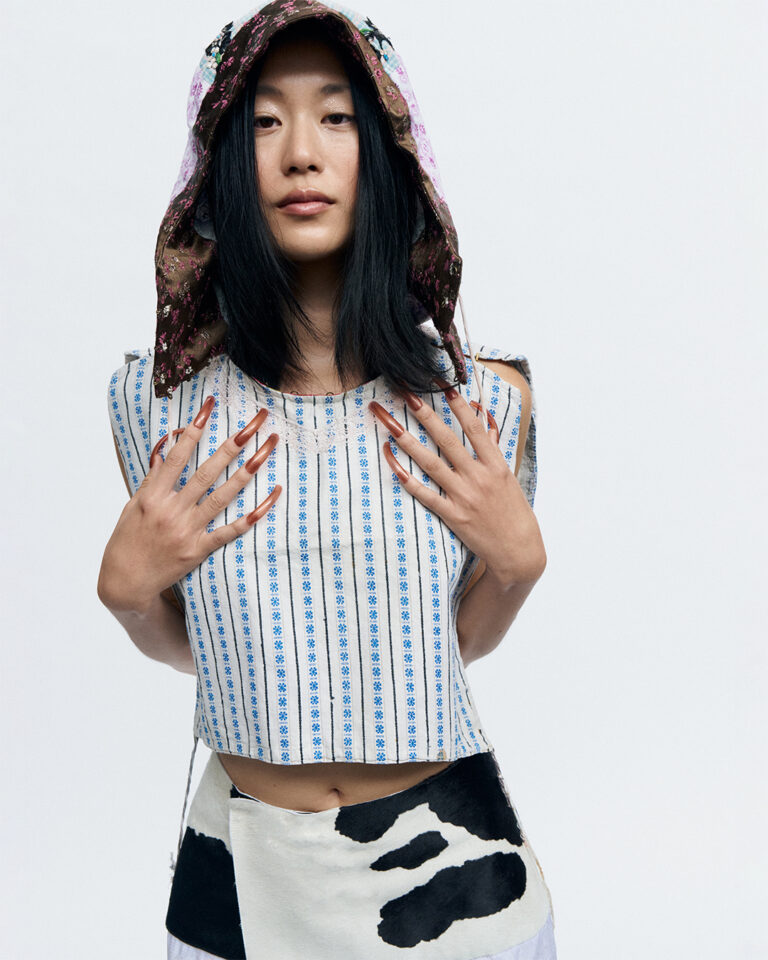
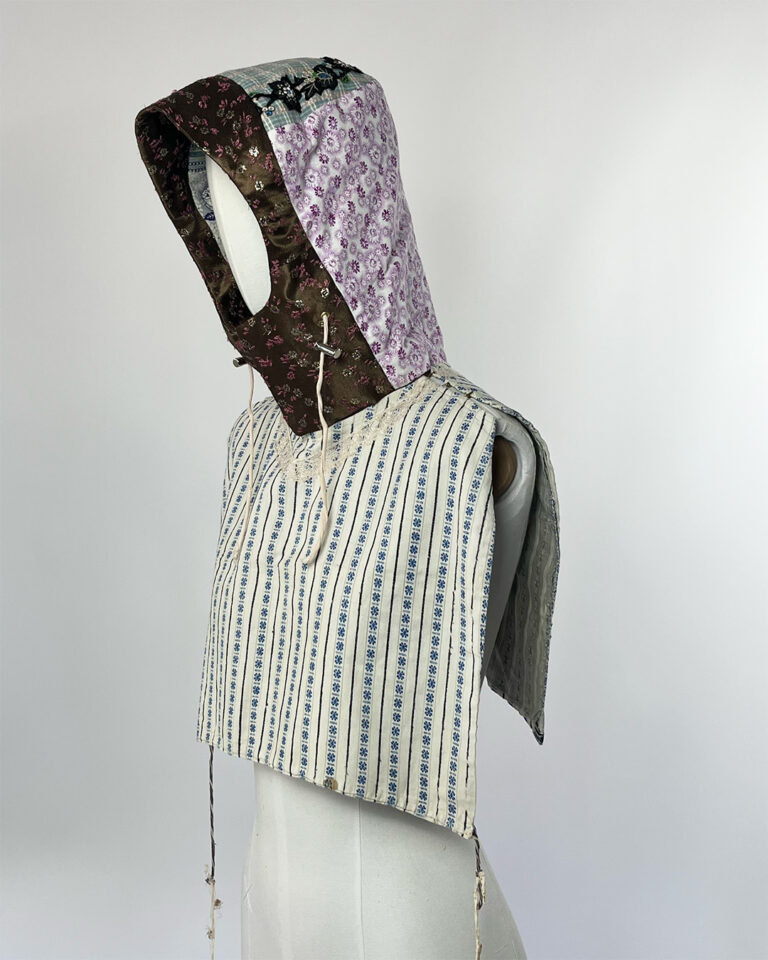
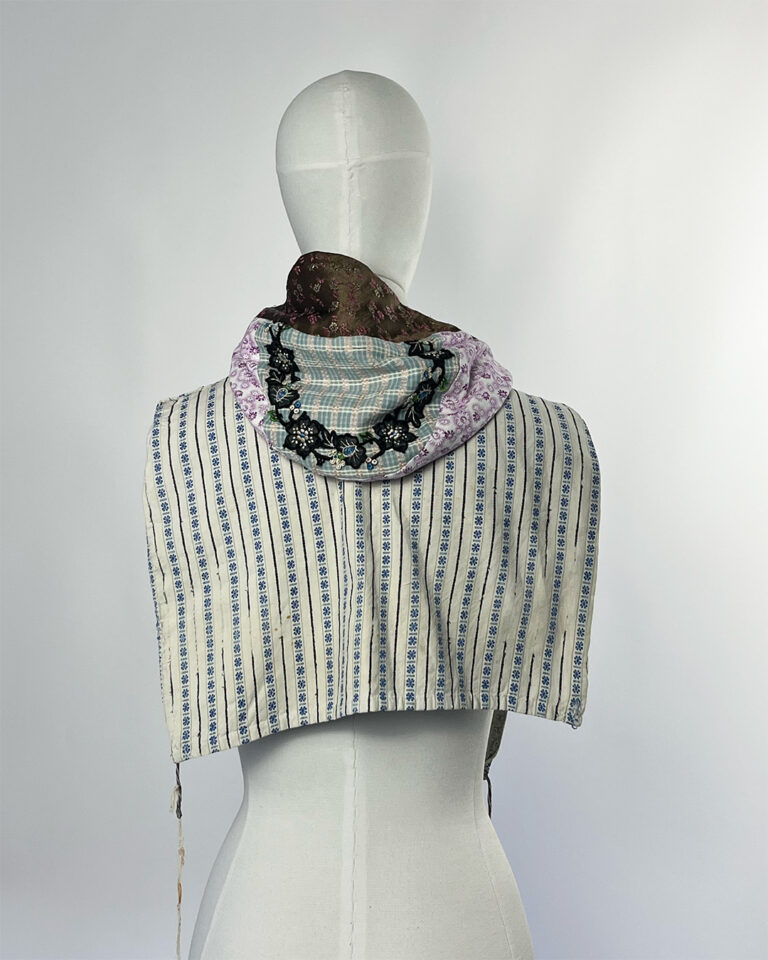
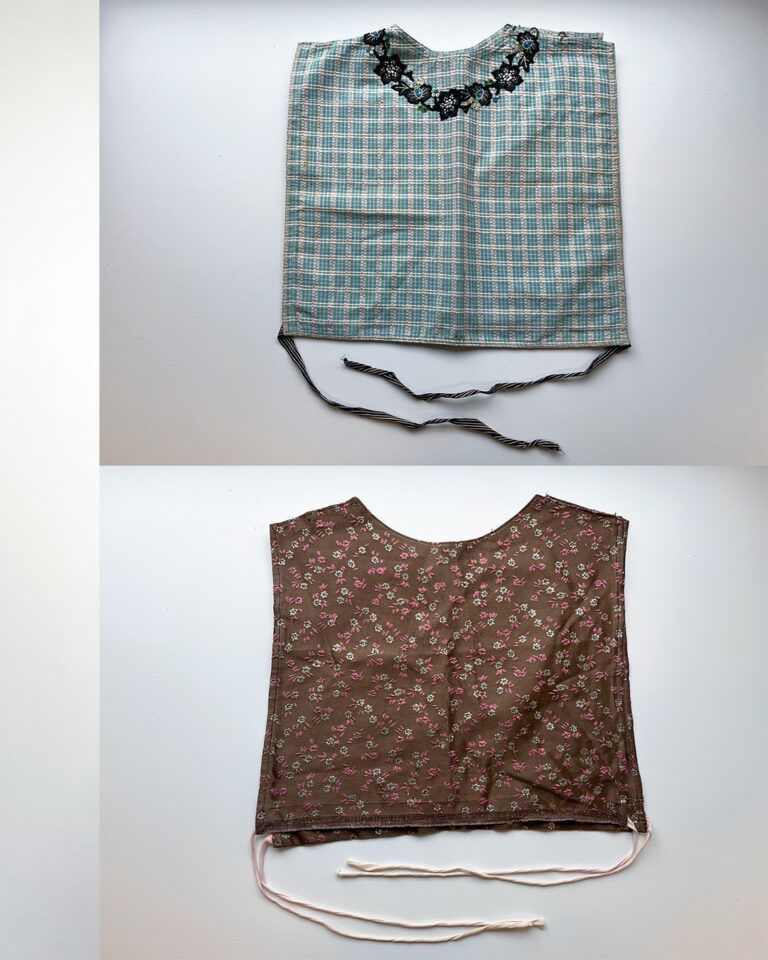
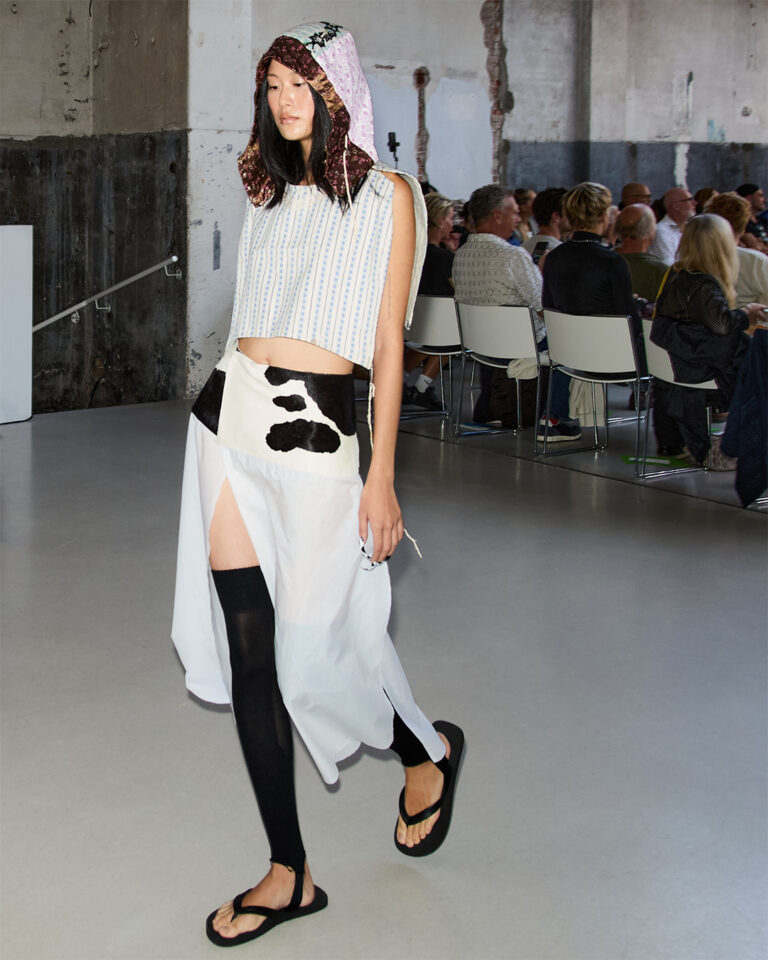
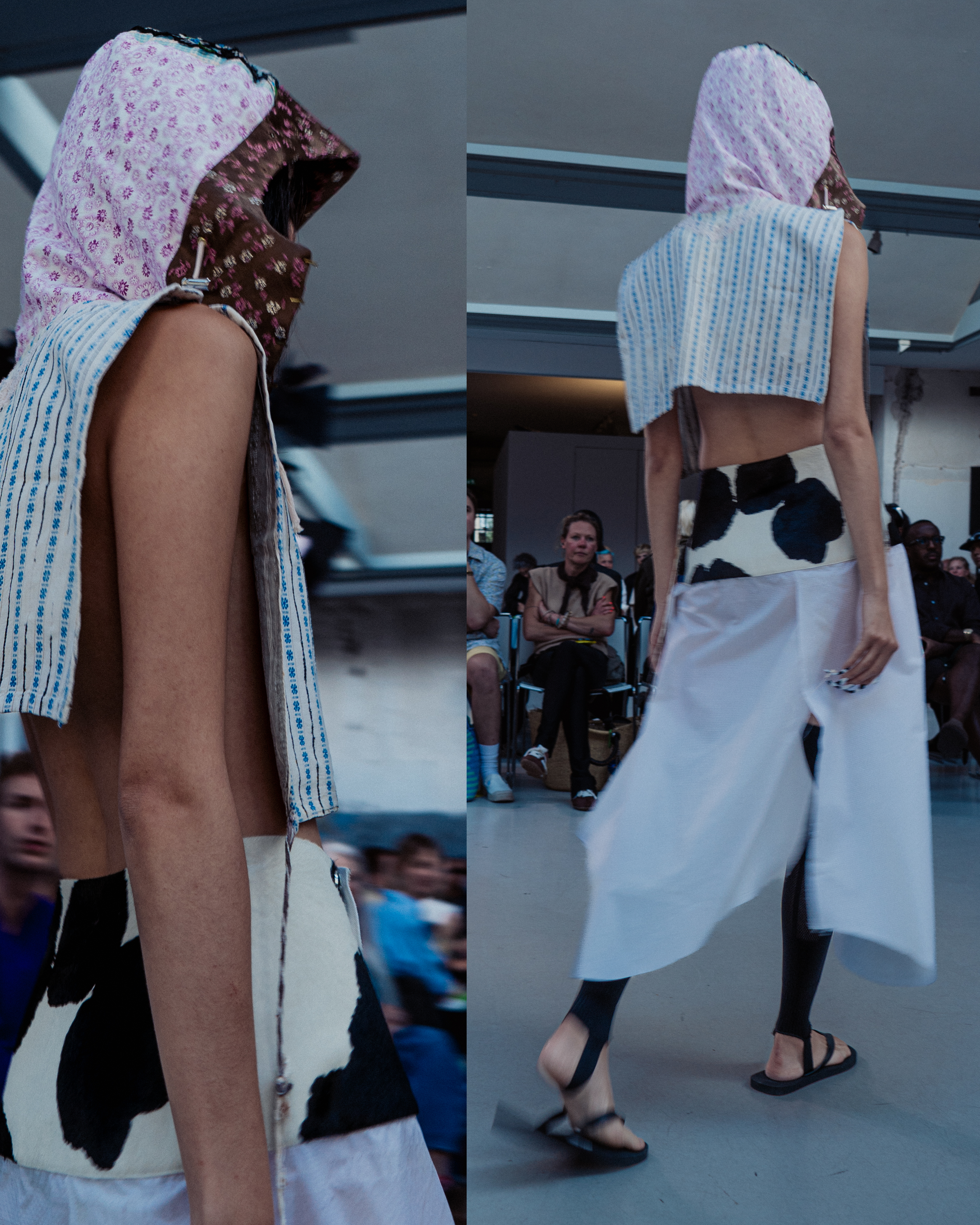
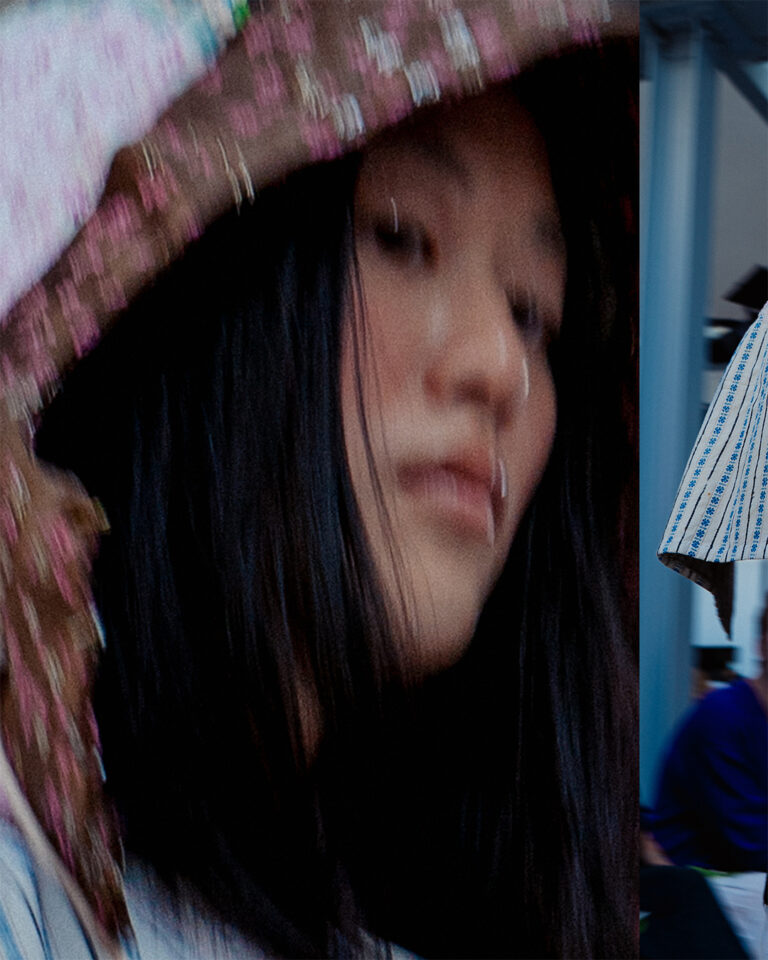
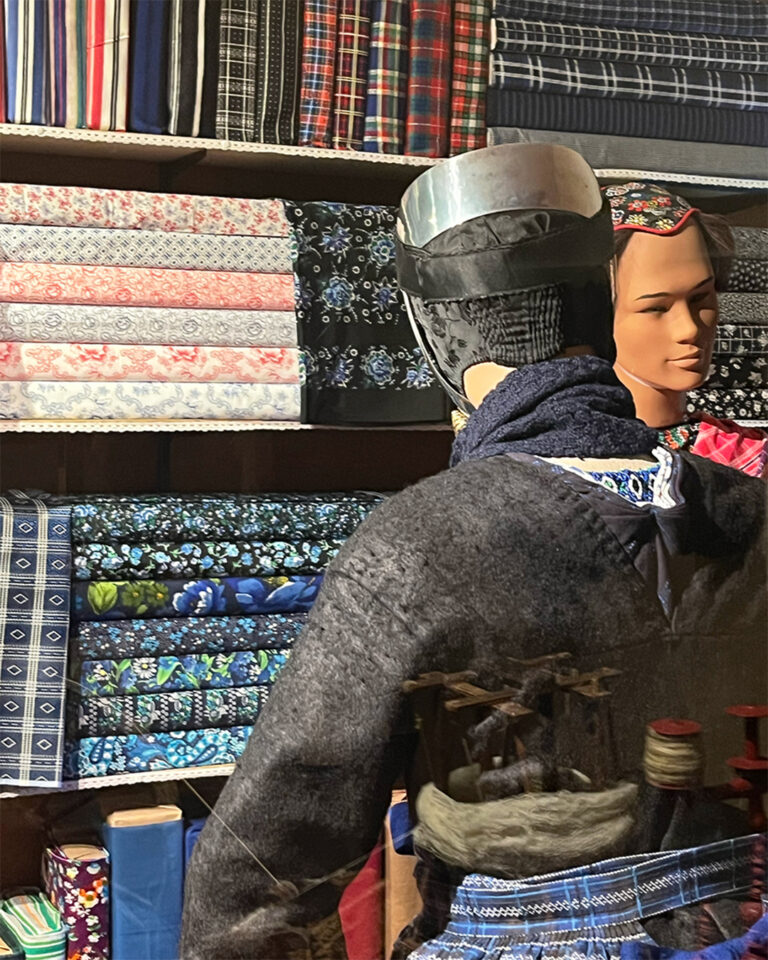
Cherry wears kraplap capuchon constructed out of original silk and cotton kraplappen (shoulder cloth) traditionally worn as part of regional dress in different parts of the Netherlands, including Zuid-Beveland and Staphorst, where these originate from.
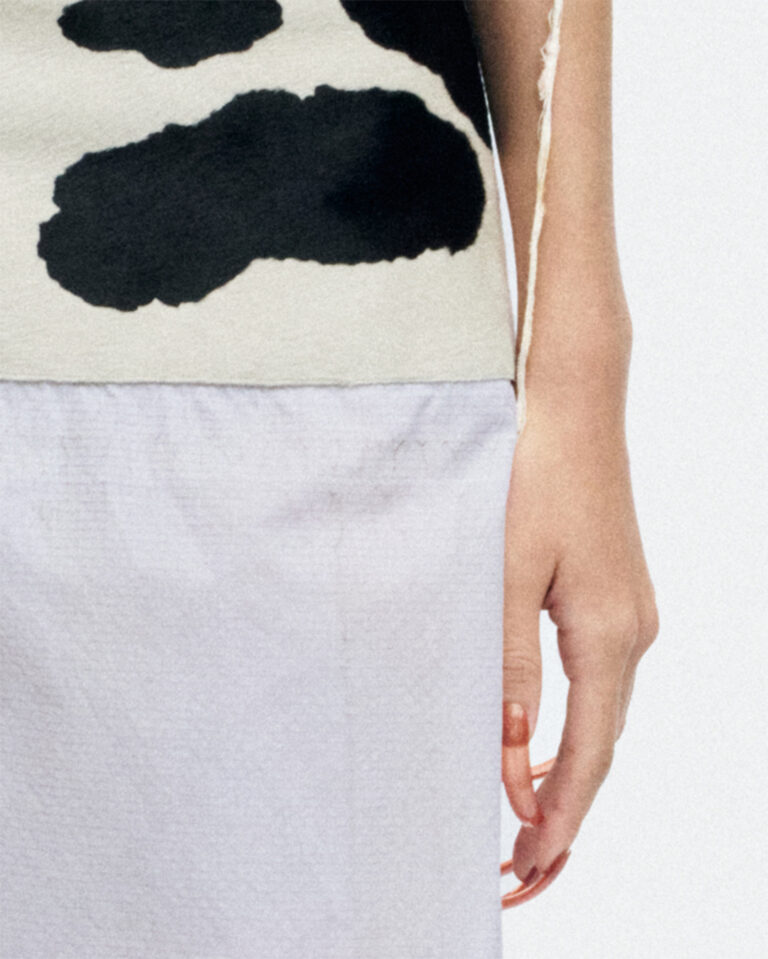
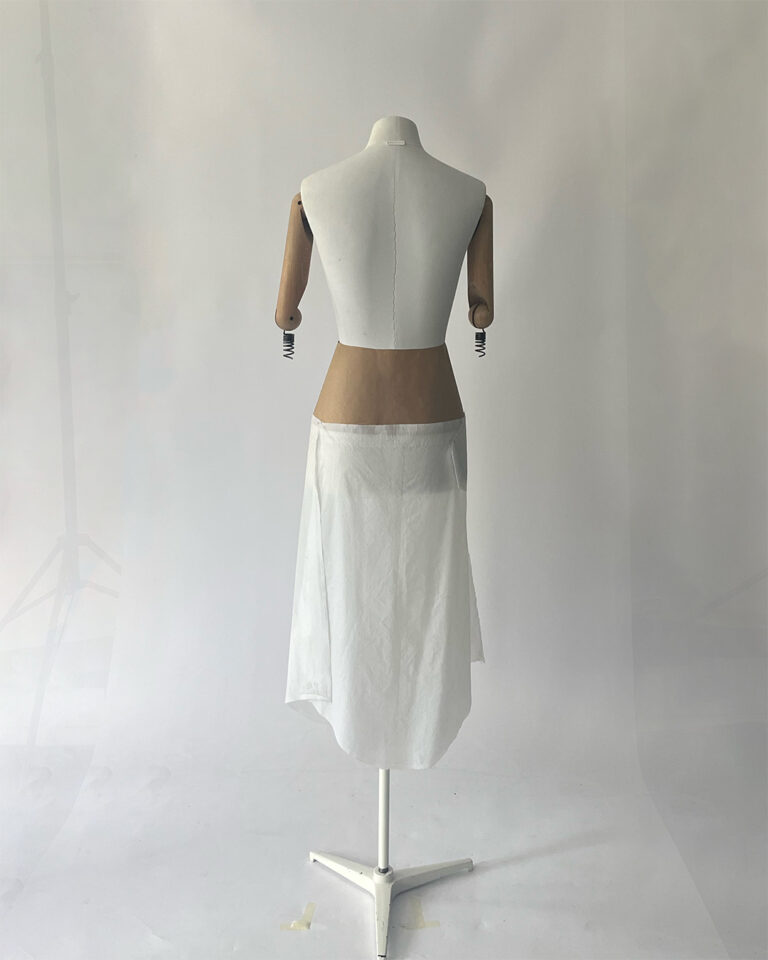
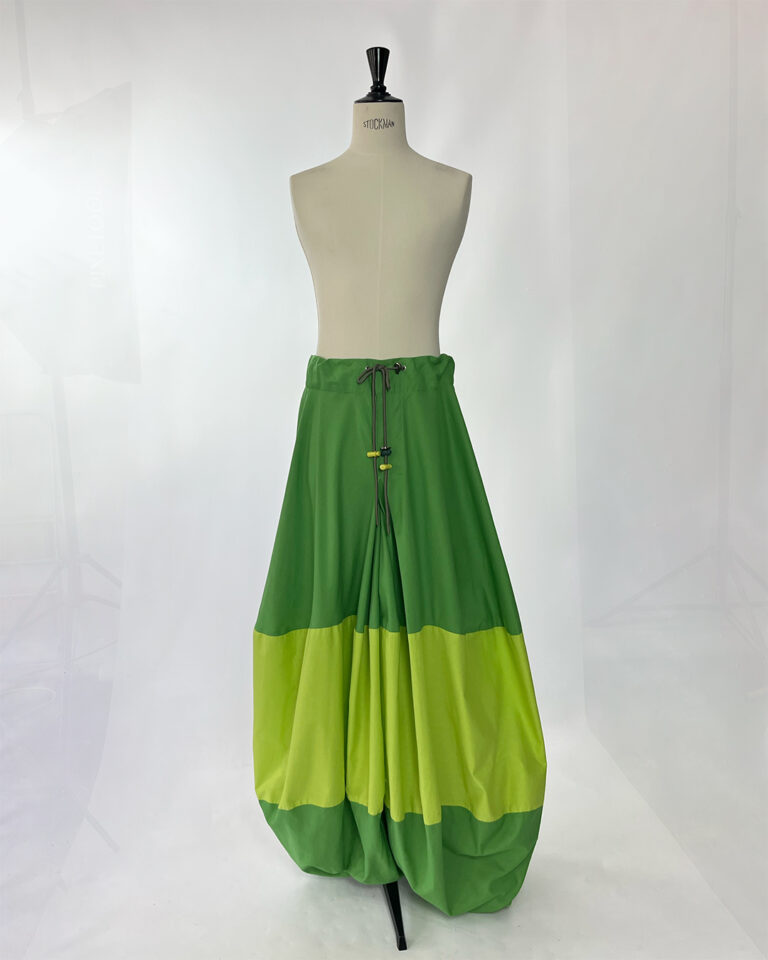
Skirt made out of three sleeves from a coated Dutch defence arctic parka, with a curved waistband out of ethically sourced Holstein-Friesian cowhide


vier,
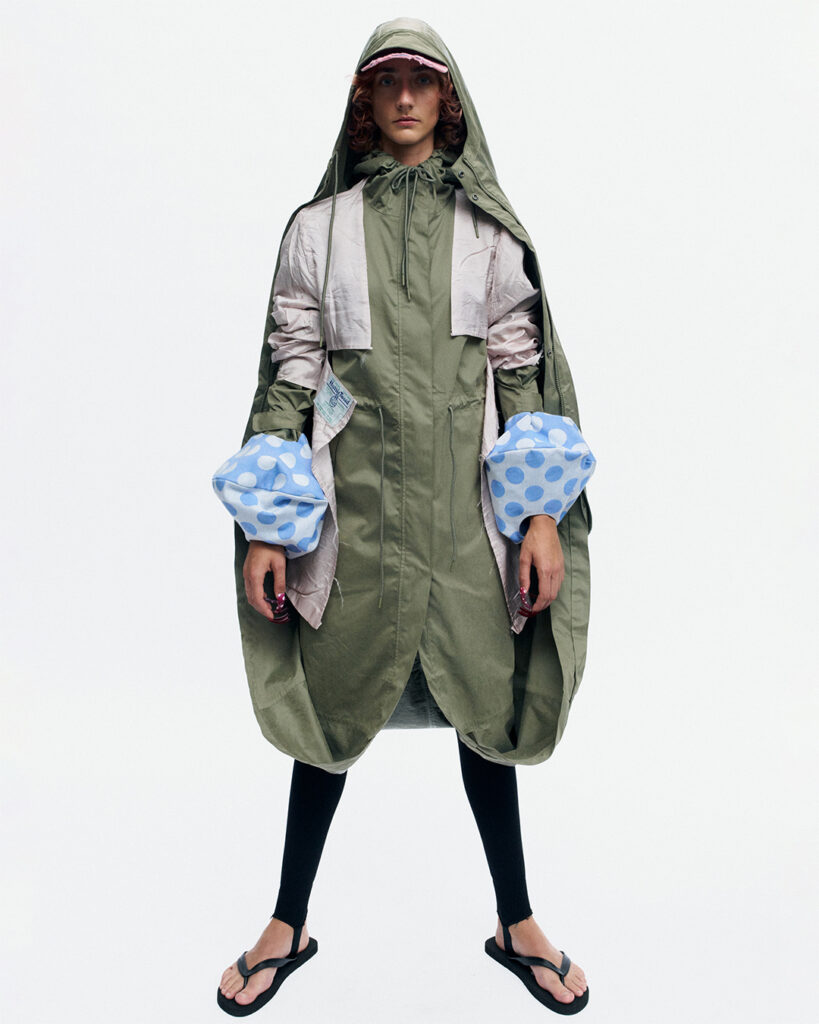
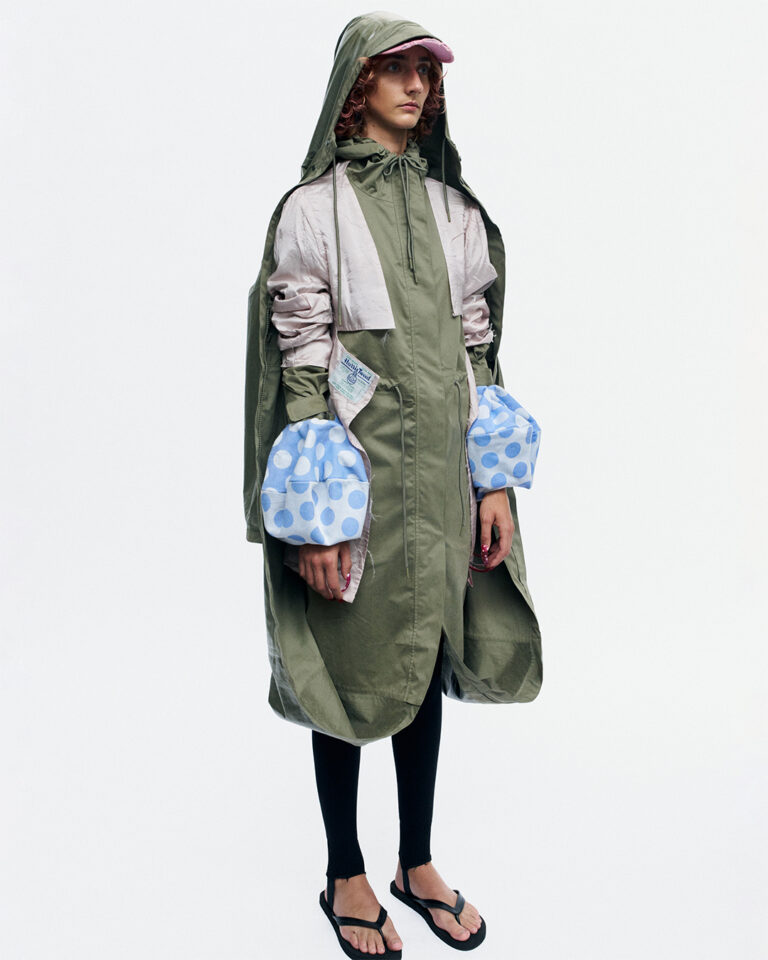
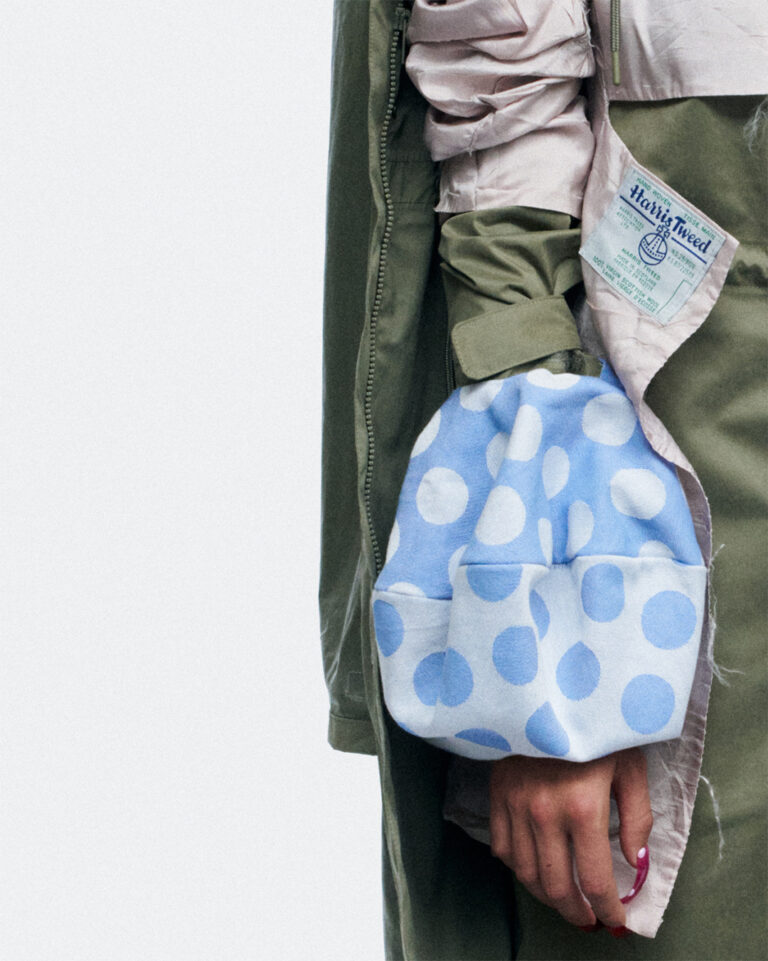
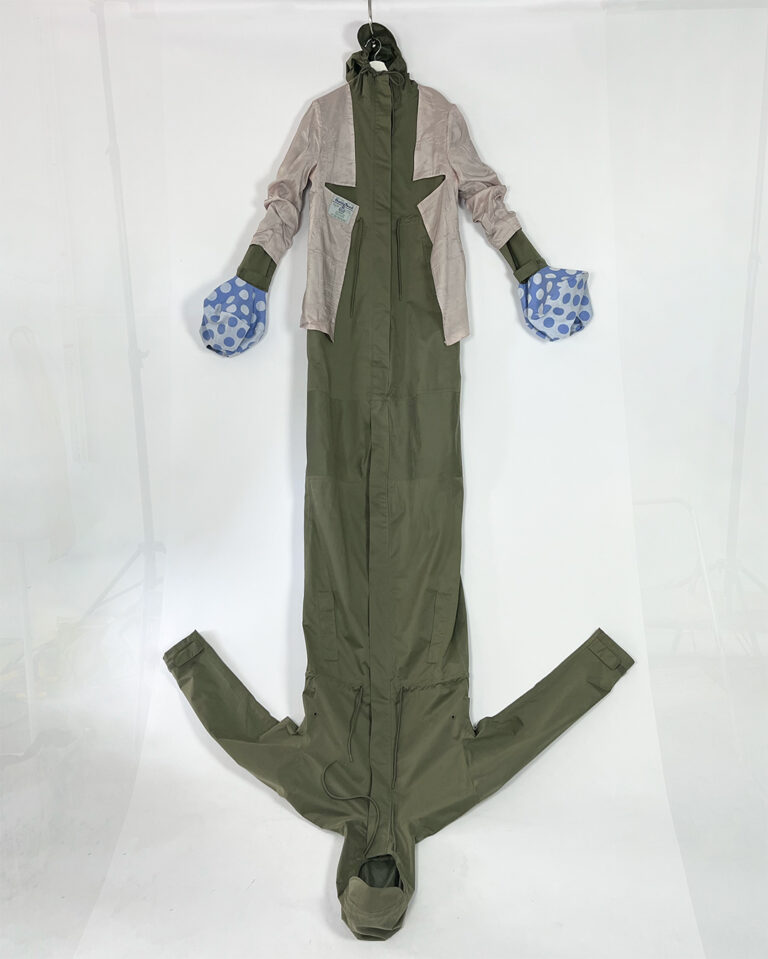
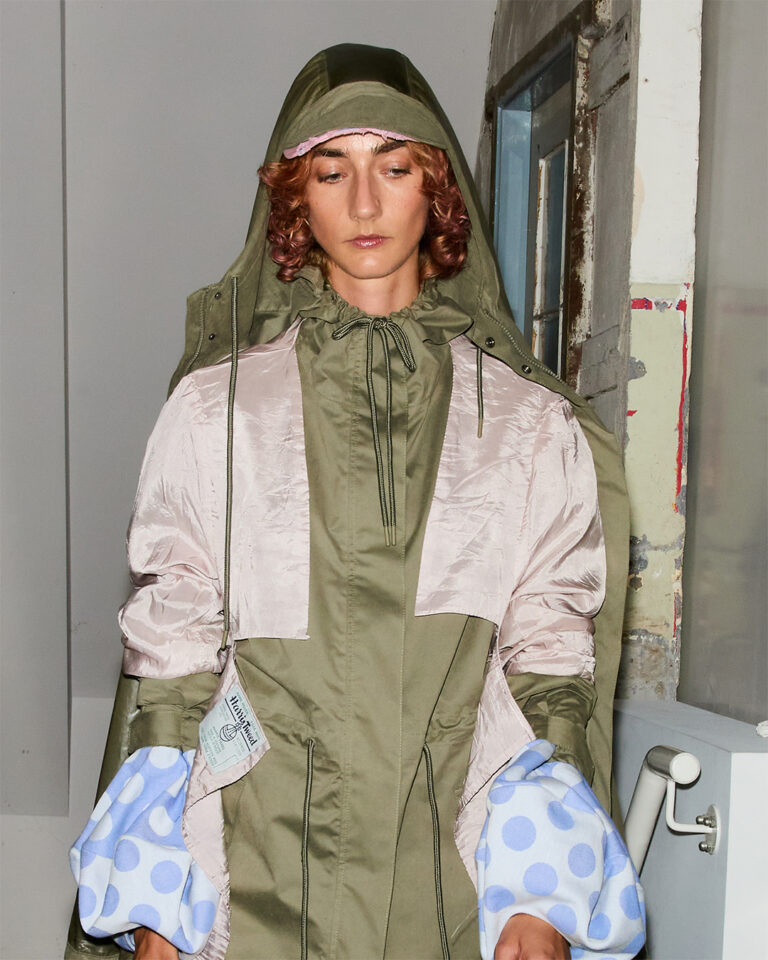
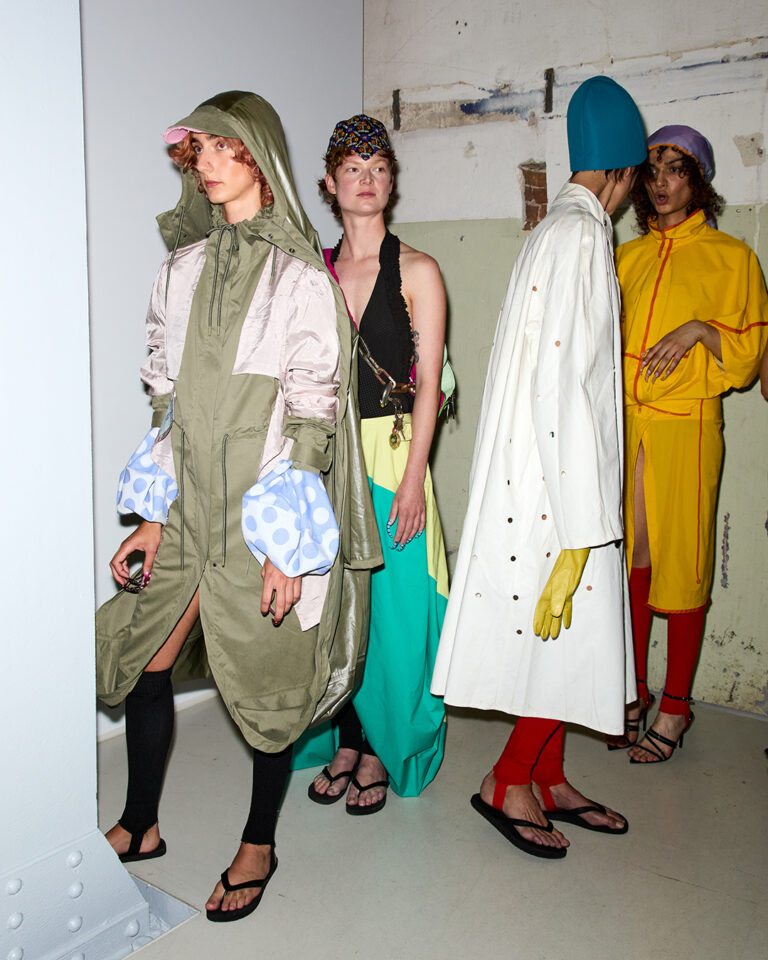
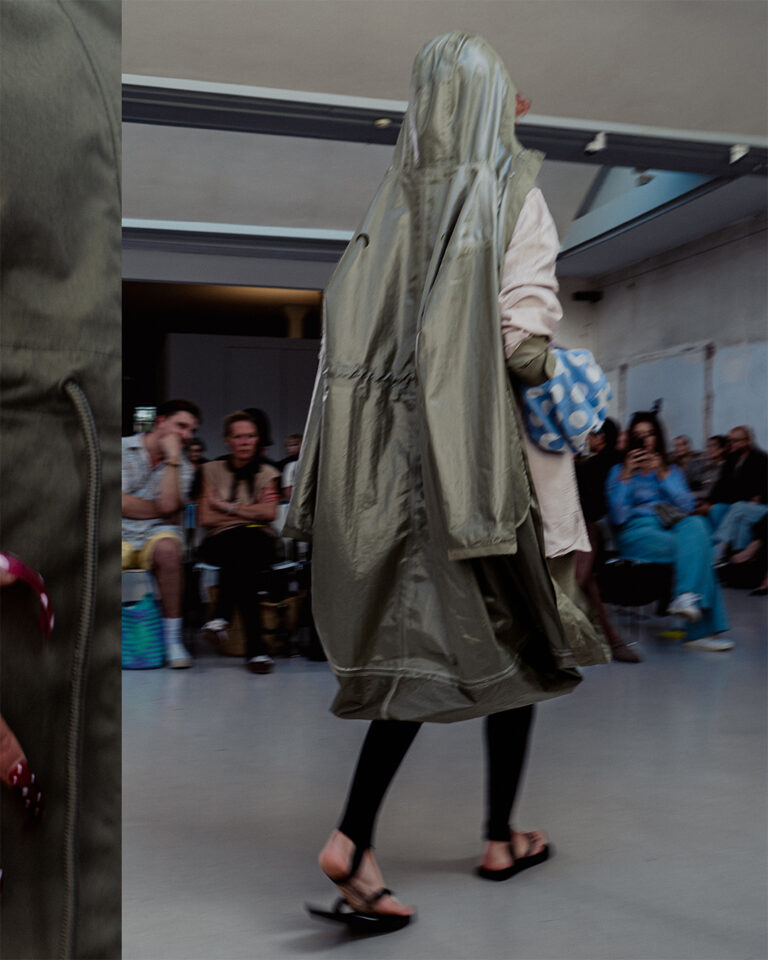
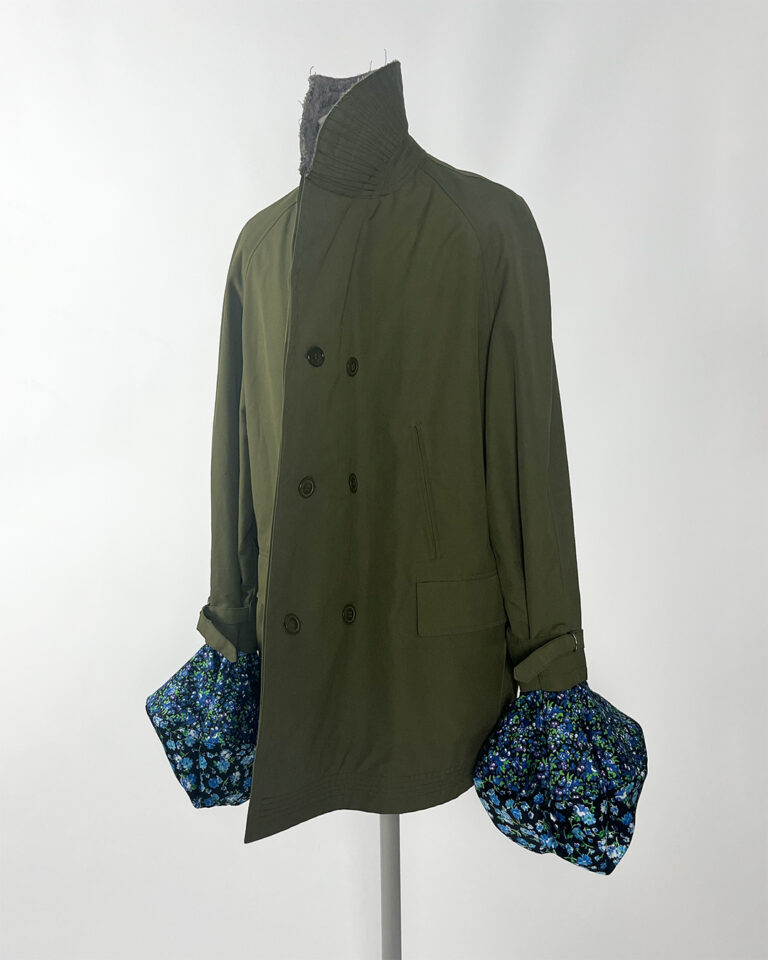
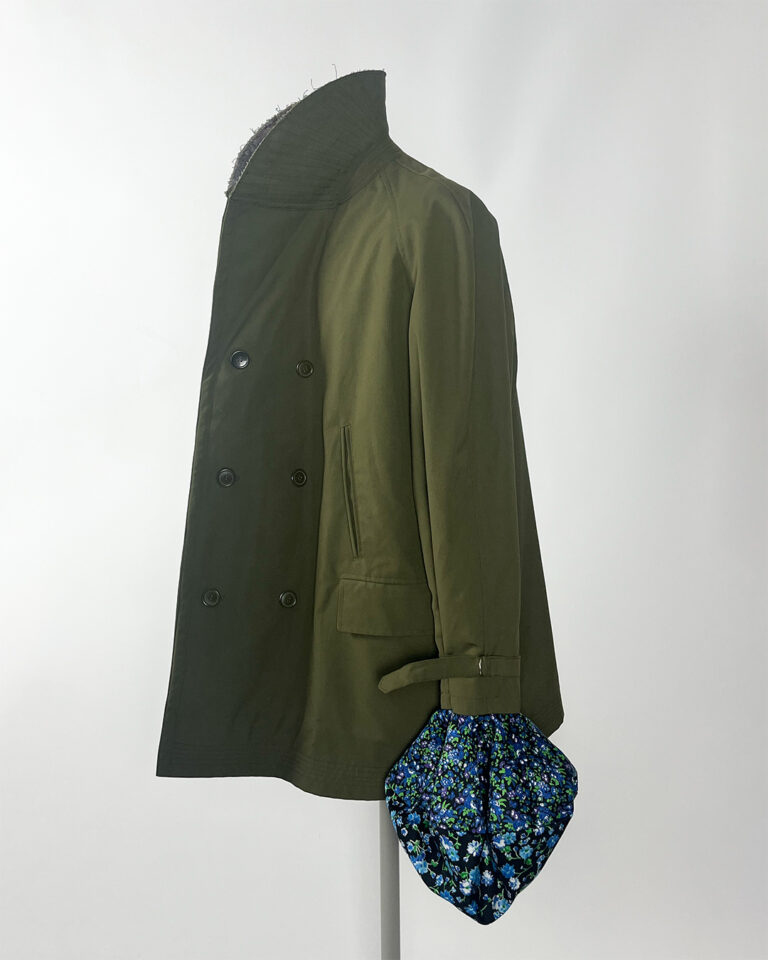
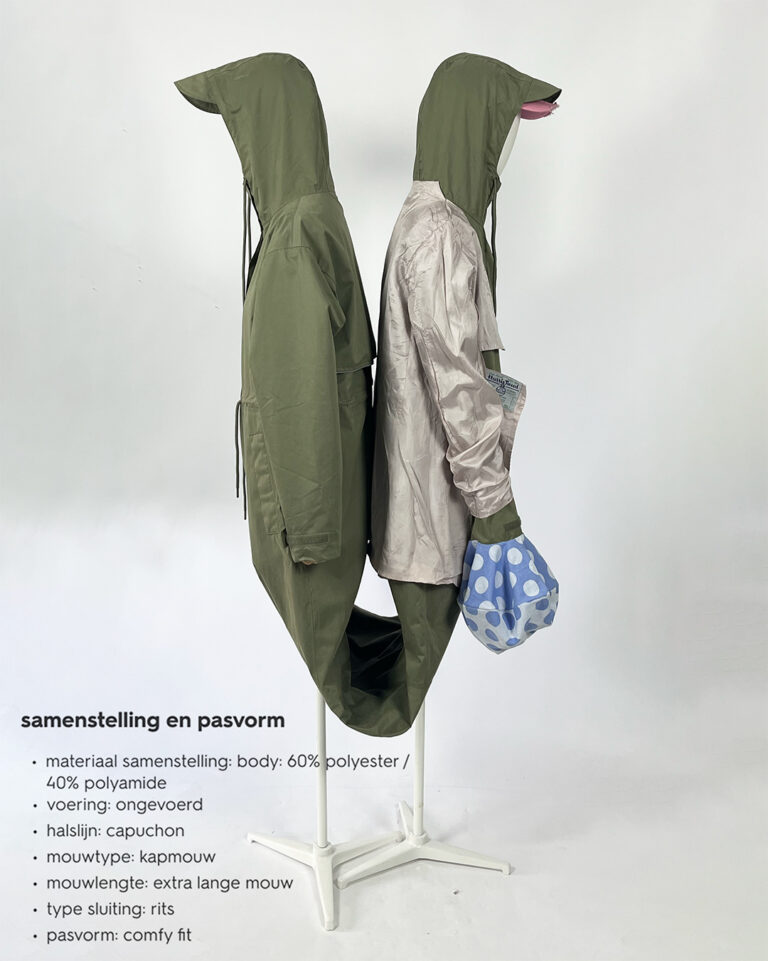
Annabel wears double coat constructed out of unsold ‘regenjas voor volwassenen khaki’, with a Harris Tweed pink rayon lining.
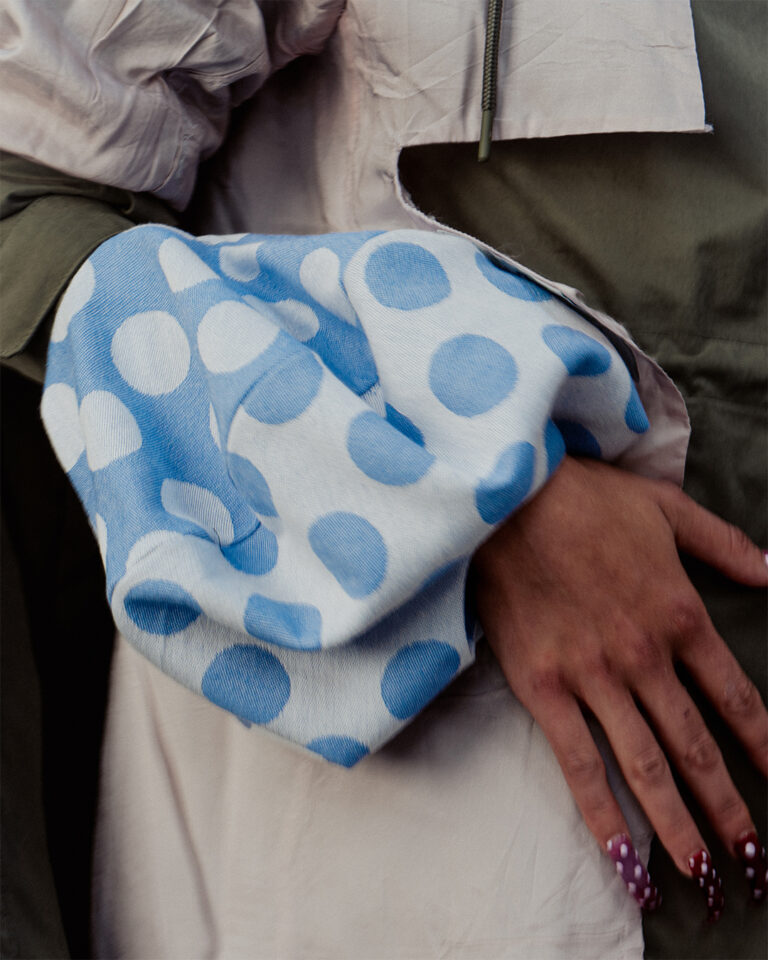
Attached blue arm saucer made out of ‘theedoek 65 × 65 katoen met stippen’, and pink cap


vijf,
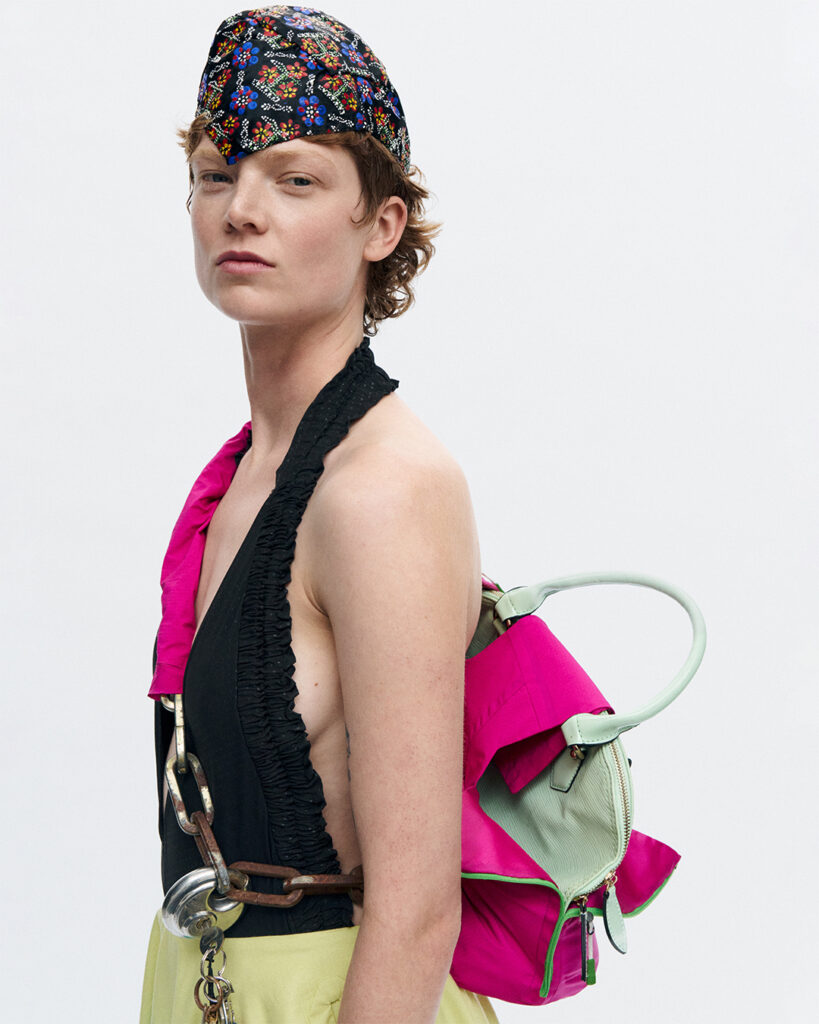
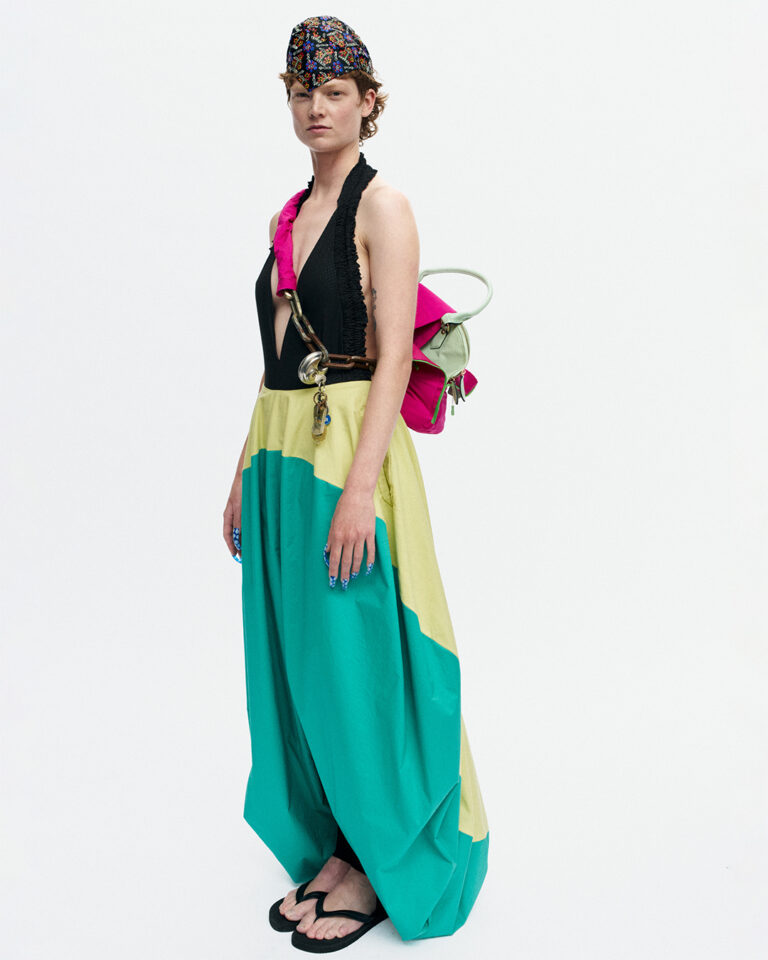
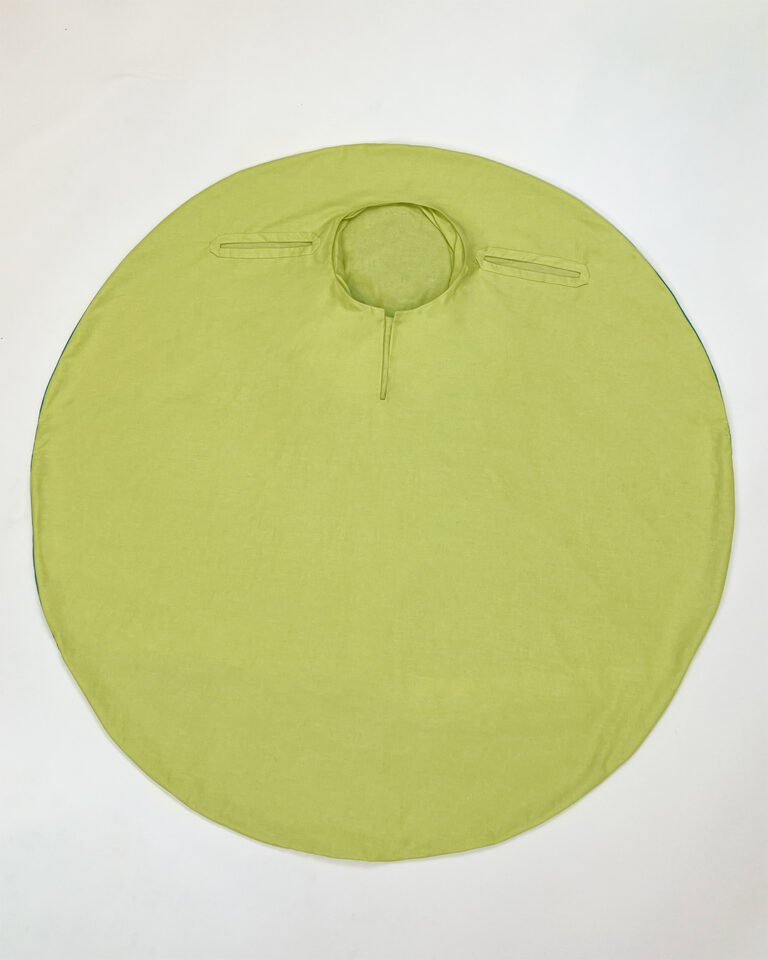
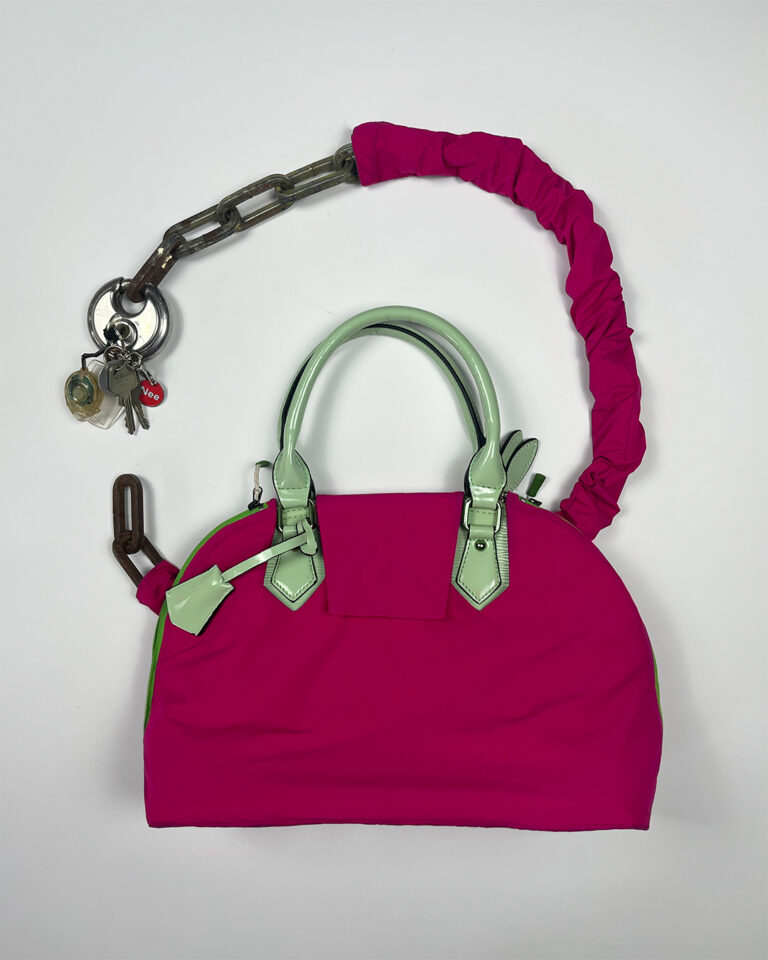
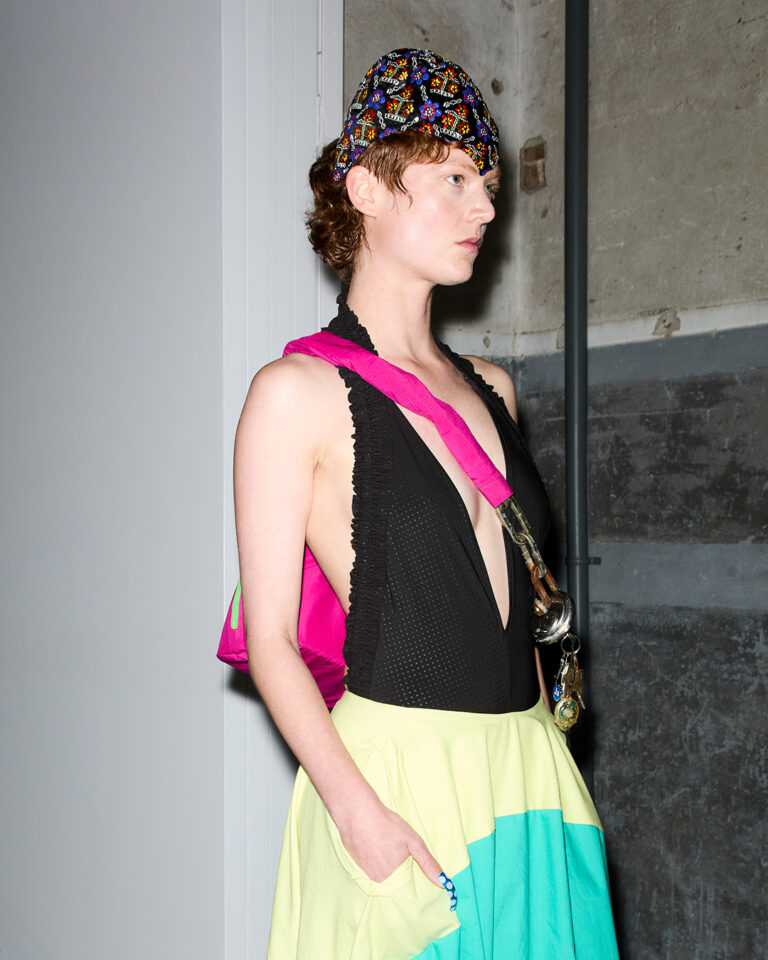
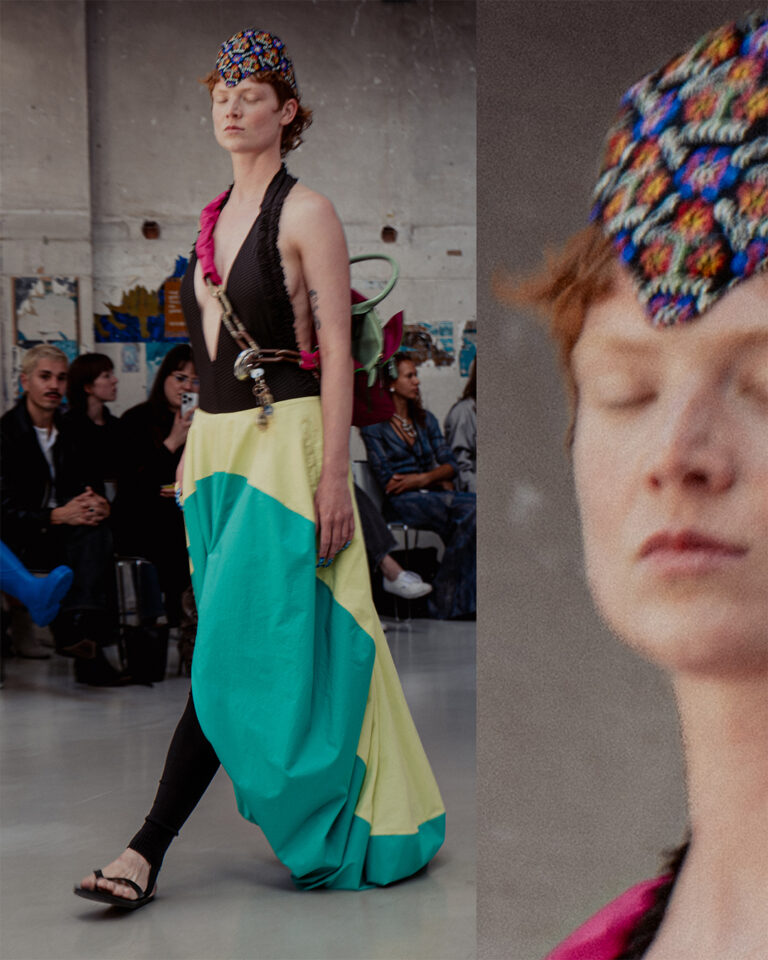
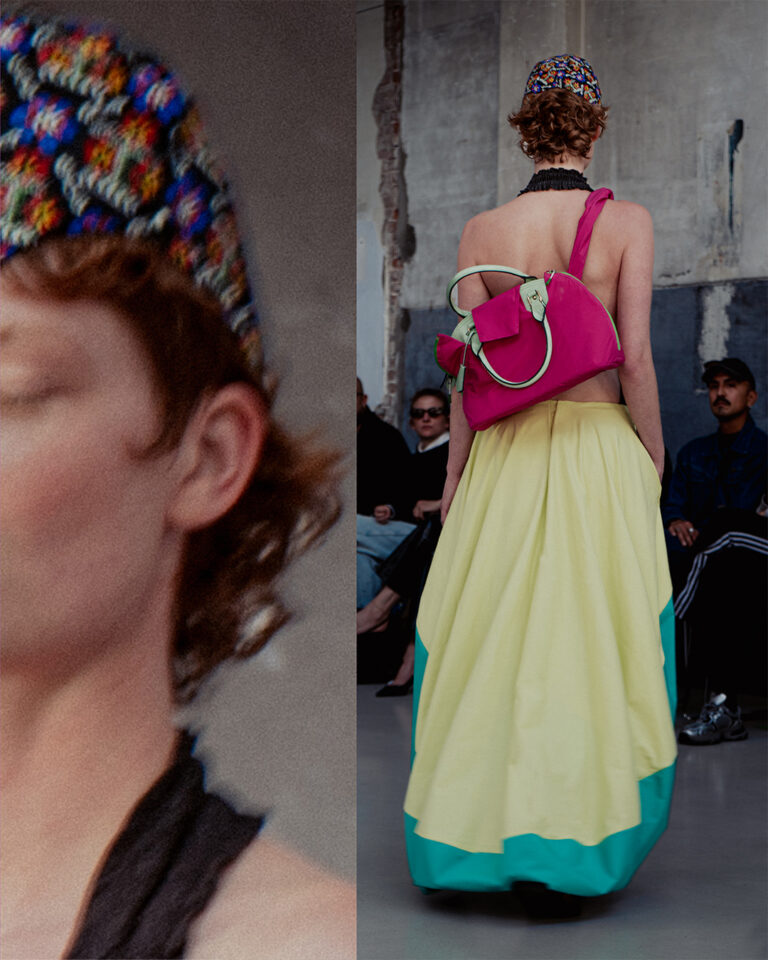
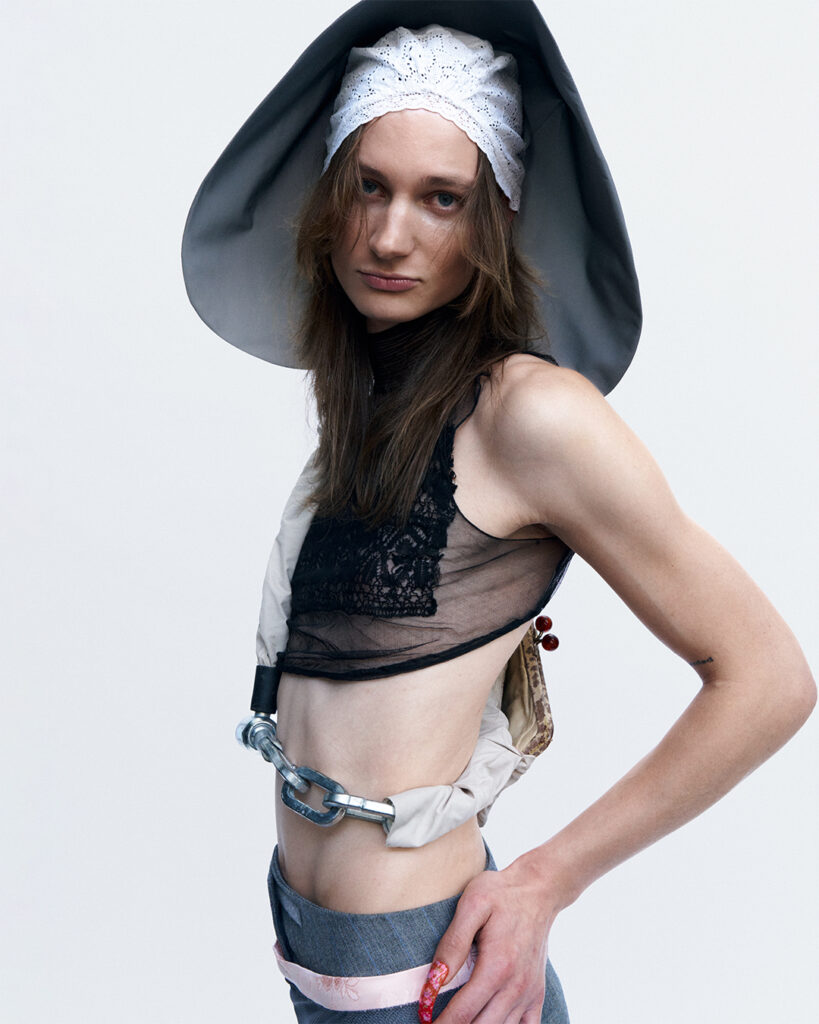
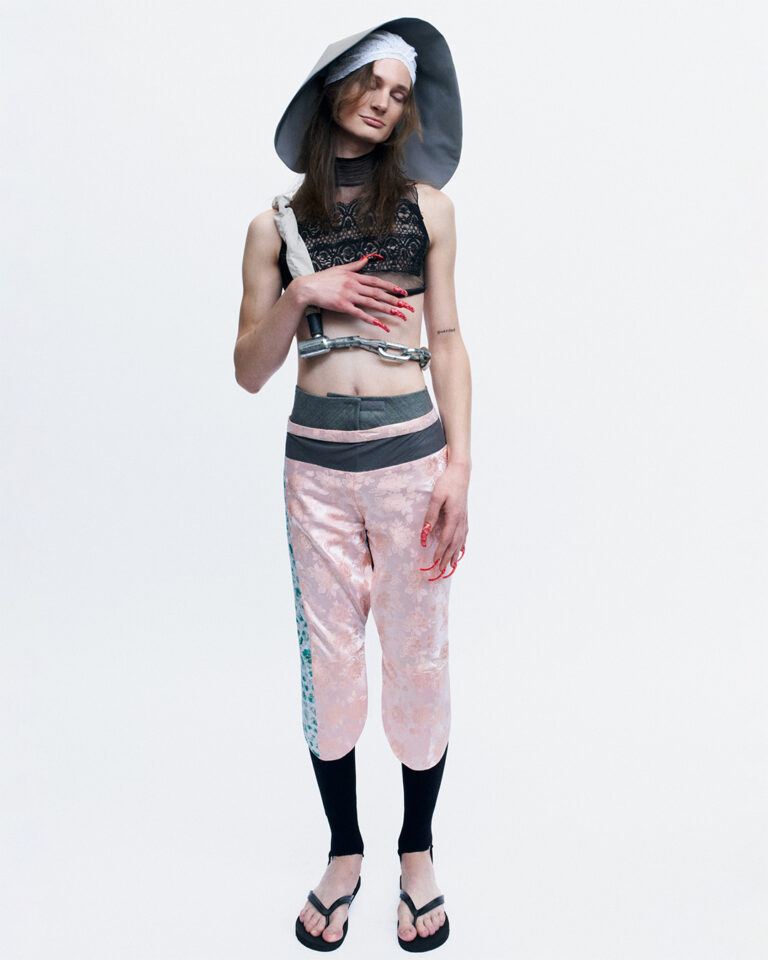
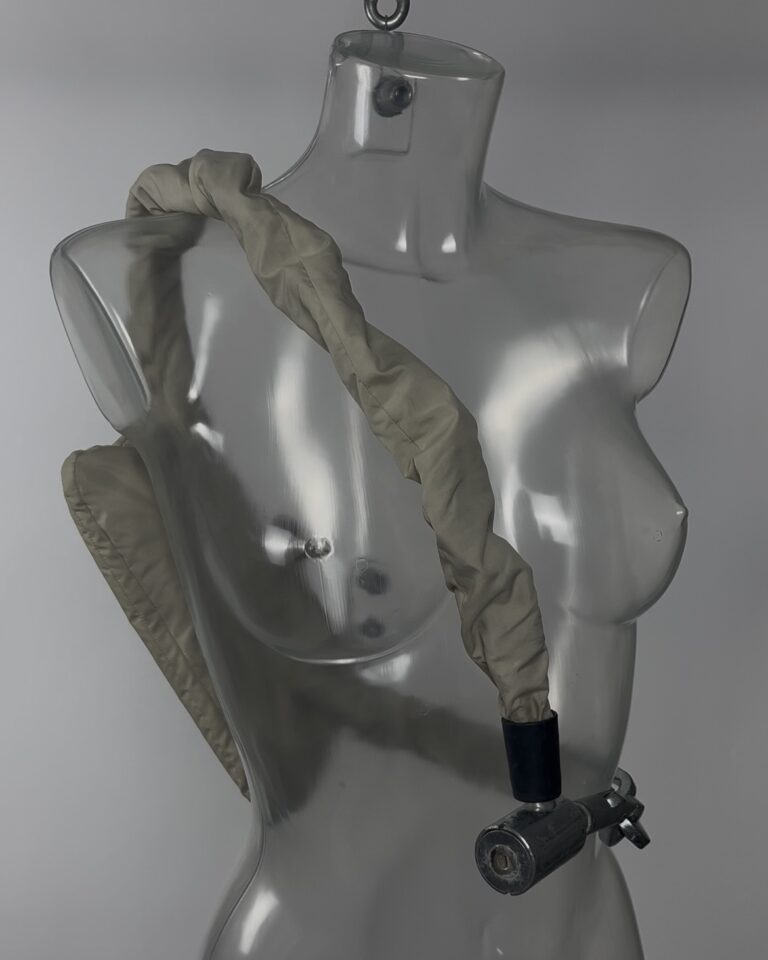
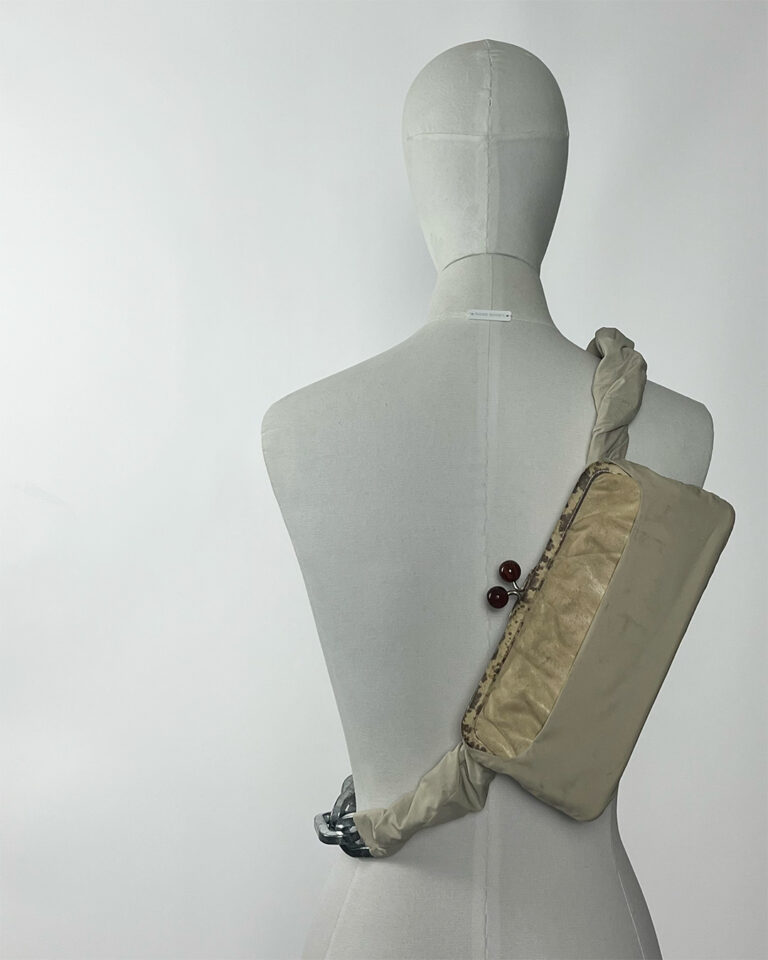
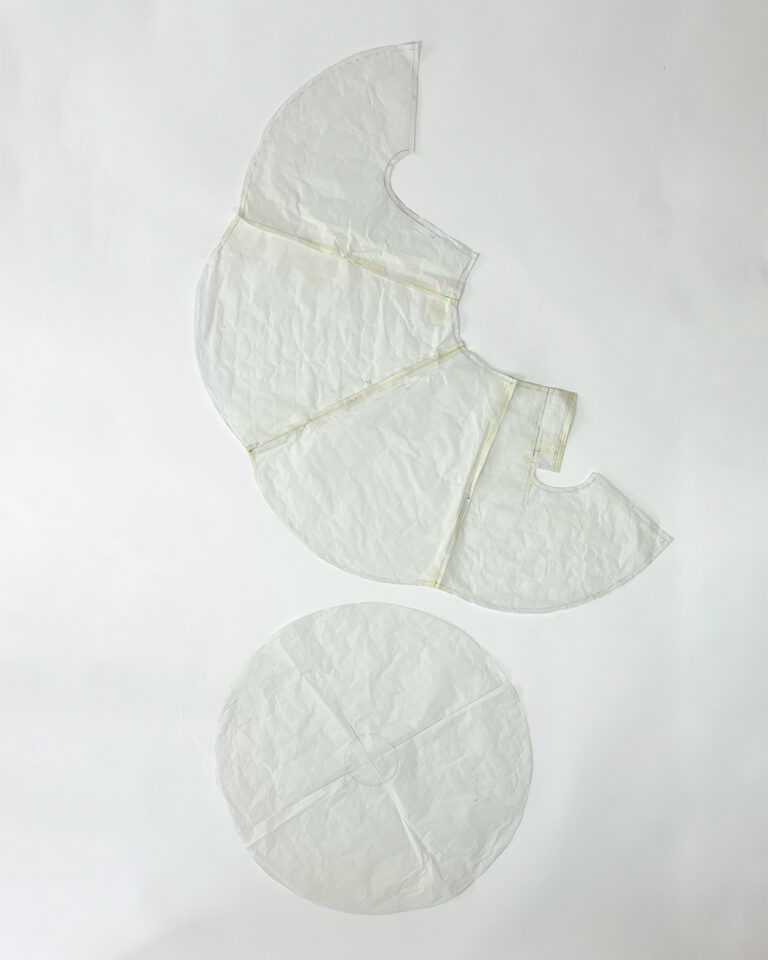
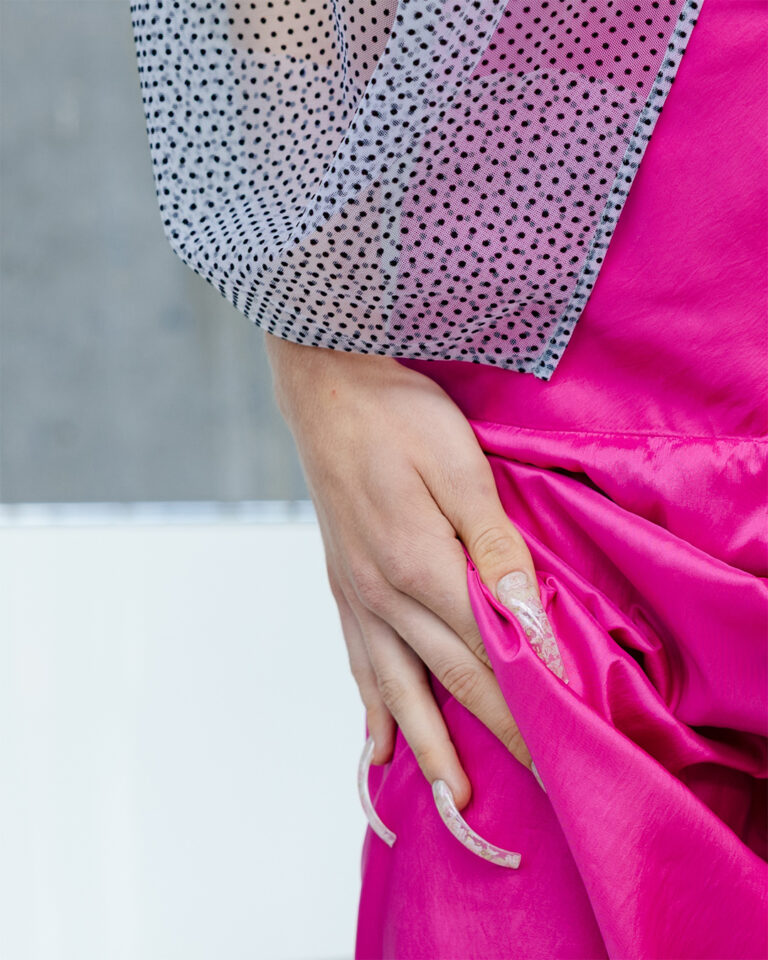
Carmen wears two-toned saucer skirt made out of deadstock cotton, reworked traditional Staphorst stipwerkmuts, circa 1970, upcycled Chloé polka-dot bodysuit, and bike chain handbag cover made out of a THE NORTH FACE HyVent 2.5 L Summit rain jacket,
The jacket would otherwise have been destroyed due to its synthetic fibres and visible signs of use. Its material is given a new function as a handbag cover, retaining the traces of its previous life.


zes,
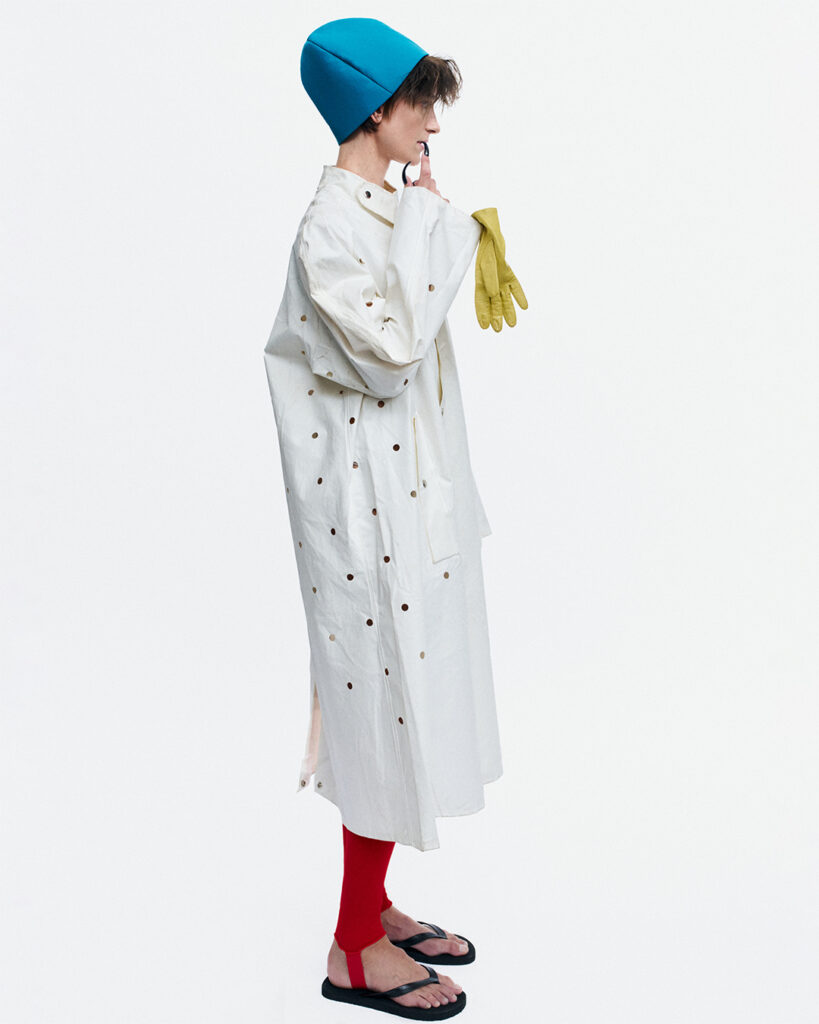
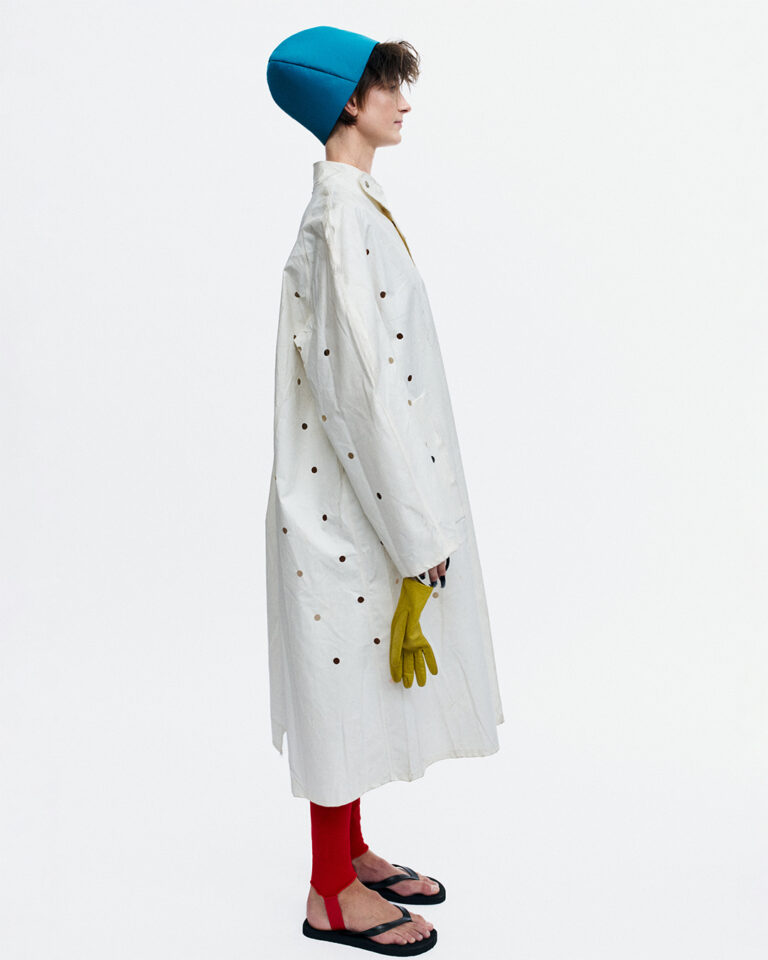
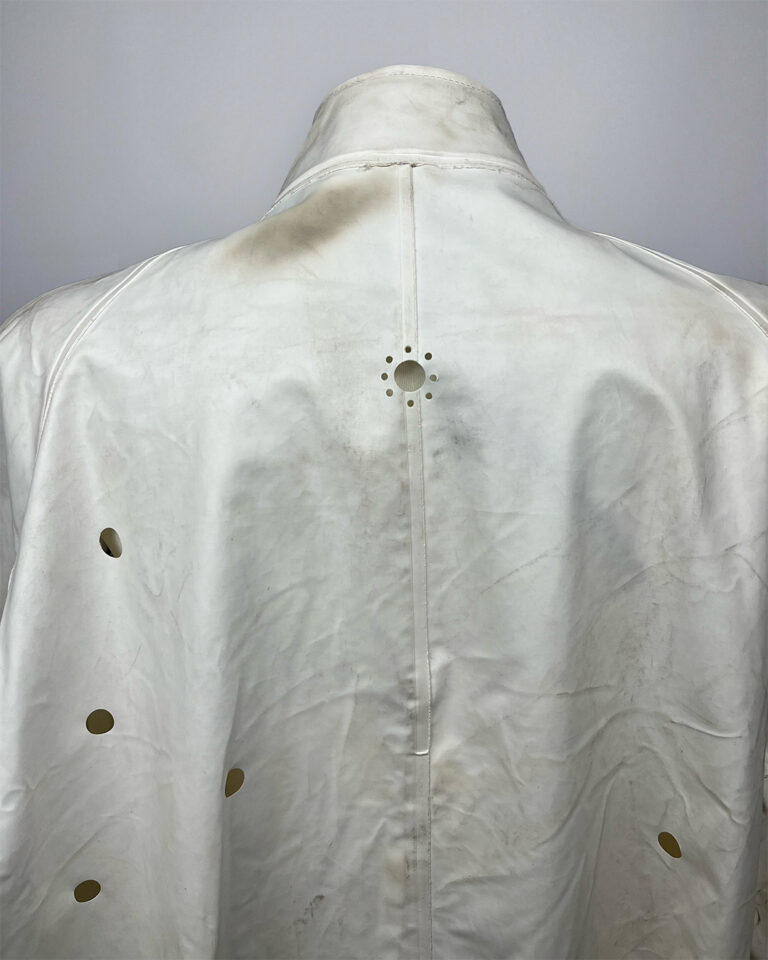
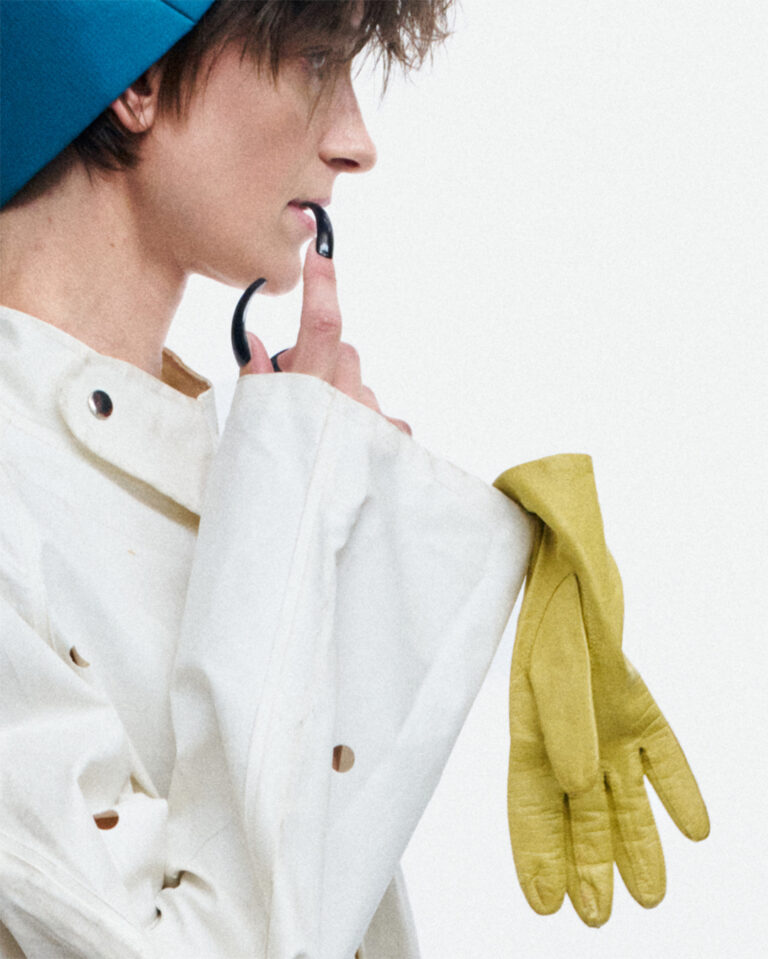
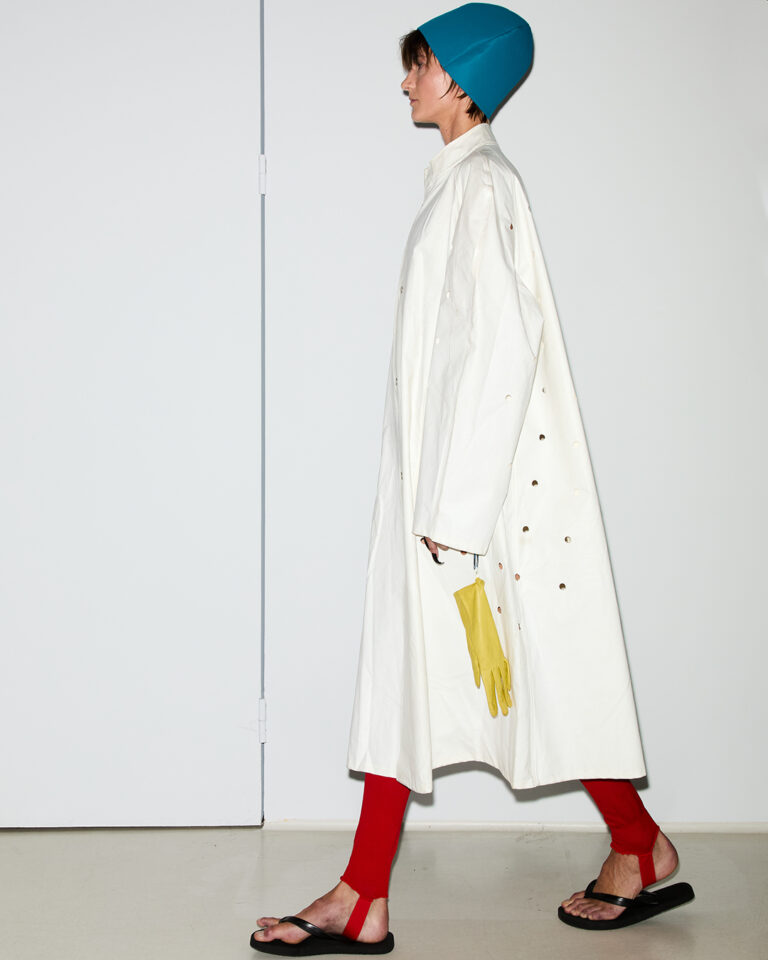
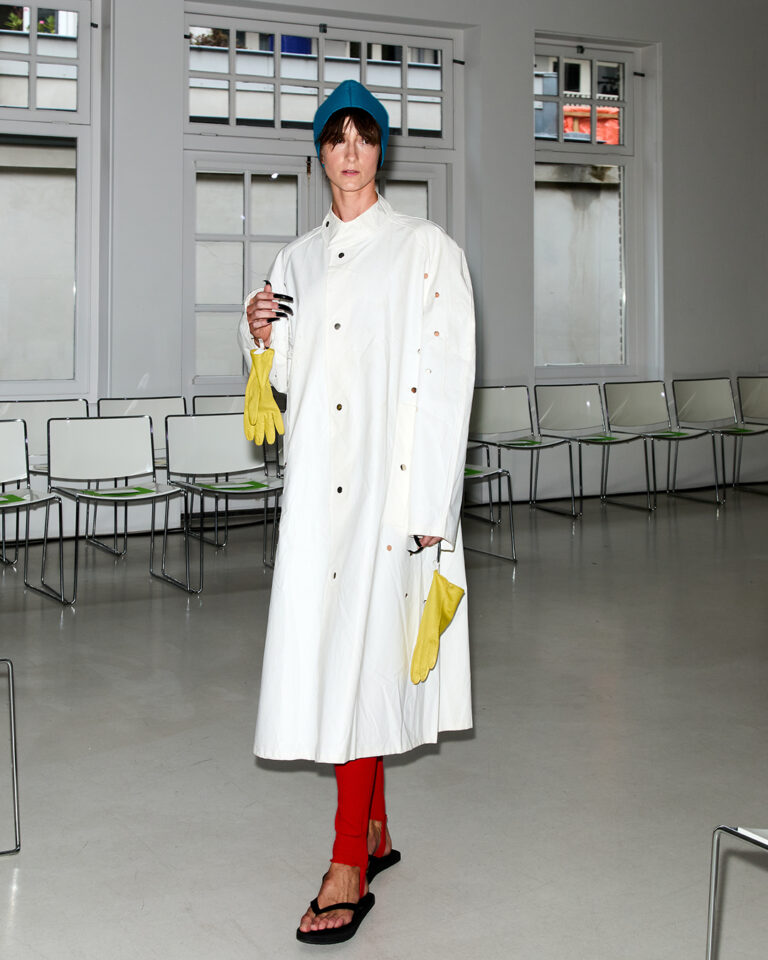
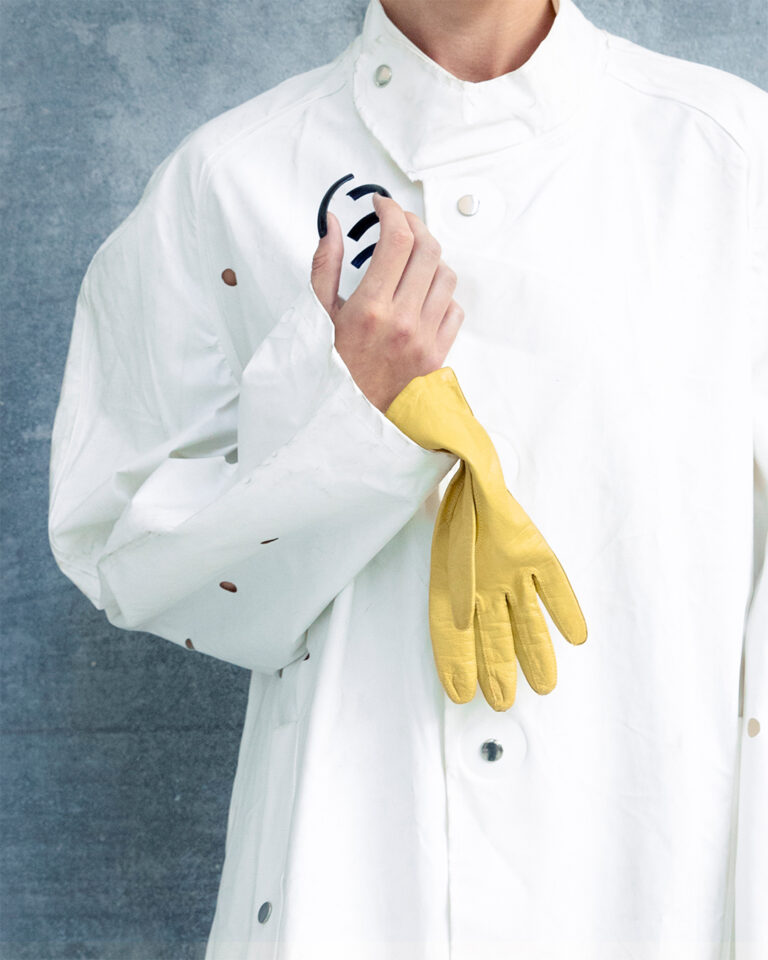
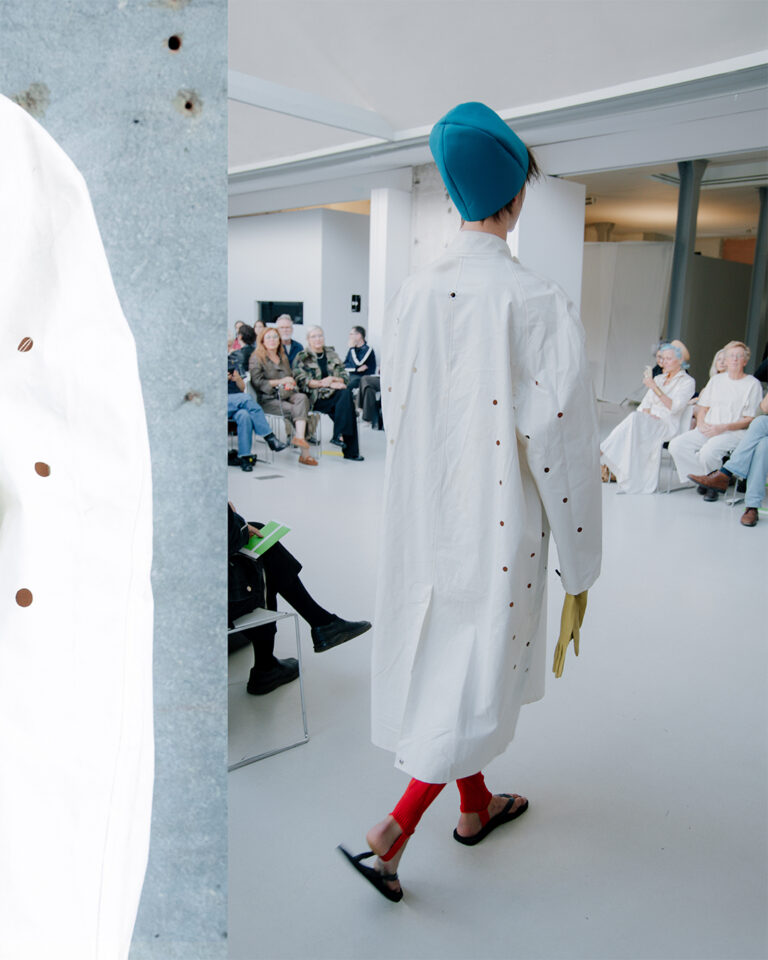
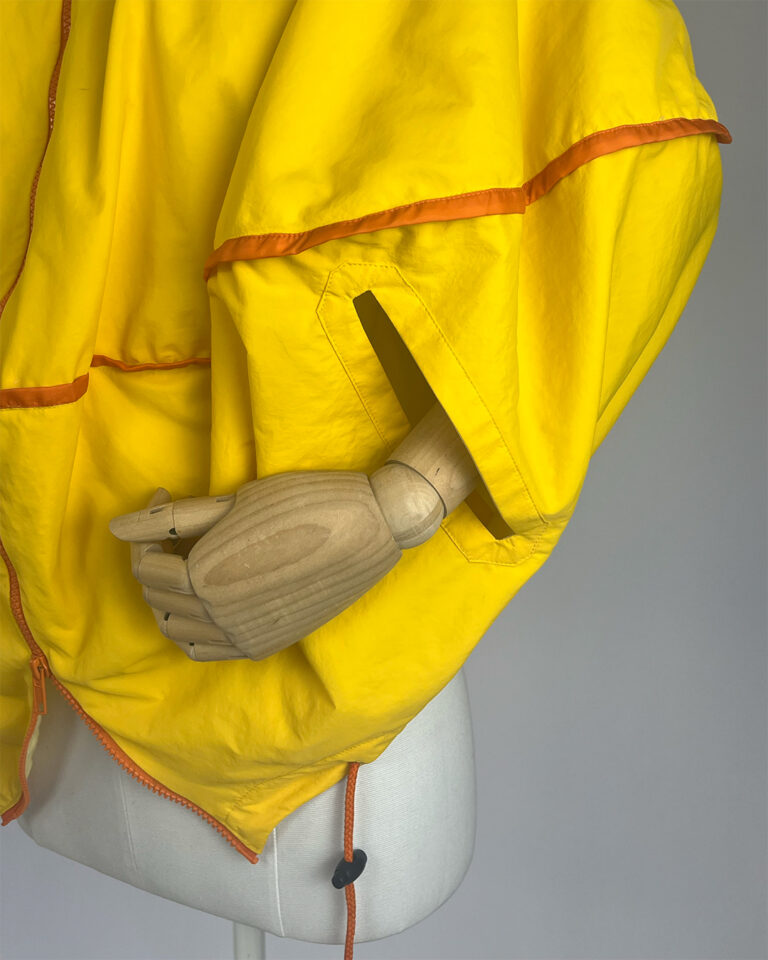
Pleuni wears a PVC-coated cotton raincoat with punched underarm vents, yellow leather gloves and blue Petteflet-hat made out of a Tex Venture shell jacket, courtesy of Stichting Restore Kringloop / ACV Groep.
The white raincoat was made by Swedish manufacturer Abeko Konf. AB and carries a label marked 1990


zeven,
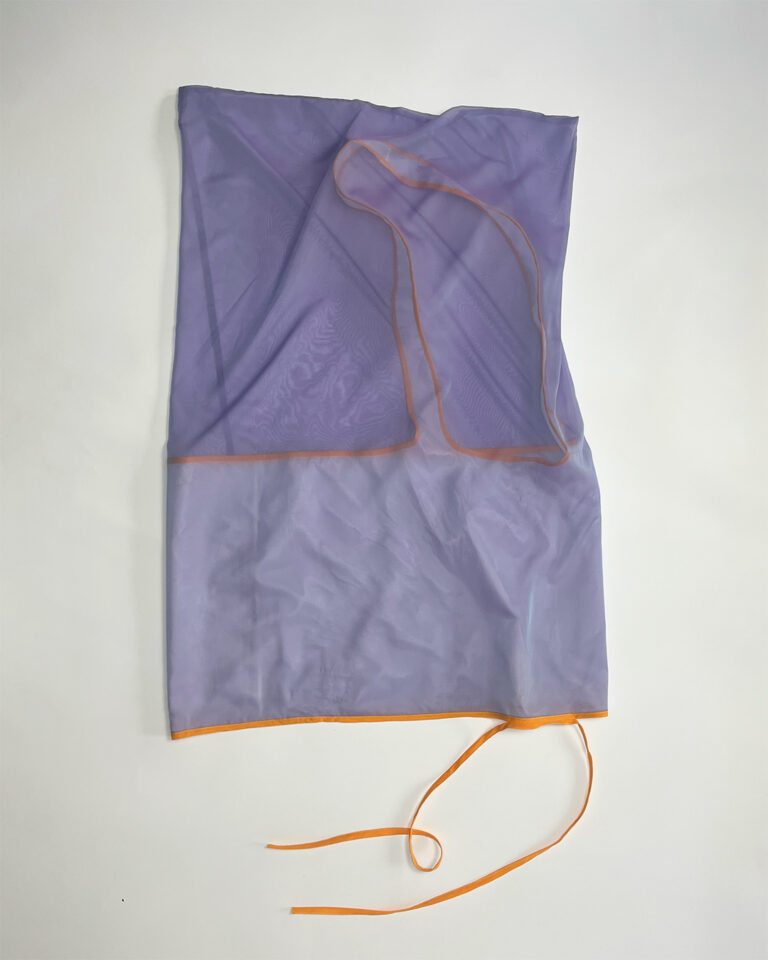
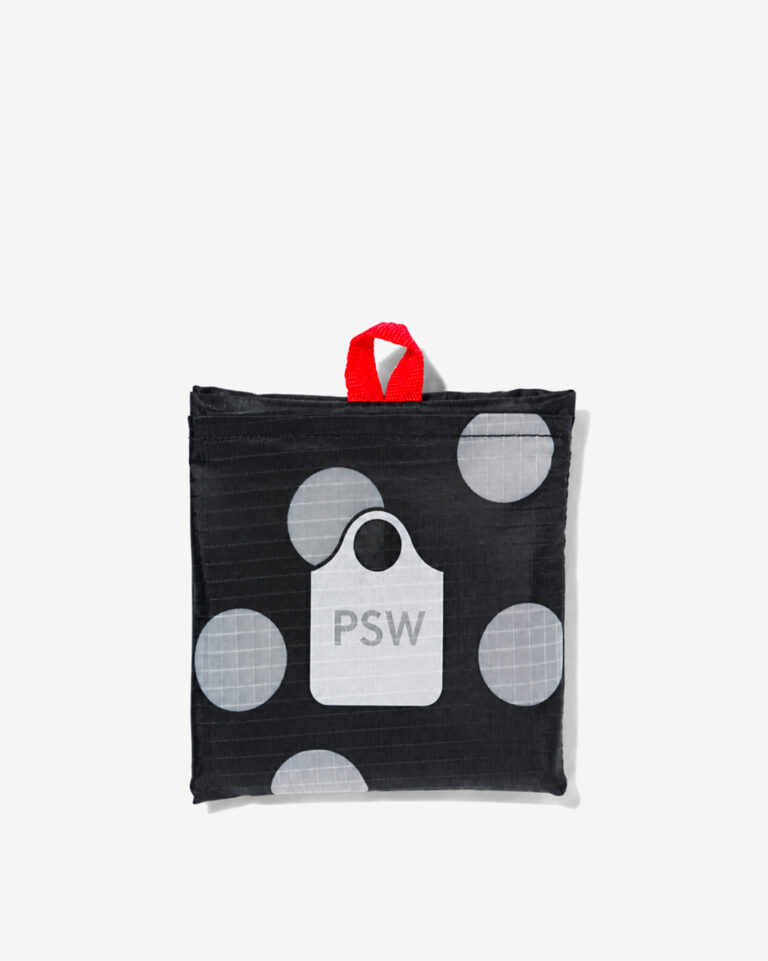
Sodes wears reusable shopping bag hat made out of deadstock ripstop and polyester, Samen met u onder de paraplu, waterproof Cirkel windbreaker and skirt set made out of deadstock nylon, 35k mm water-resistant, lined with unsold HEMA cotton duvet cover ‘housse de couette cotton’. Binding made out of orange rain jackets, courtesy of Stichting Restore Kringloop / ACV Groep.


acht,
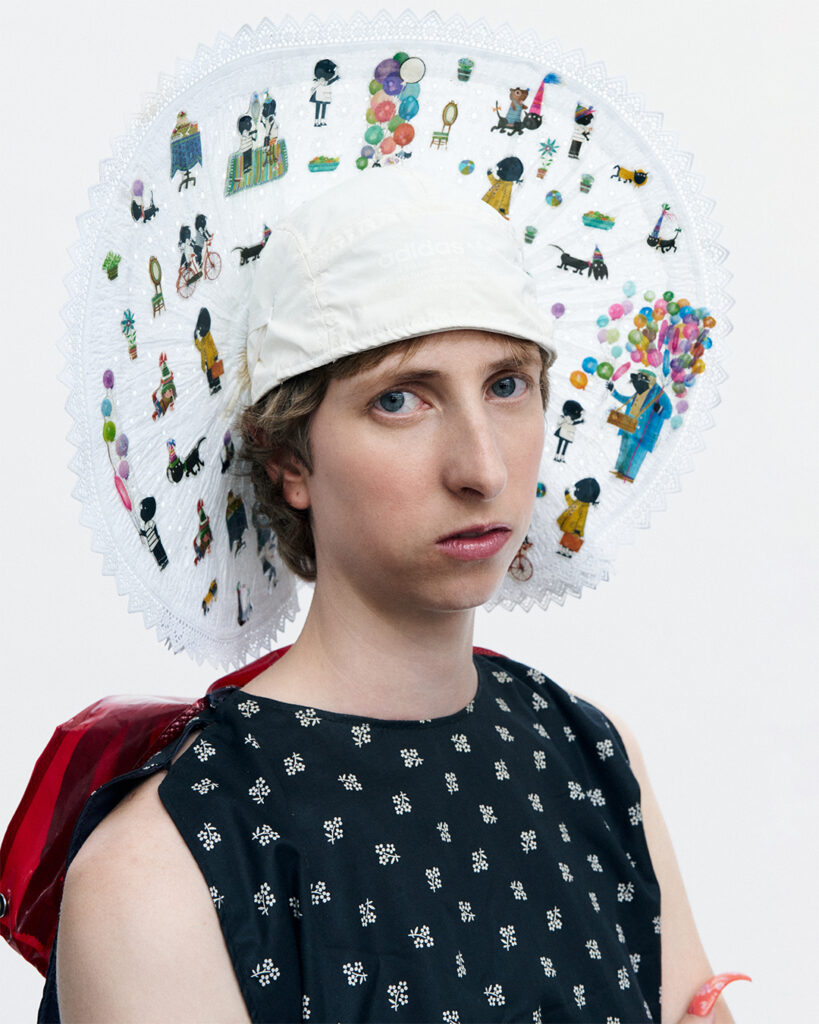
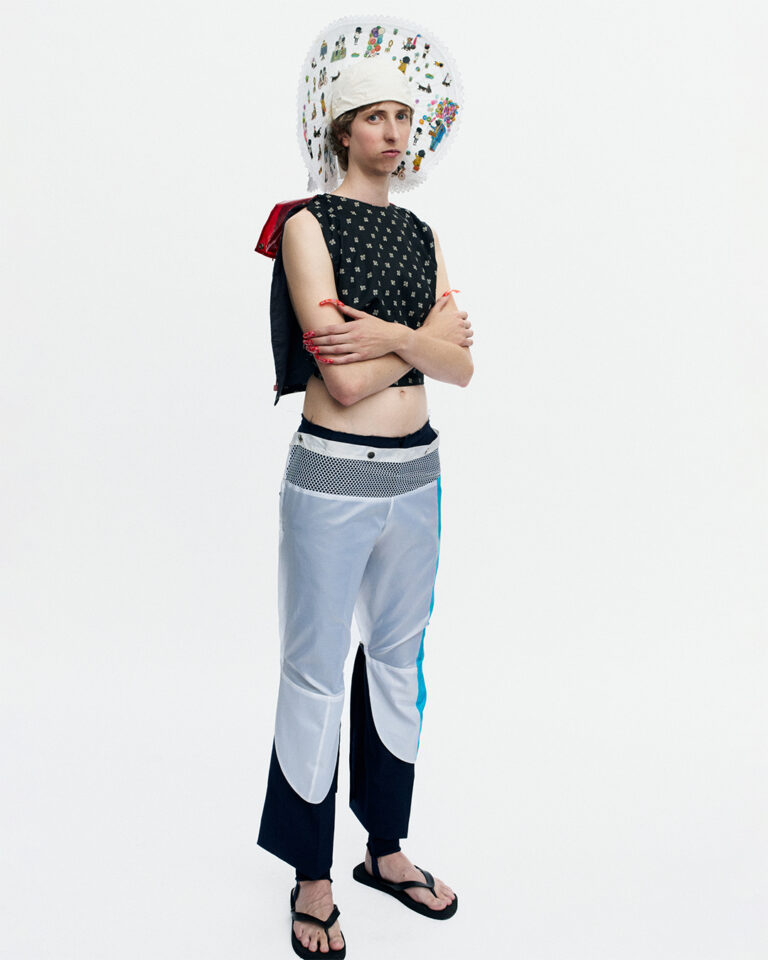
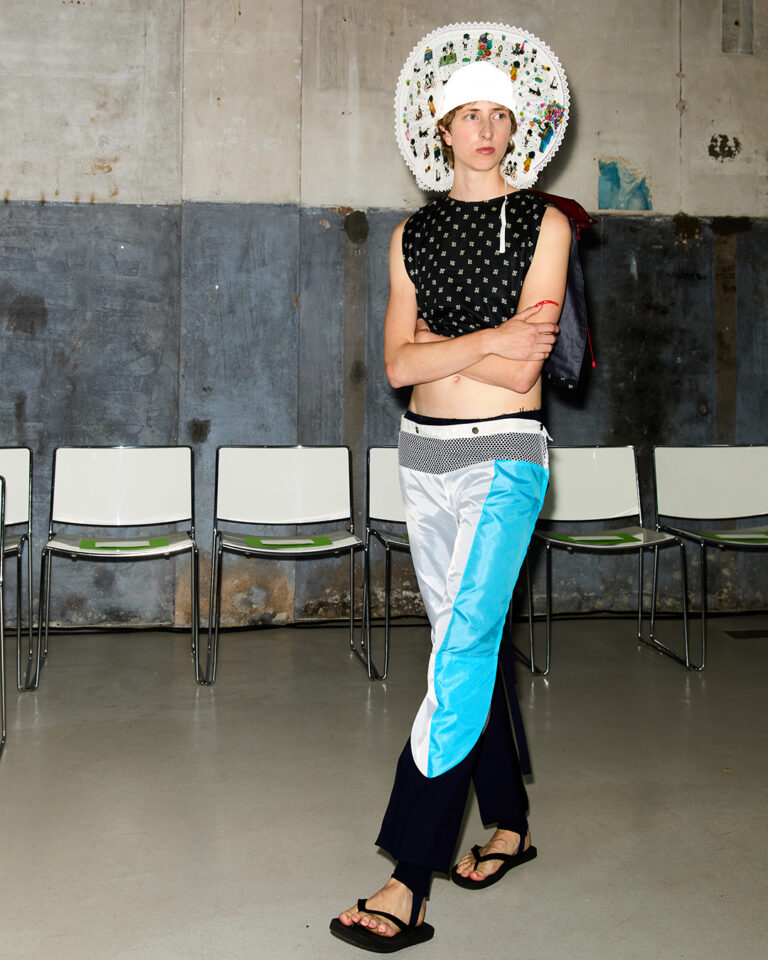
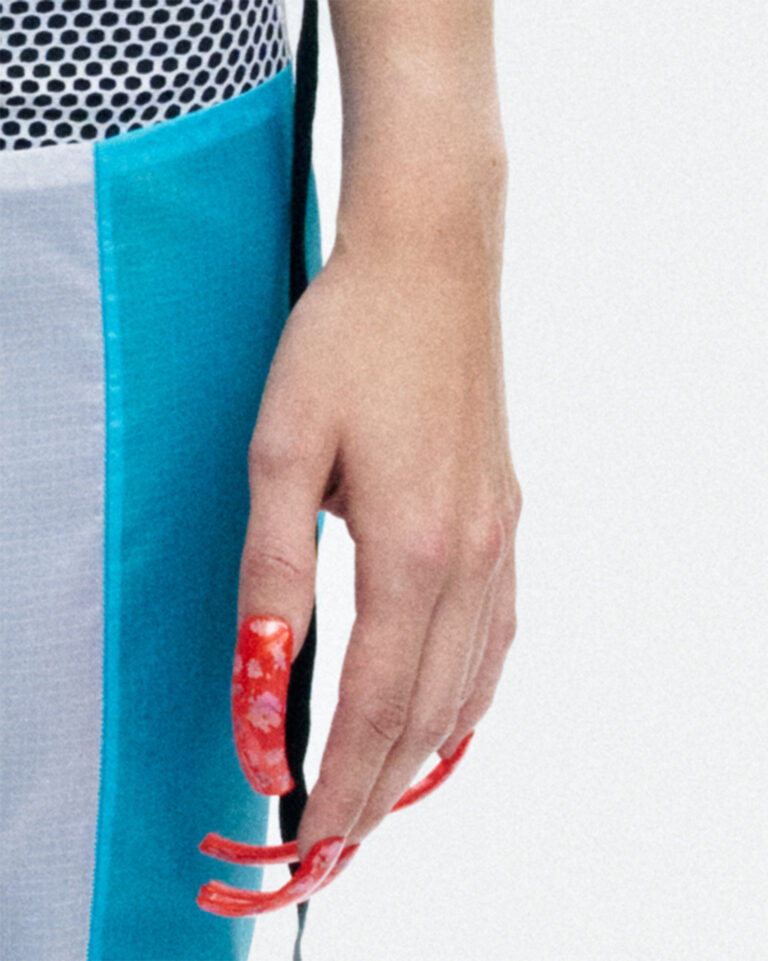
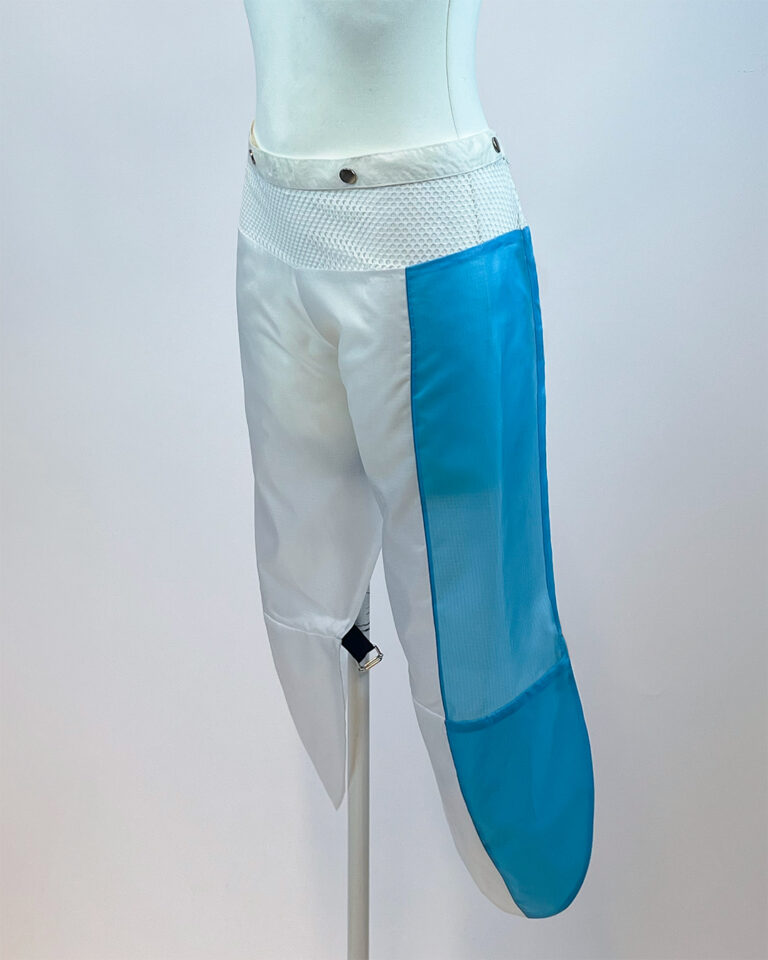
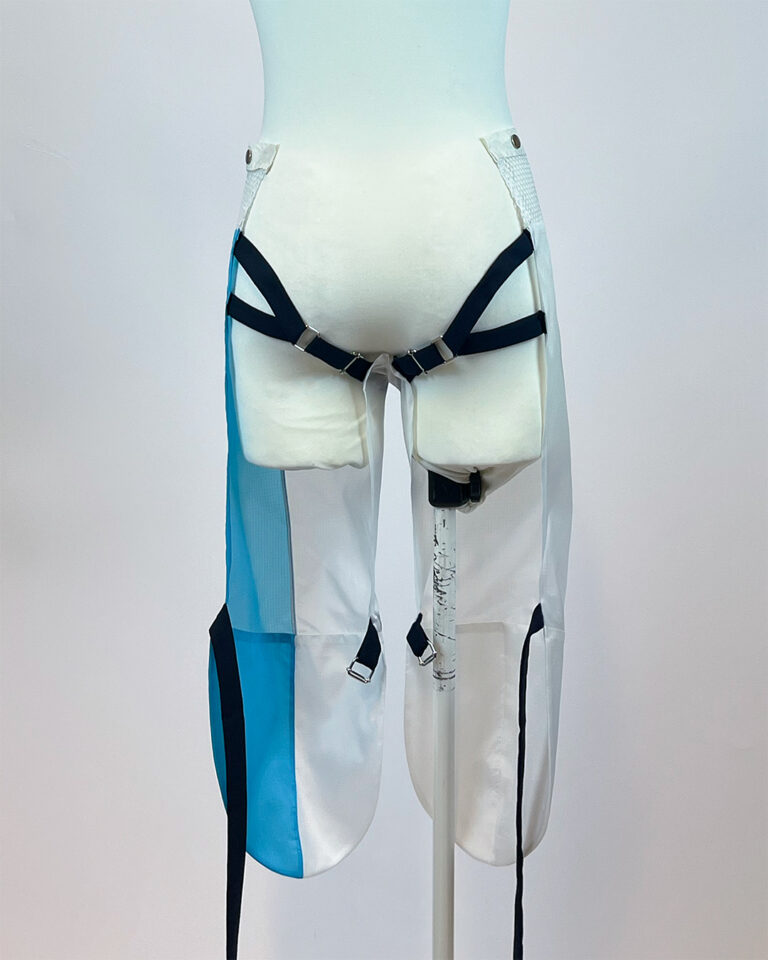
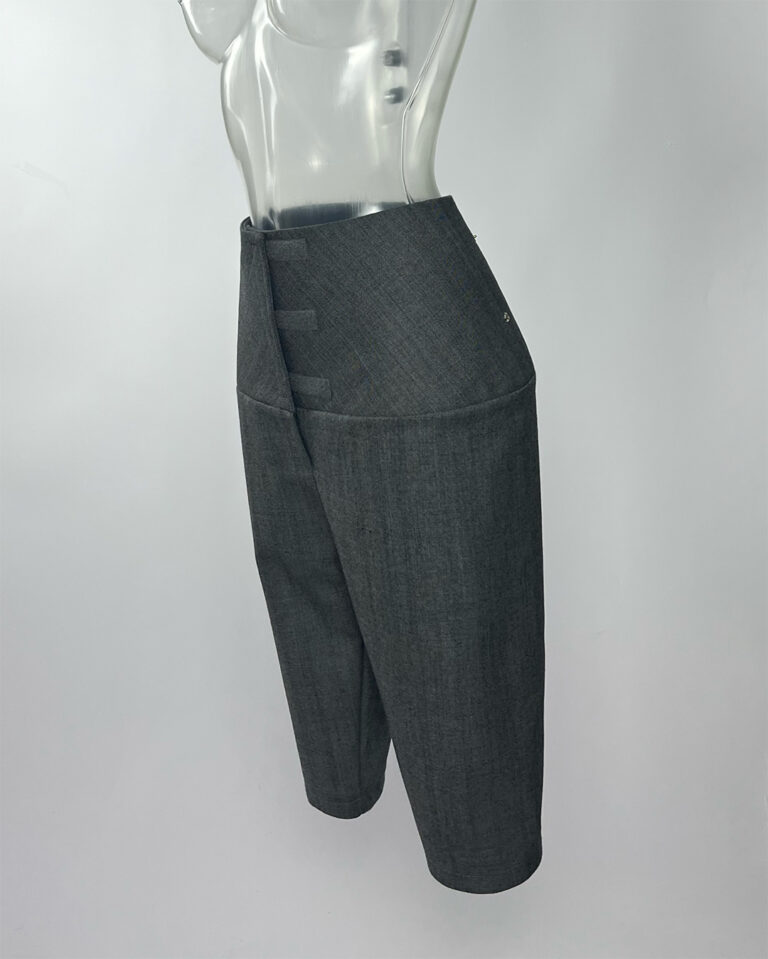
Kris wears dark blue hoog water pantalon with rain leg, protecting the upper legs from rain, wind and cooling, made out of upcycled wind- and waterproof ripstop.
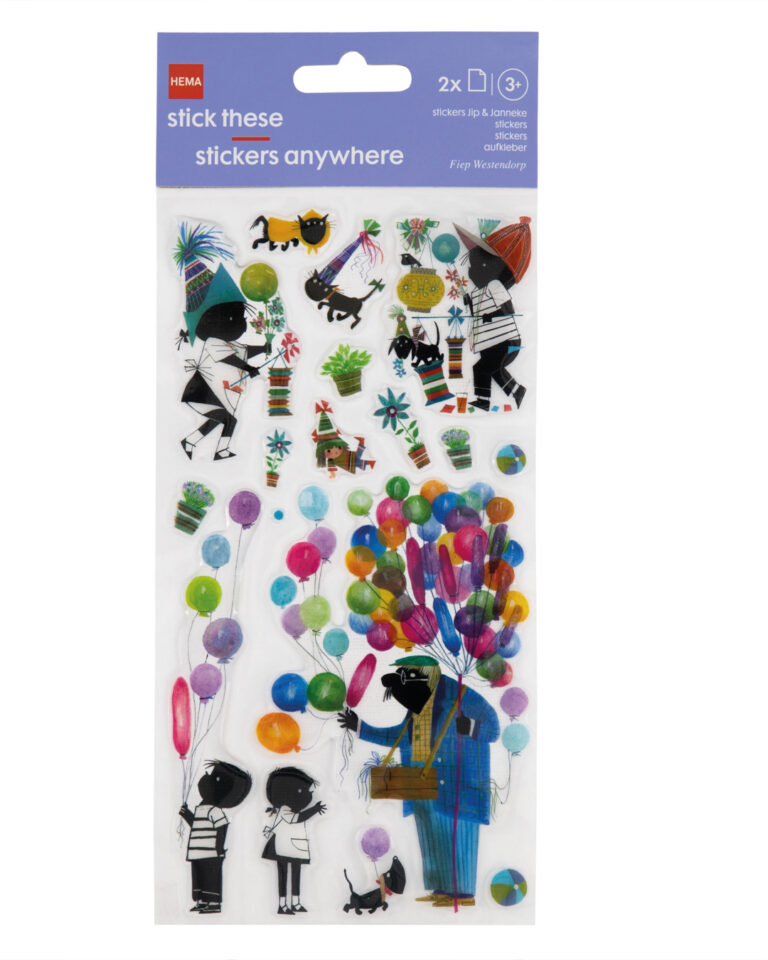
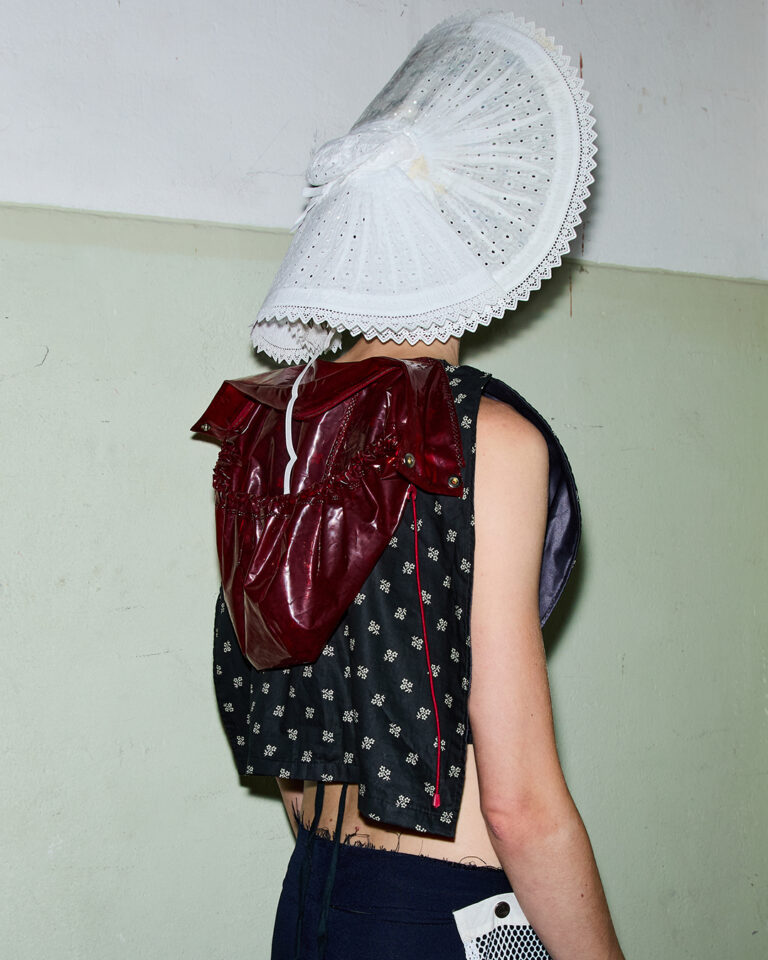
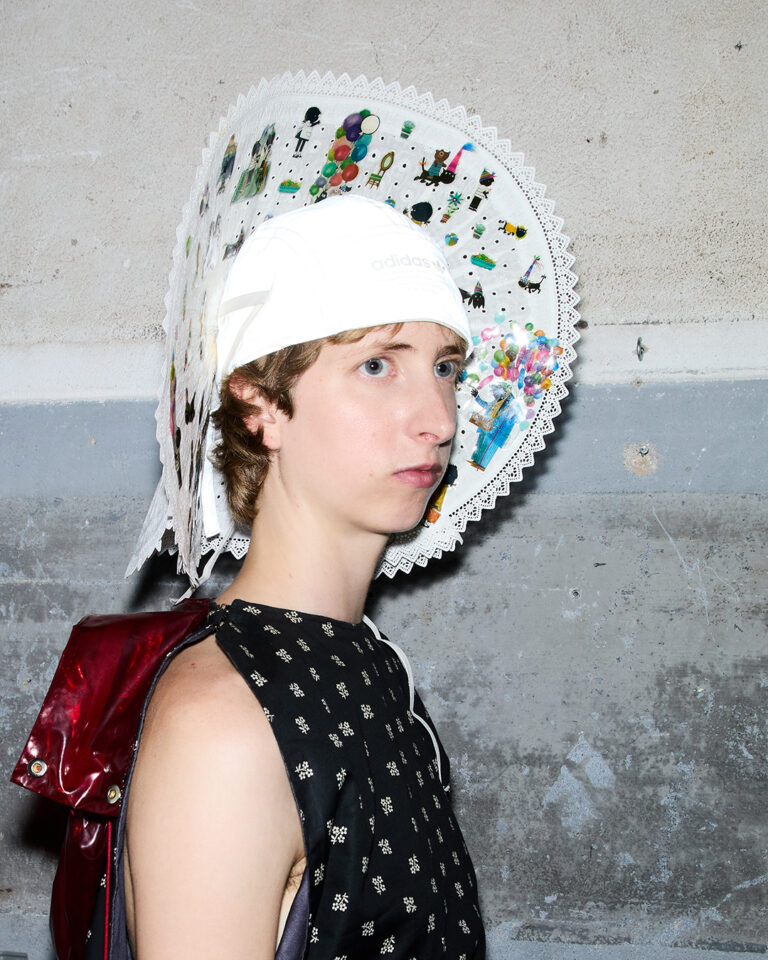
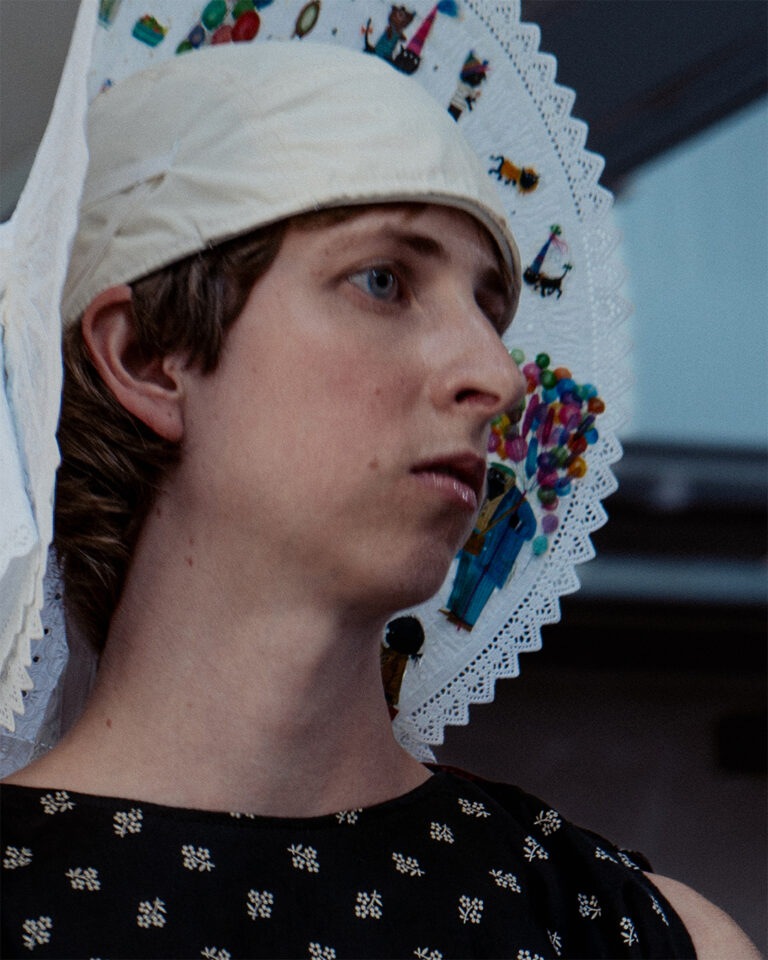
Stiffened bobbin lace bovenkap, worn as part of the regional dress of Zeeland, stickered with Fiep Westendorp’s Jip en Janneke, with white tonal Adidas dopje.
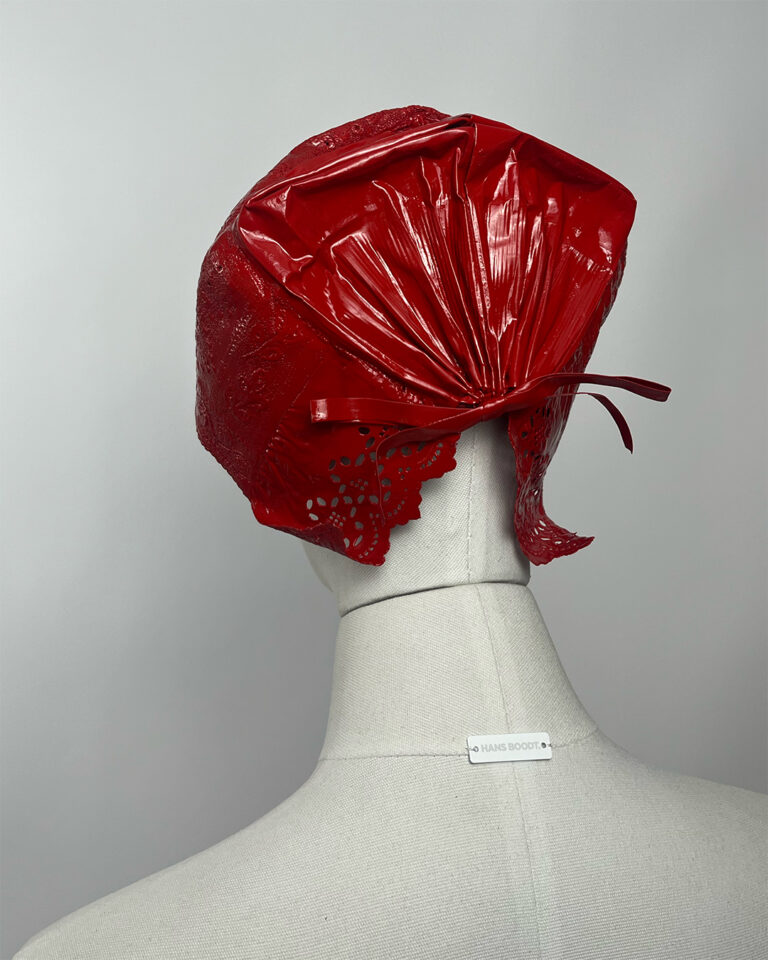
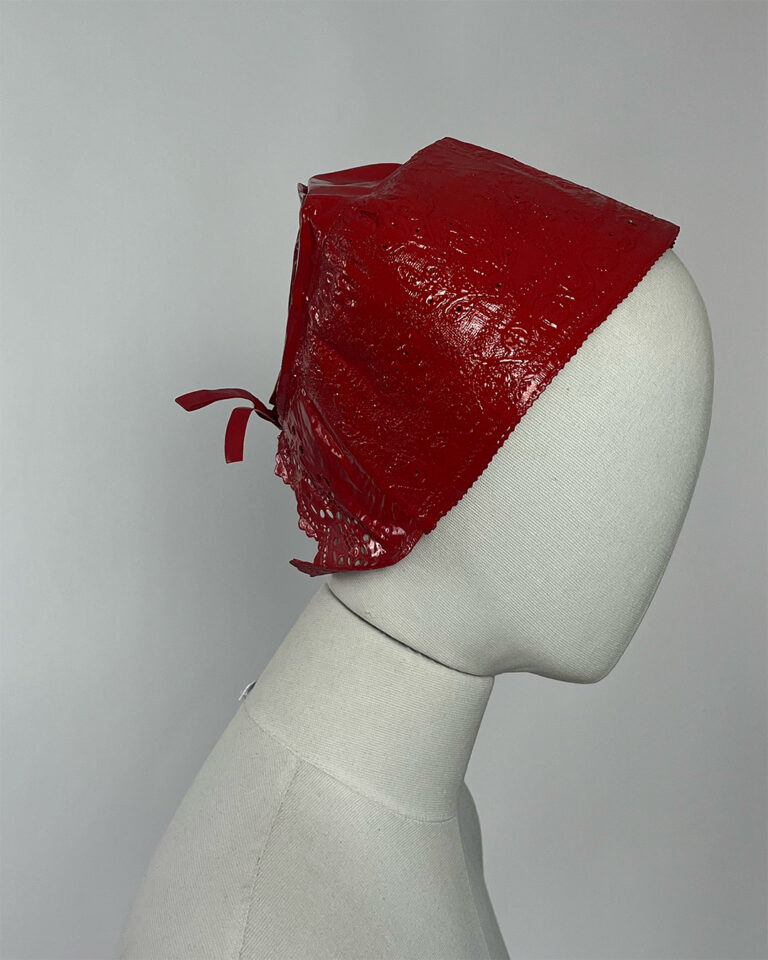
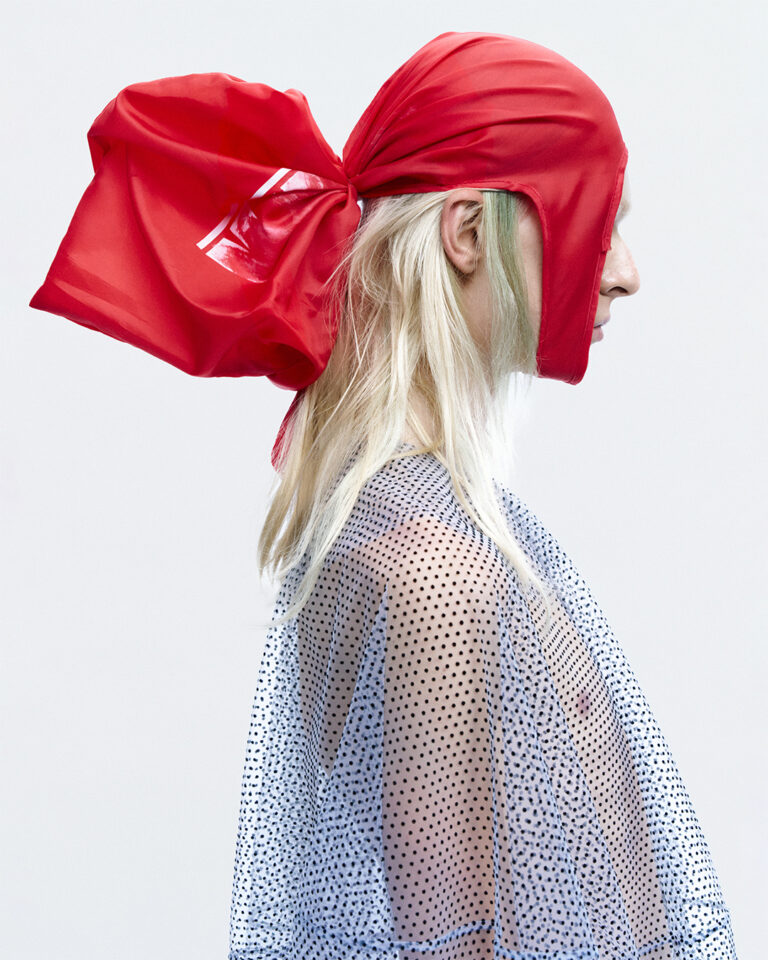
Silk kraplap (shoulder cloth), traditionally worn in Zeeland, dating from around 1915, with an attached red PVC stowaway hood, originally produced by upcycling designer Marine Serre for her 2018 debute show Manic Soul Machine. When the raincoat was left unsold, it ended up with upcycling designer Duran Lantink, when he could not find a purpose for this piece, it ended up with me, finding its final (for now) resting place in this collection


negen,
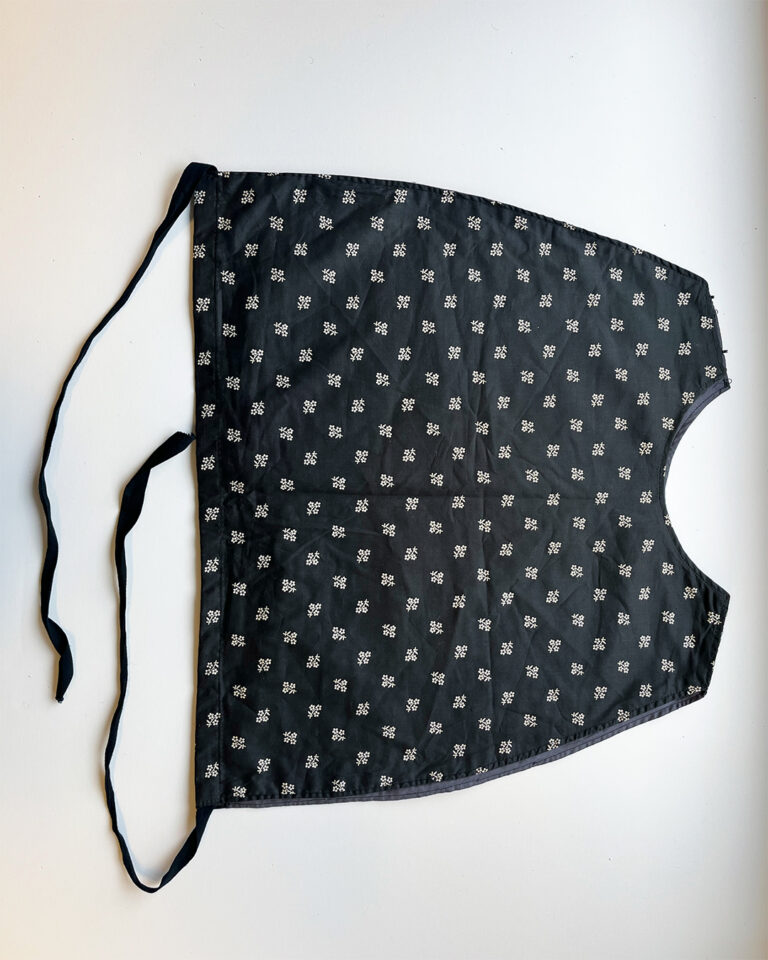
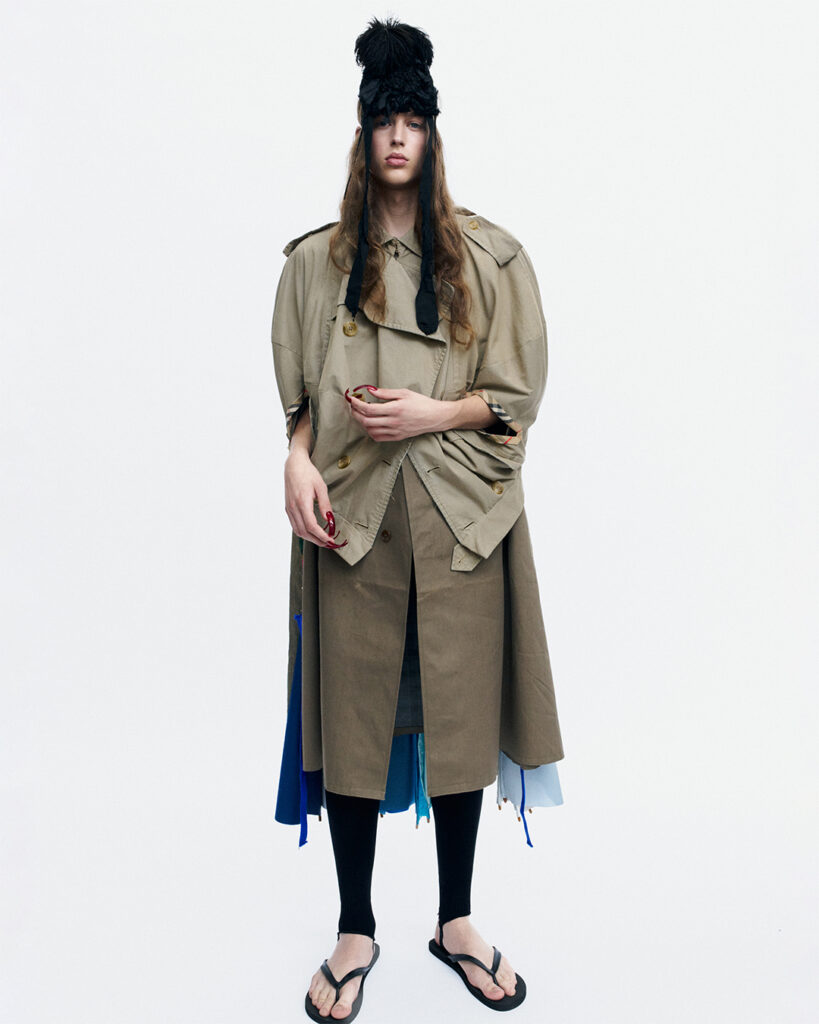
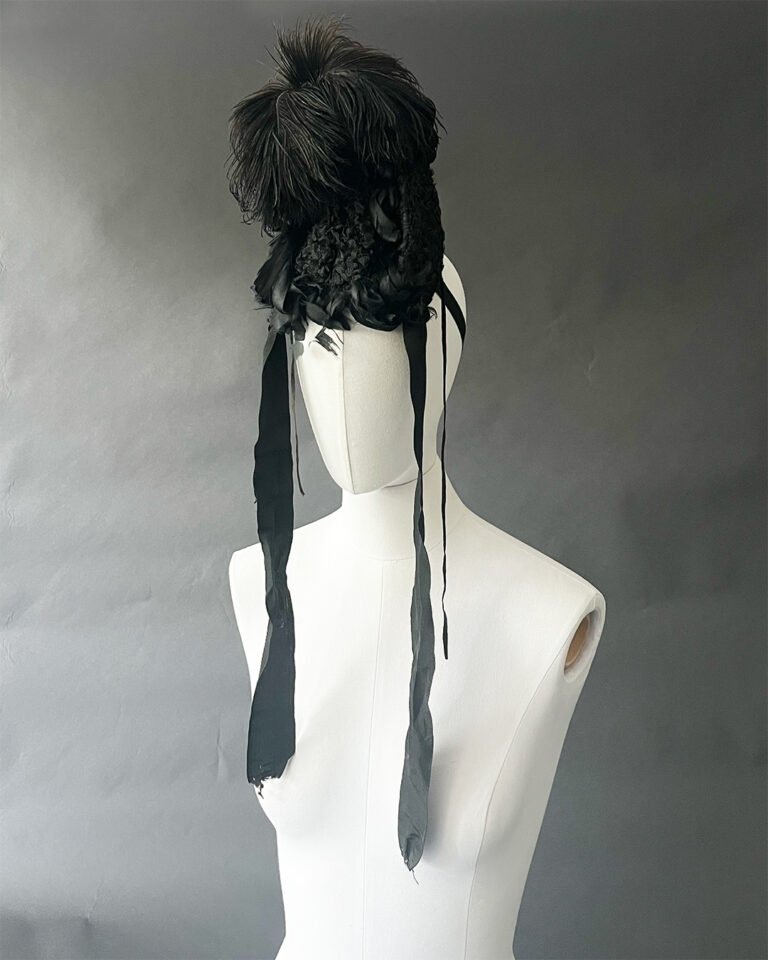
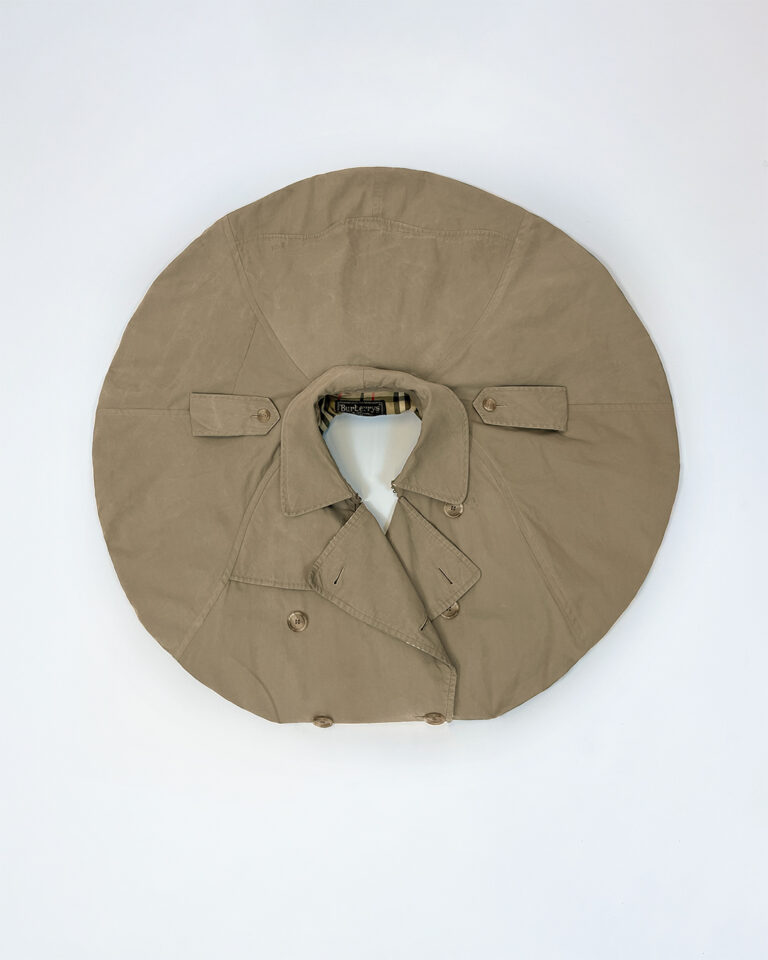
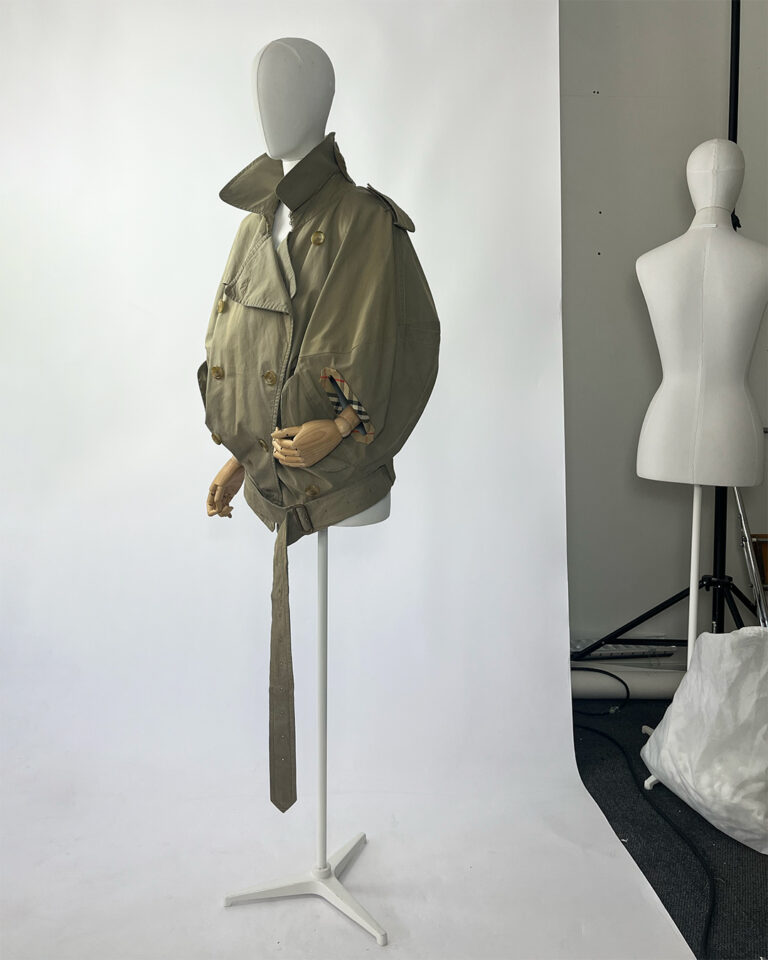
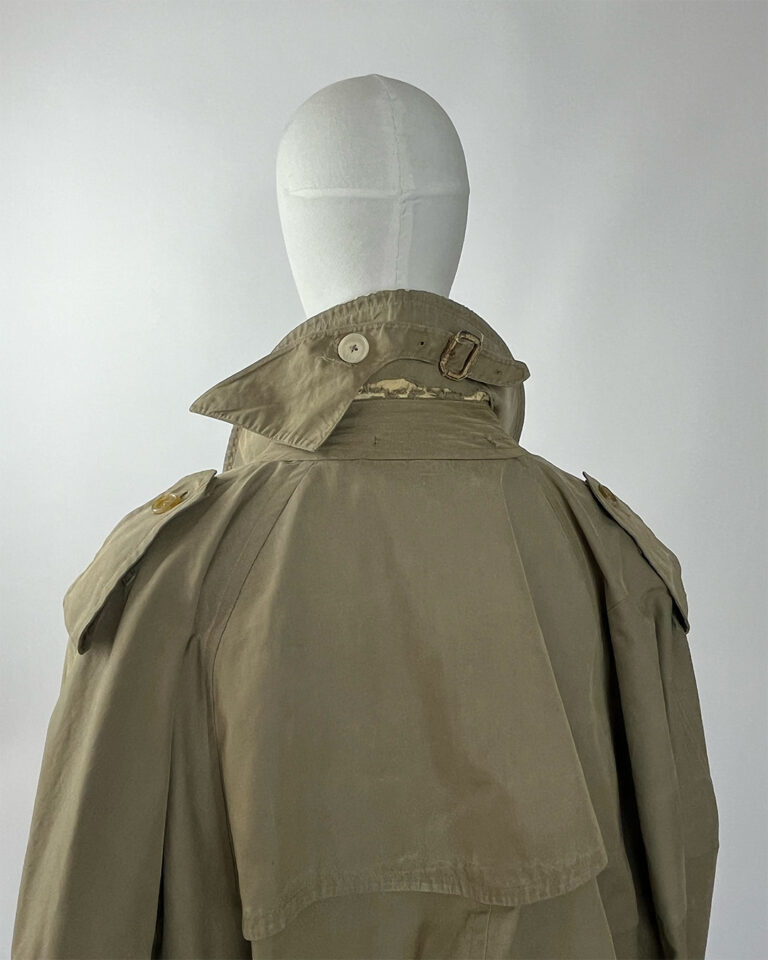
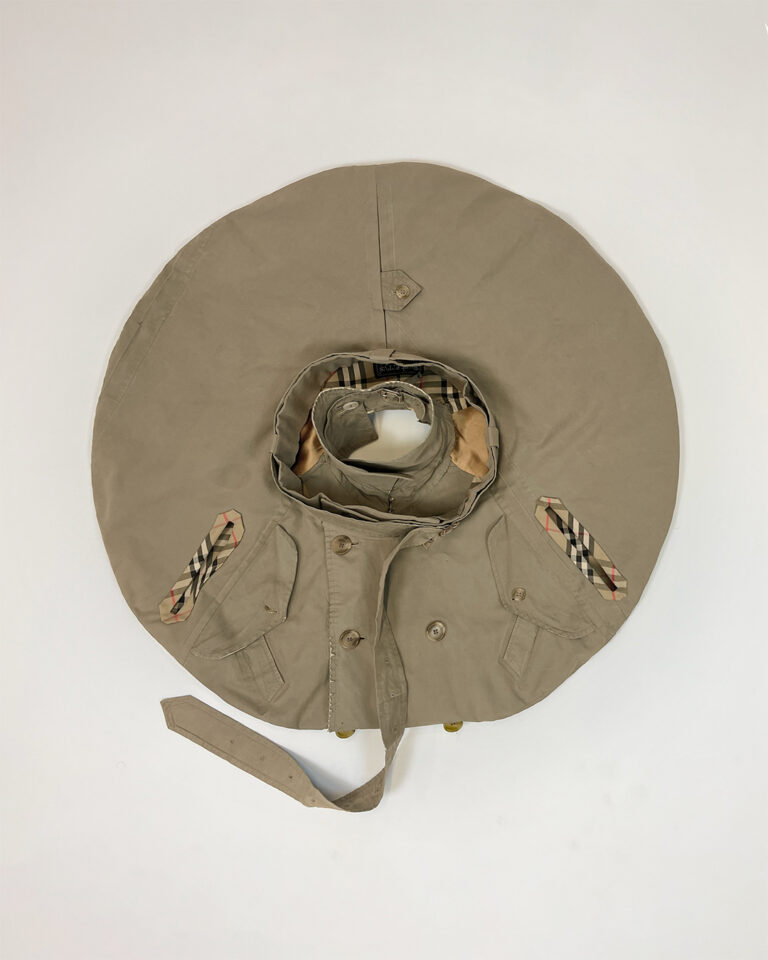
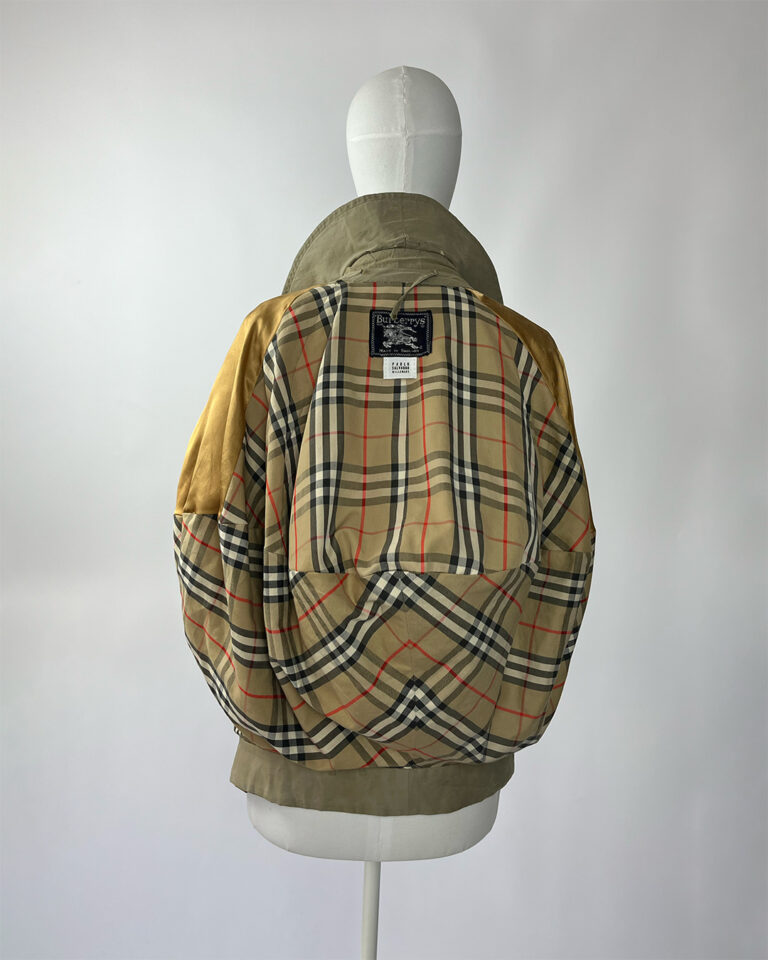
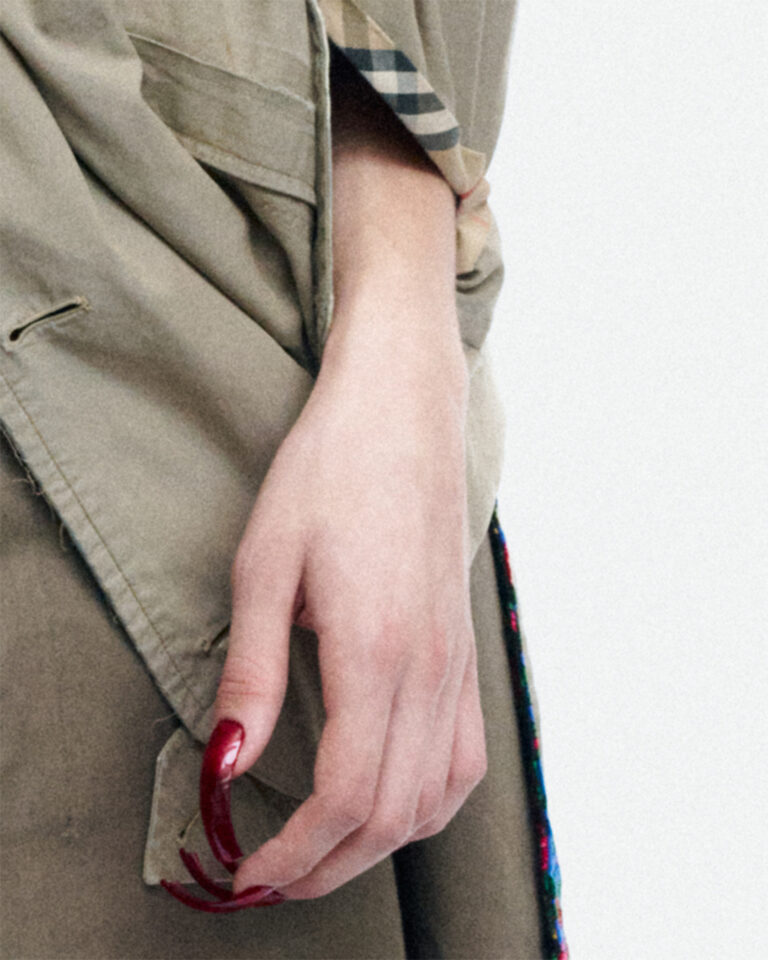
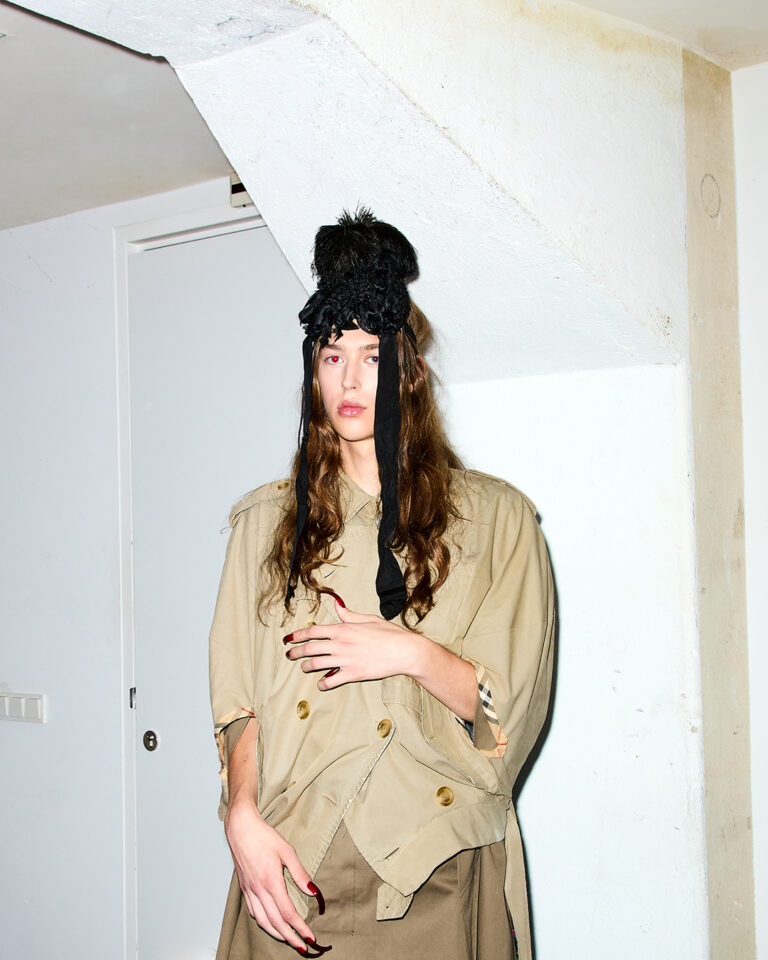
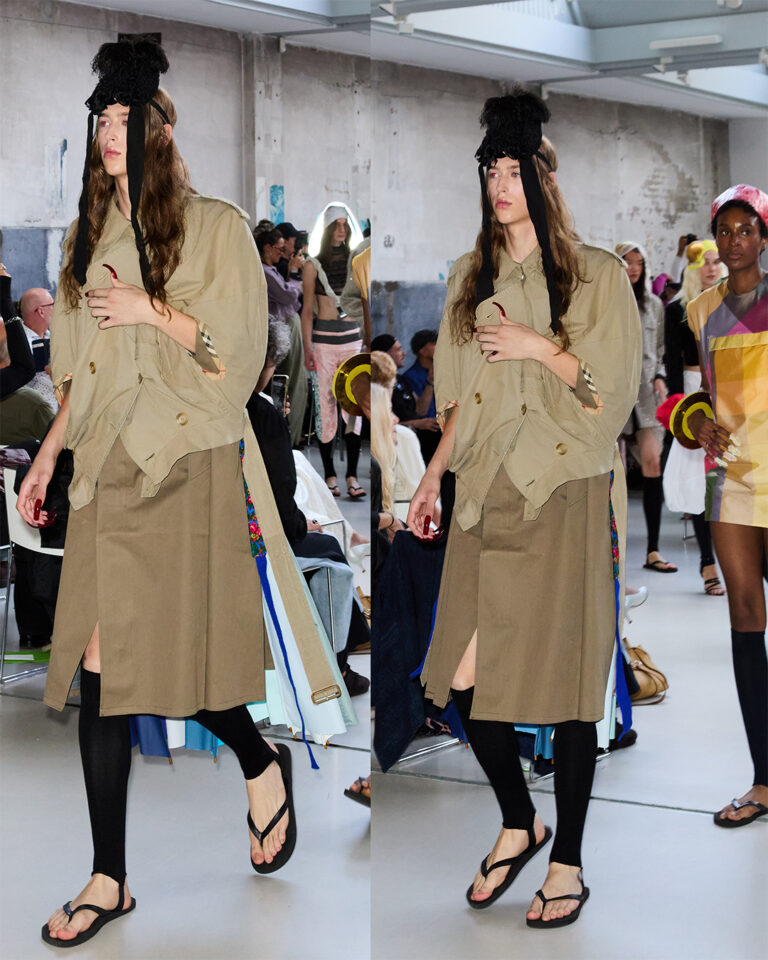
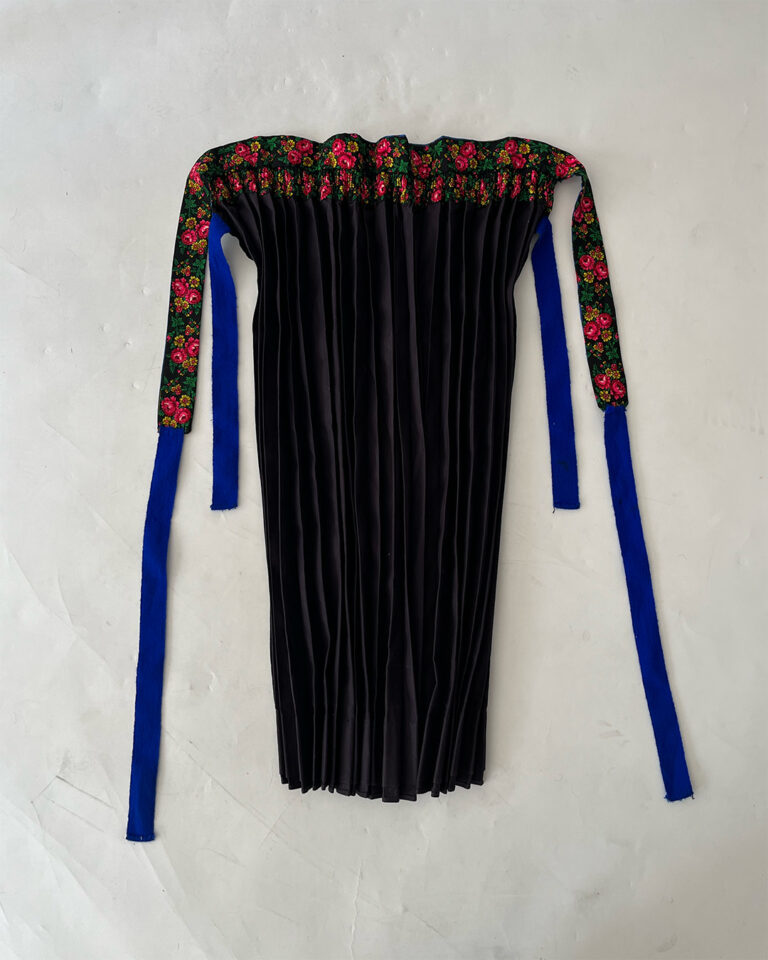
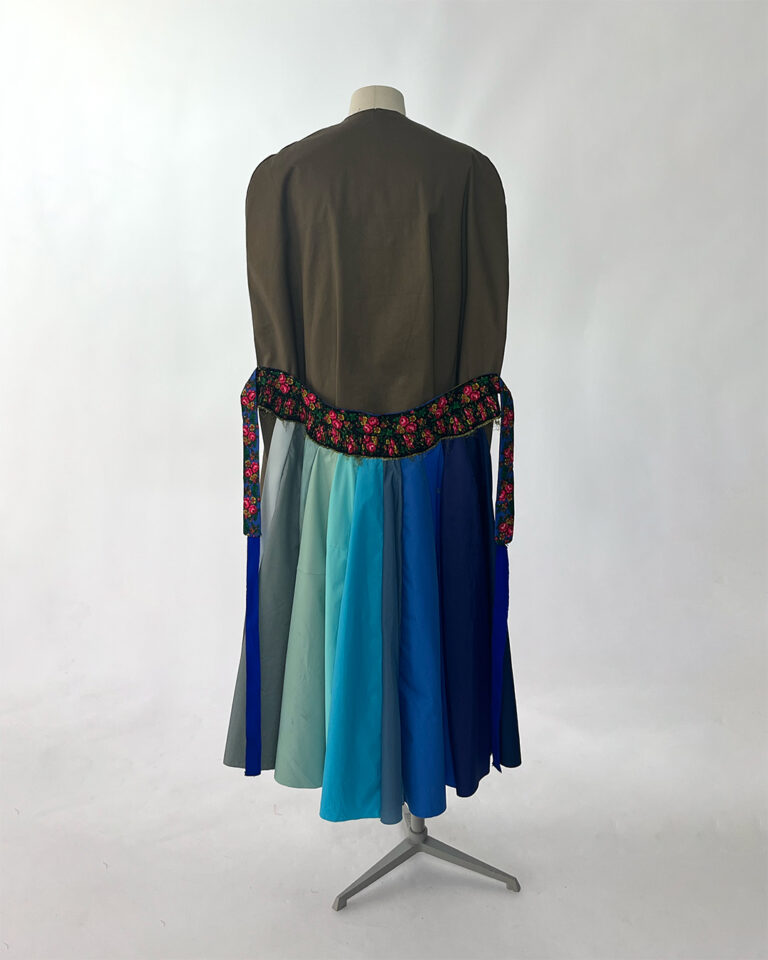
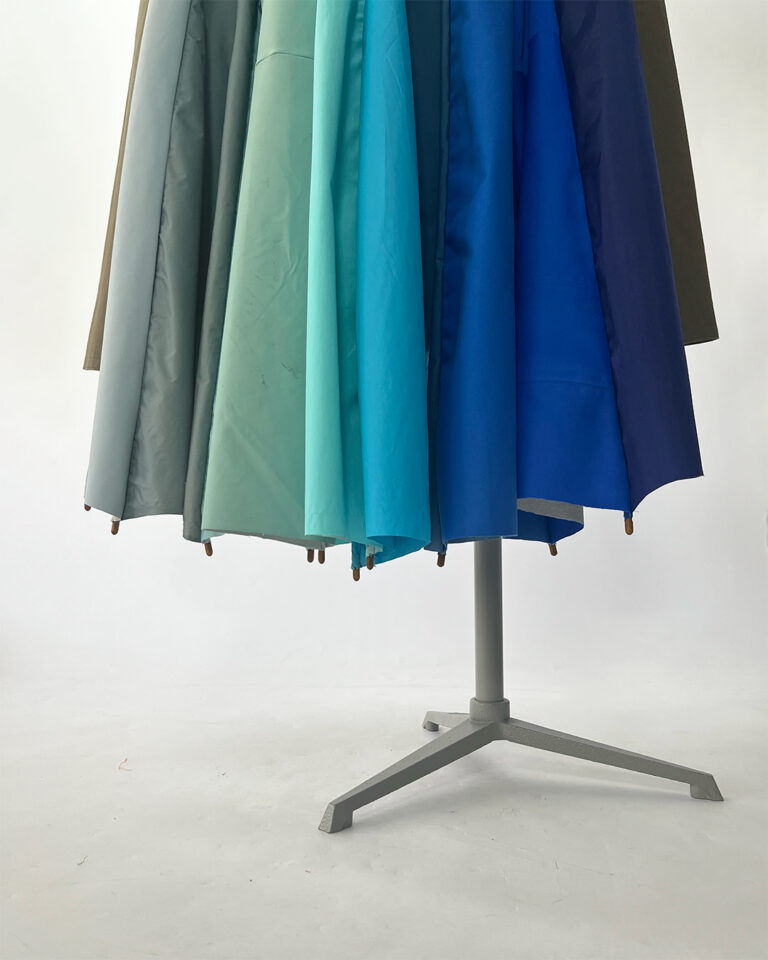
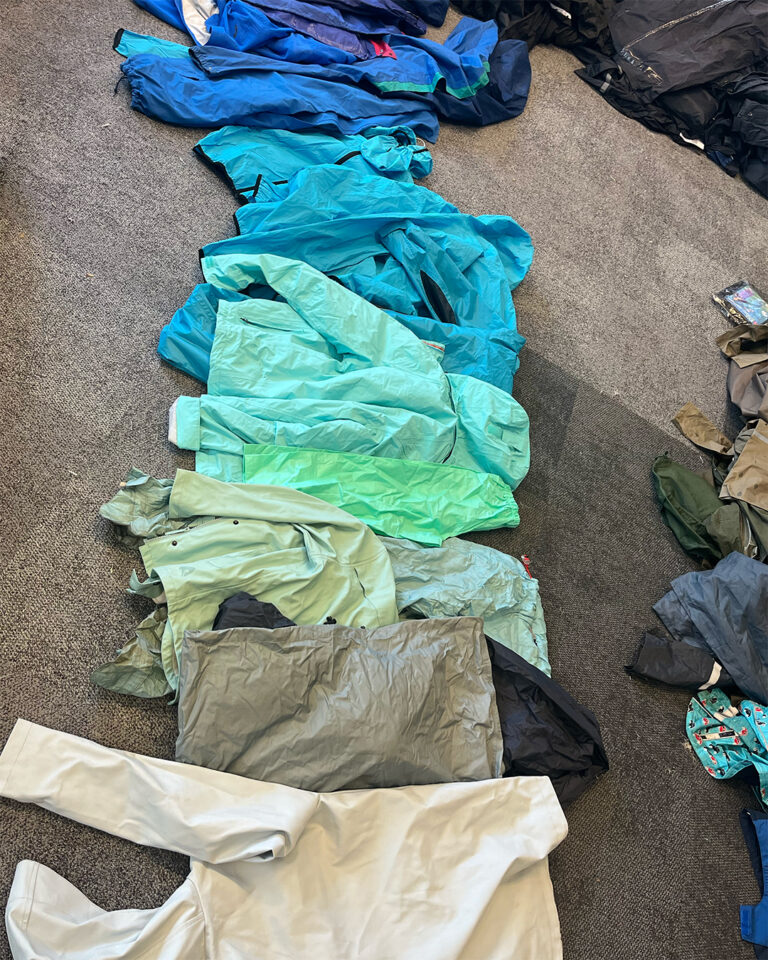
Sofie wears Cirkel Burberrys® of London macintosh produced between 1992 and 1998, original silk, cotton and feather Zeeuws kipje, and cape with attached umbrella skirt constructed out of 13 rain jackets and wooden umberella tips, courtesy of Stichting Restore Kringloop / ACV Groep with cotton floral waistband out of a traditional Staphorst pleated apron skirt
A kipje is a small black hat traditionally worn on top of a white veil as part of regional dress on the northern Zeeland islands. Originally part of commonly worn dress in the Netherlands, it was adopted into Zeeland regional dress in the second half of the nineteenth century and decorated with feathers, beads and other ornamentation


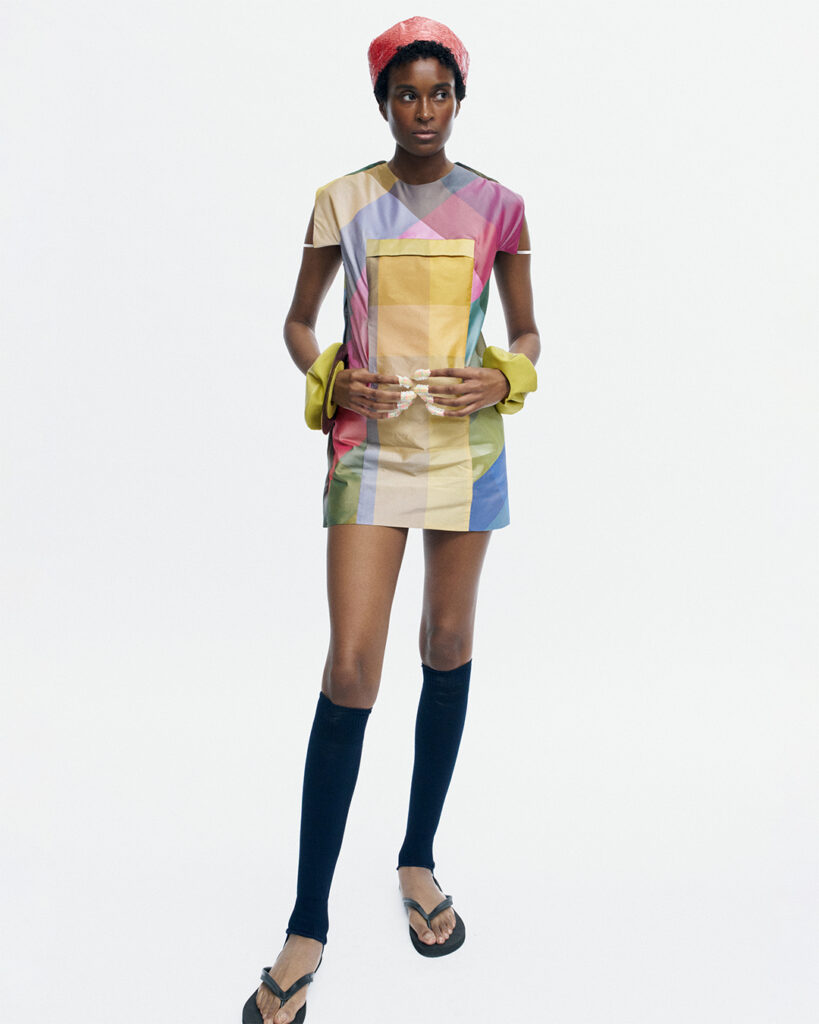
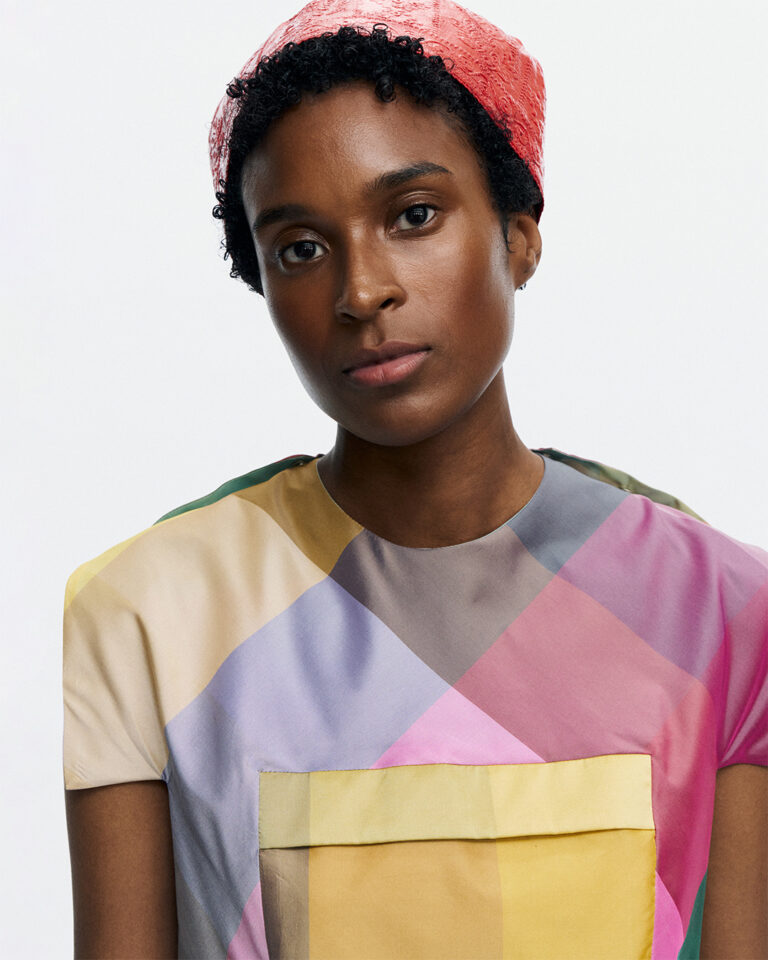
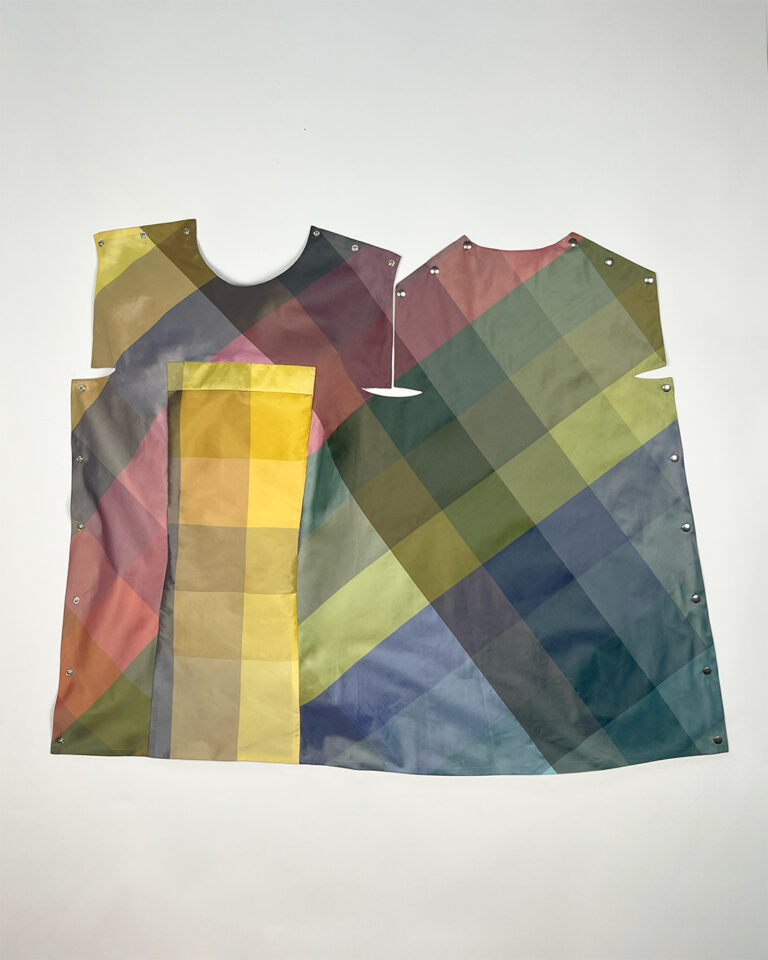
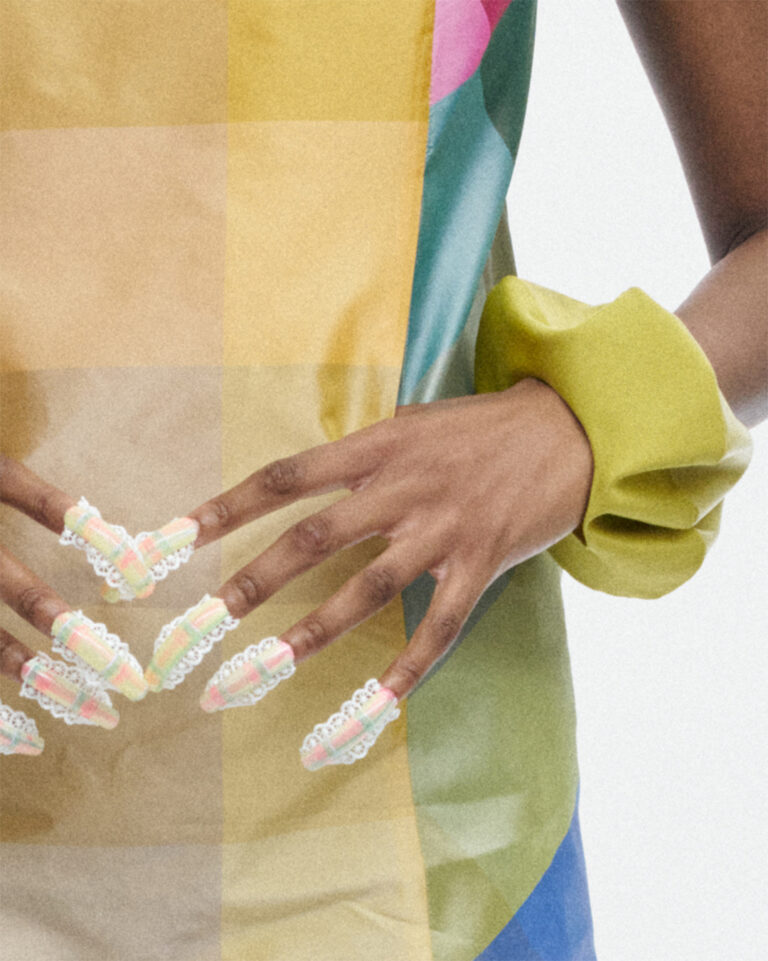
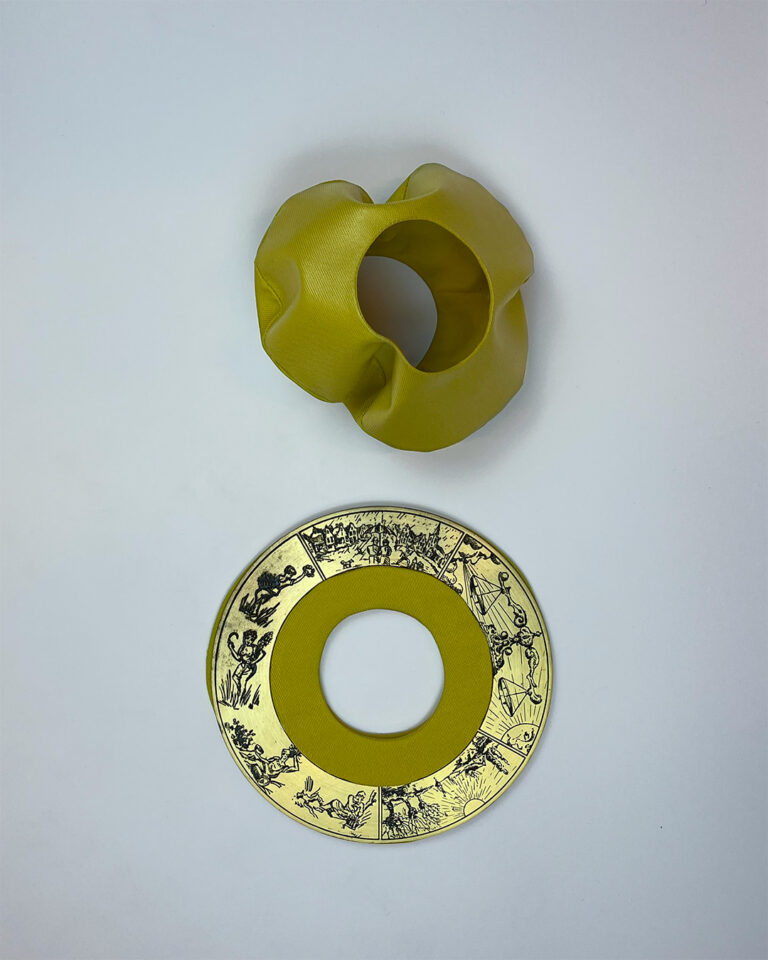
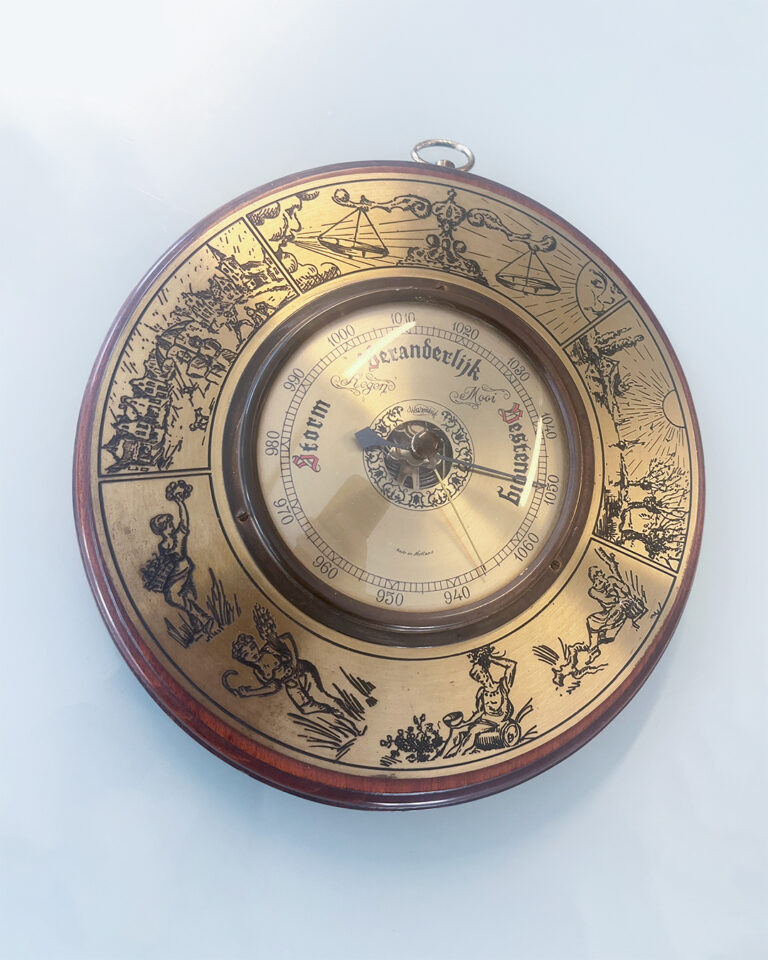
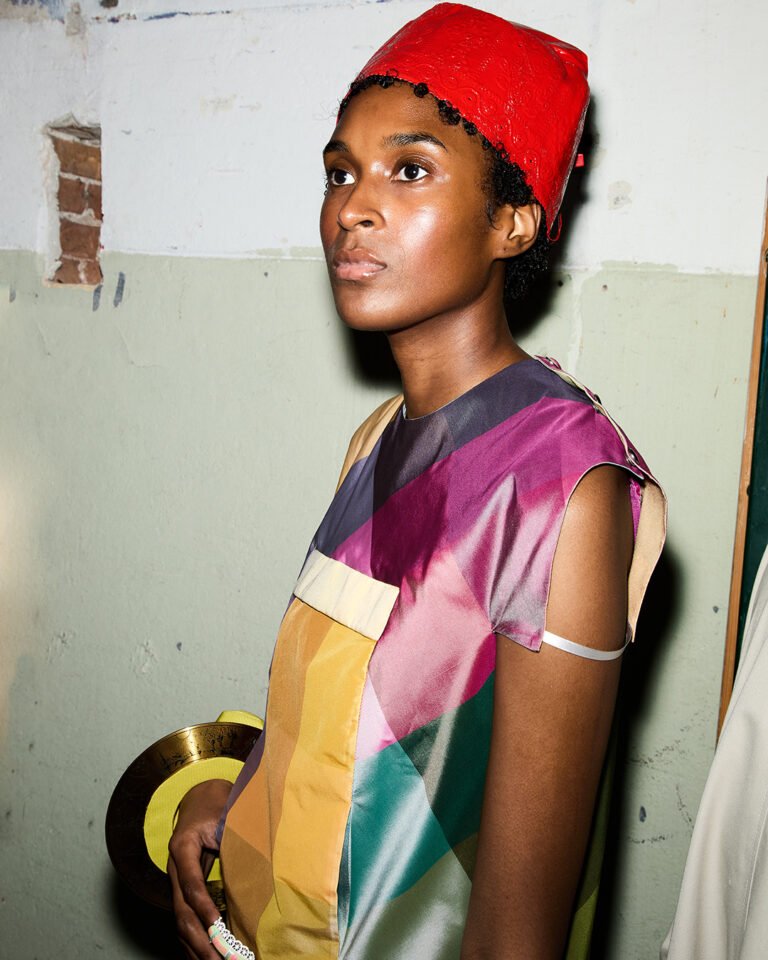
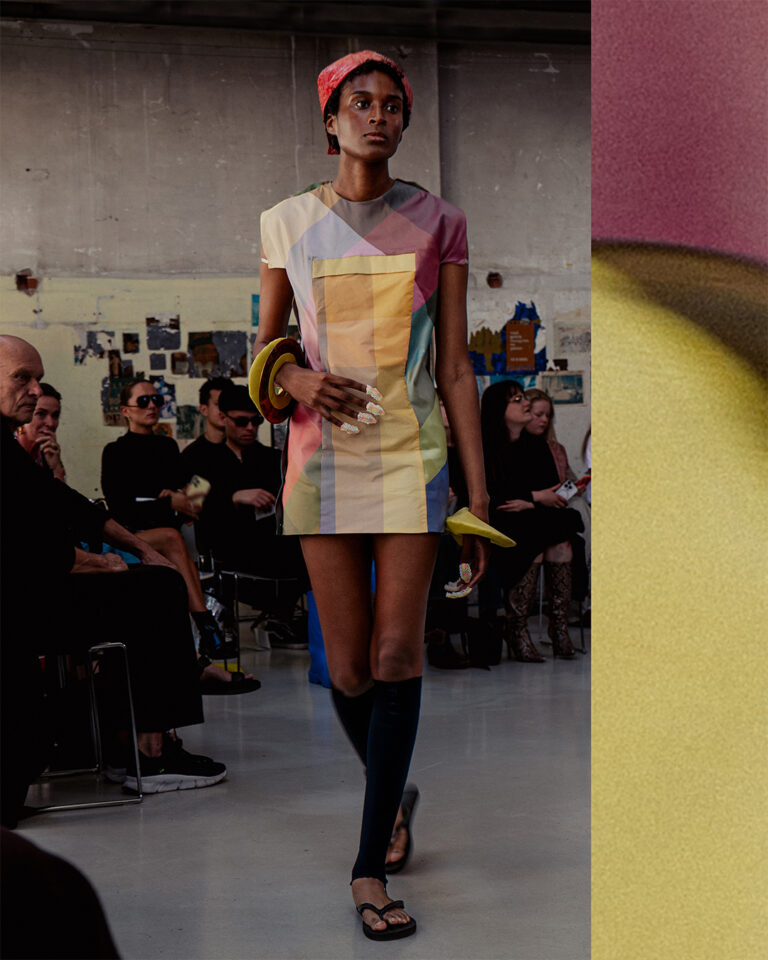
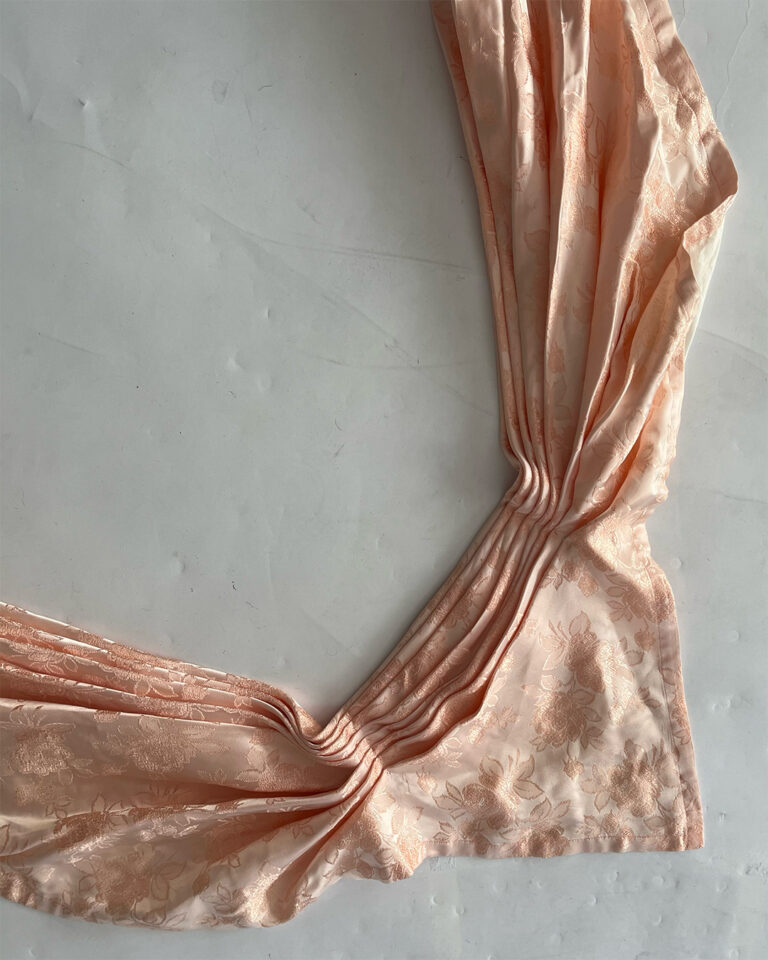
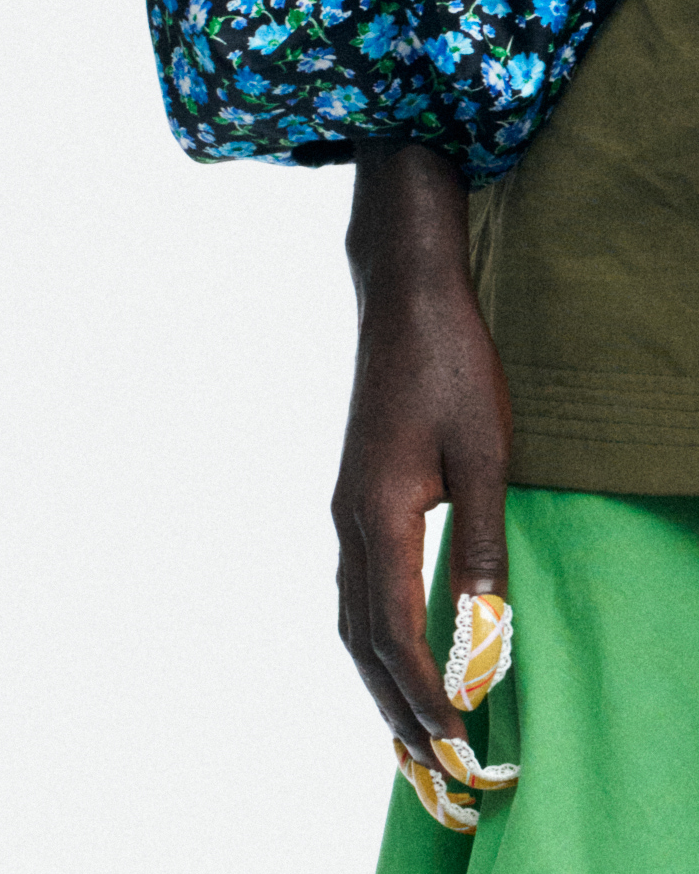
Dushaika wears a deadstock silk satin flat-panel shift dress, a stiffened, painted and coated original Zeeuwse streekdrachtmuts with decorative embroidery and pleats, circa 1950, two-toned yellow arm saucer made out of deadstock (Beste Reizigers) fabric, and a brass ring taken from an antique barometer, illustrated with weather and landscape images.
A falling air pressure reading on a barometer indicates a change in the weather and can come before cloudiness and rain. The barometer is marked with “Regen”, “Veranderlijk” and “Mooi Weer”, connecting the measurement of air pressure directly to different types of weather and how we experience it


elf,
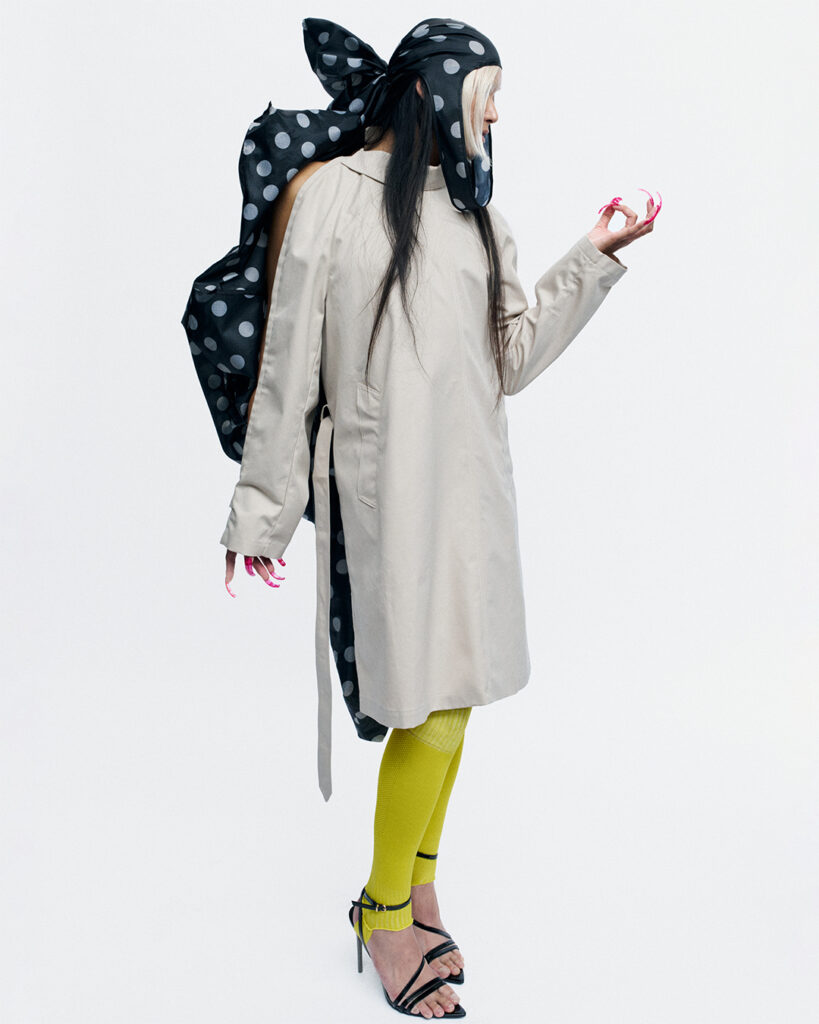
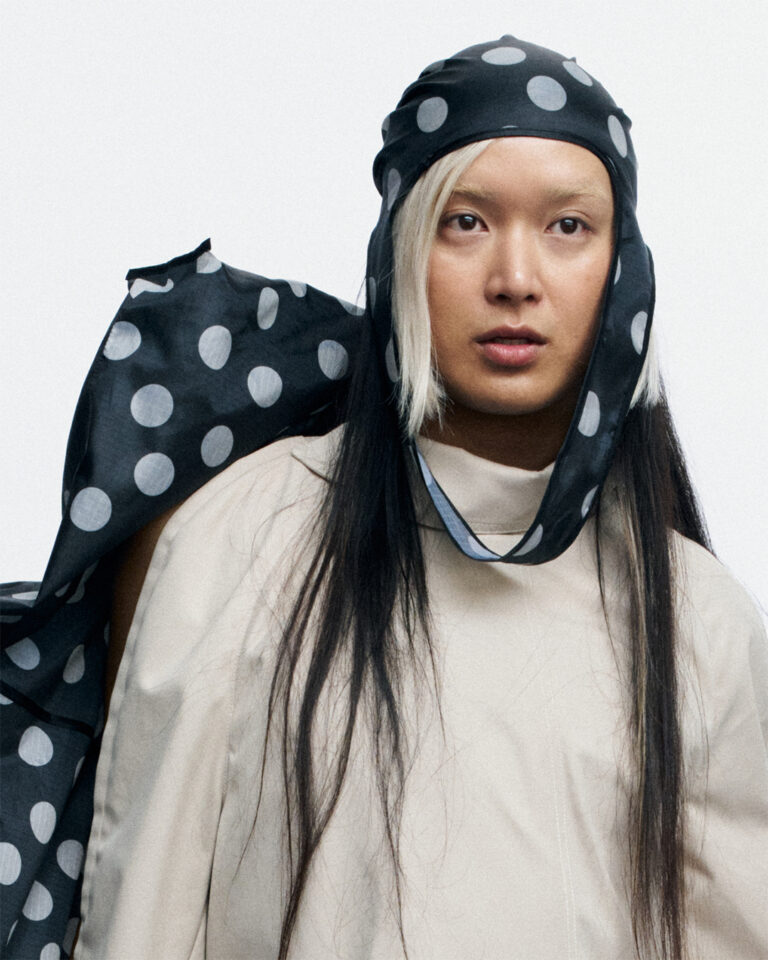
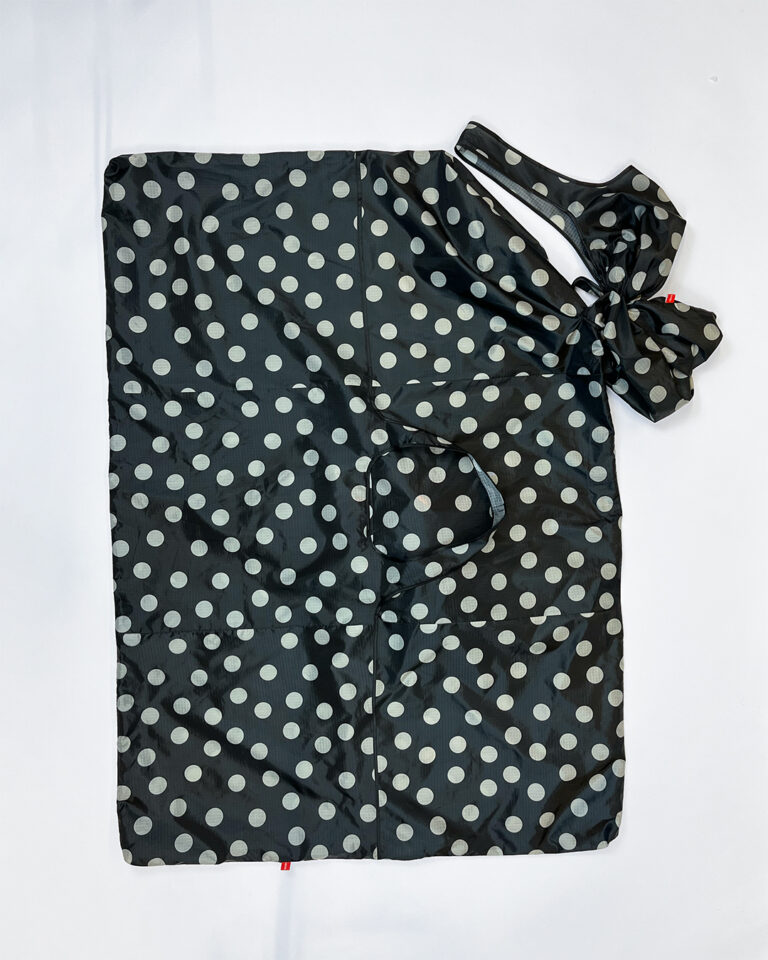
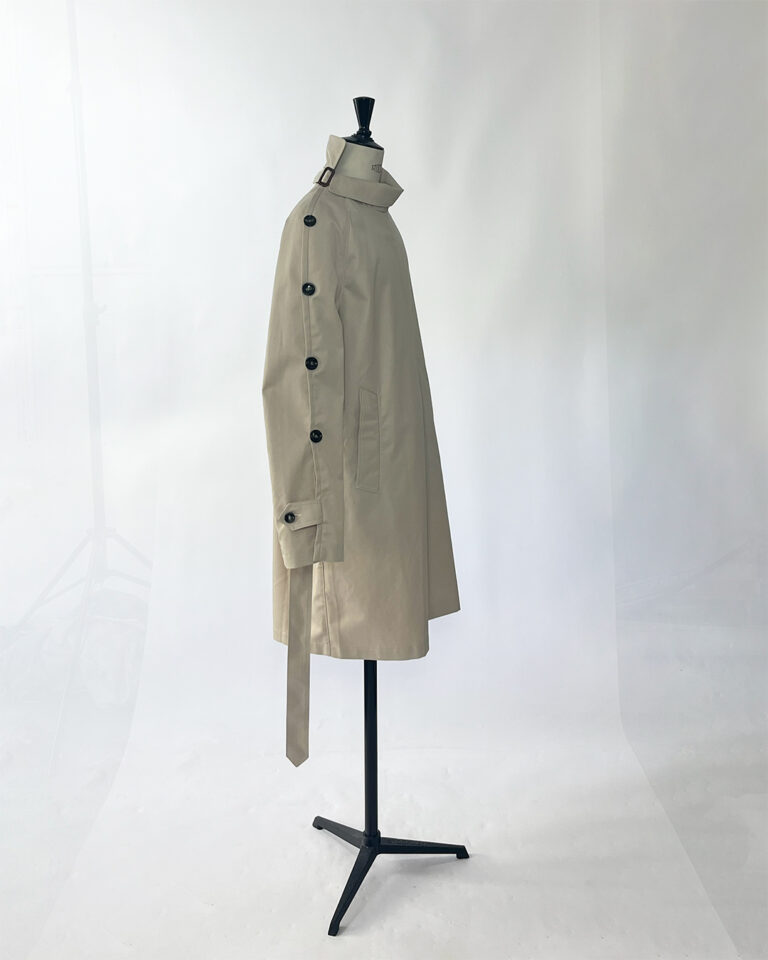
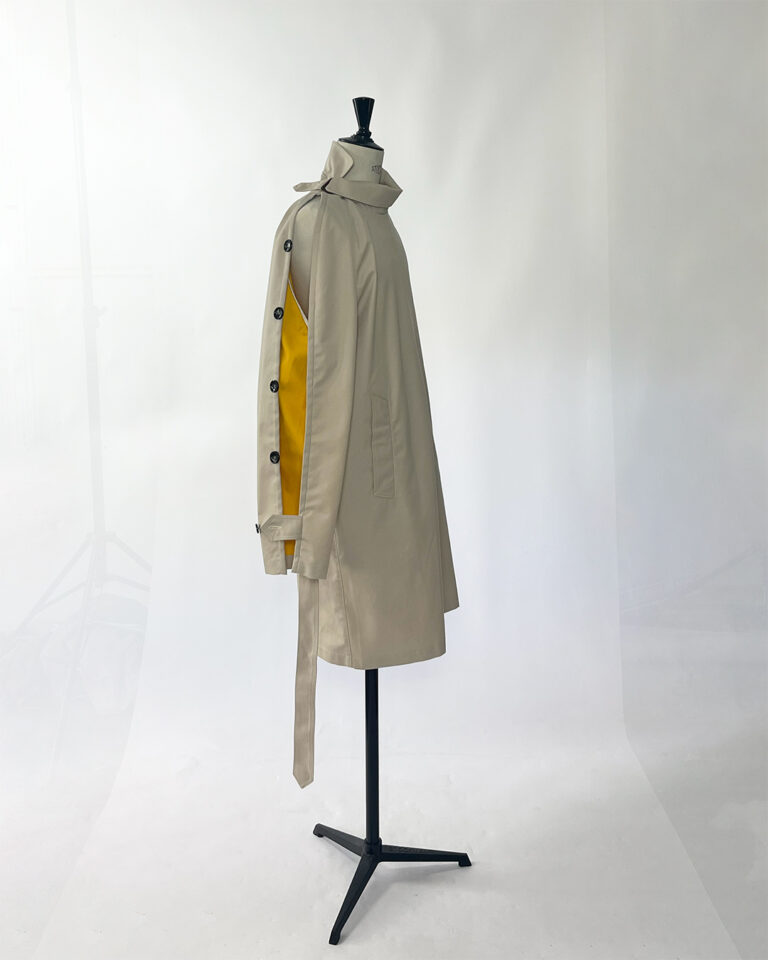
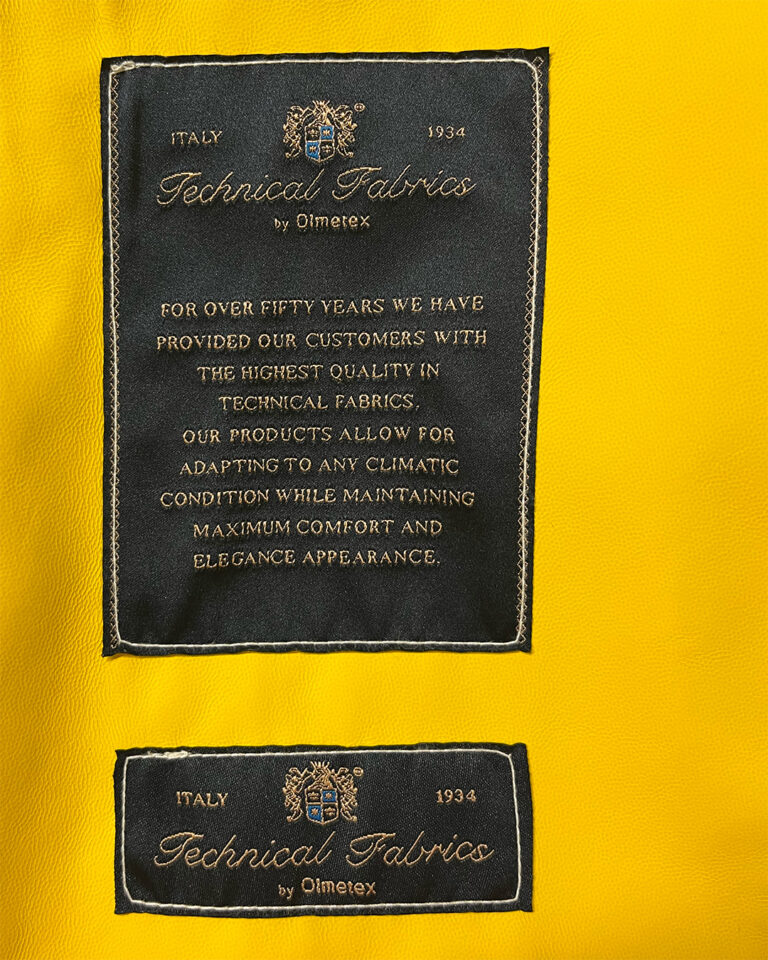
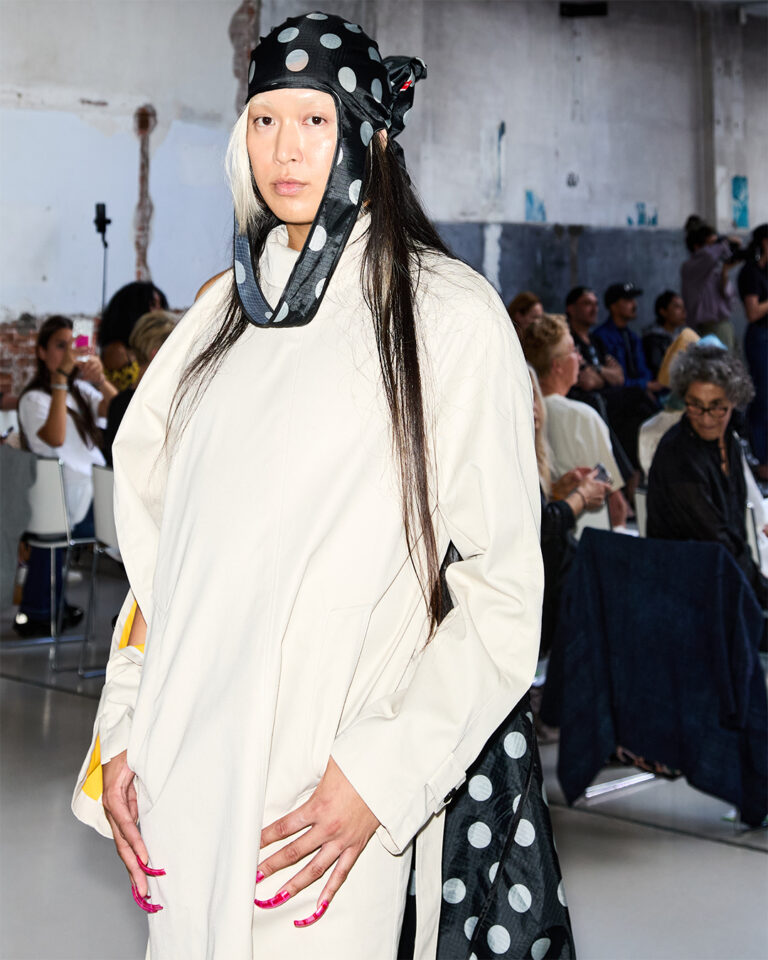
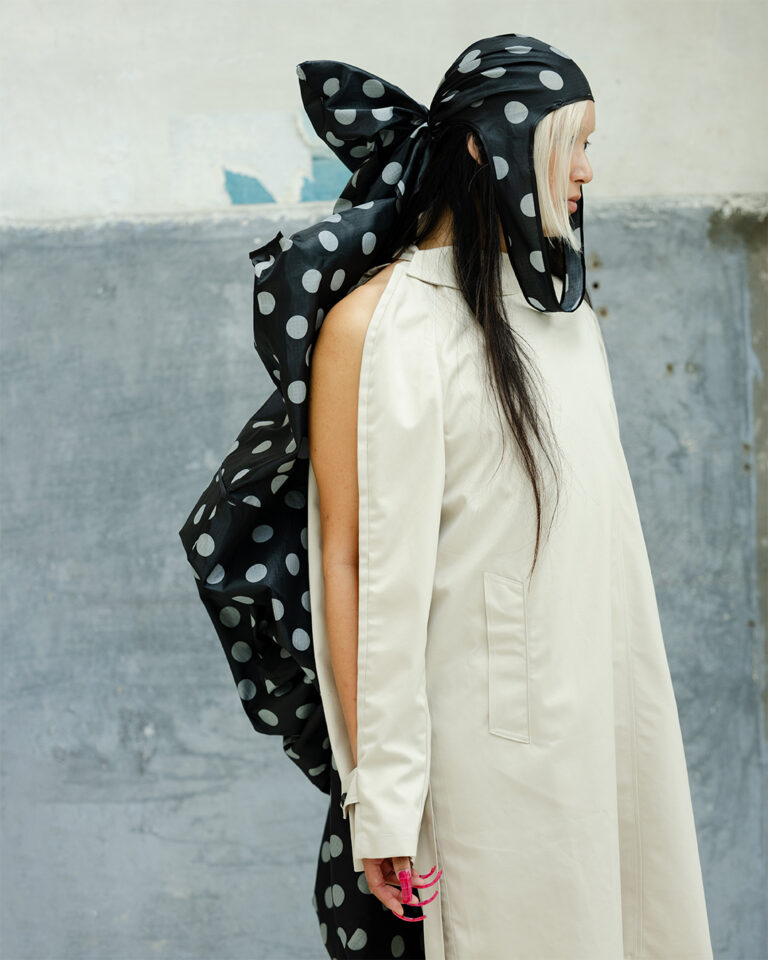
Miami wears shoulder opening coat, originally produced by LC23 out of cotton waterproof Olmetex fabric, with a button closure running from the neck to the wrist, and polka-dot opvouwbare boodschappentas hat


twaalf,
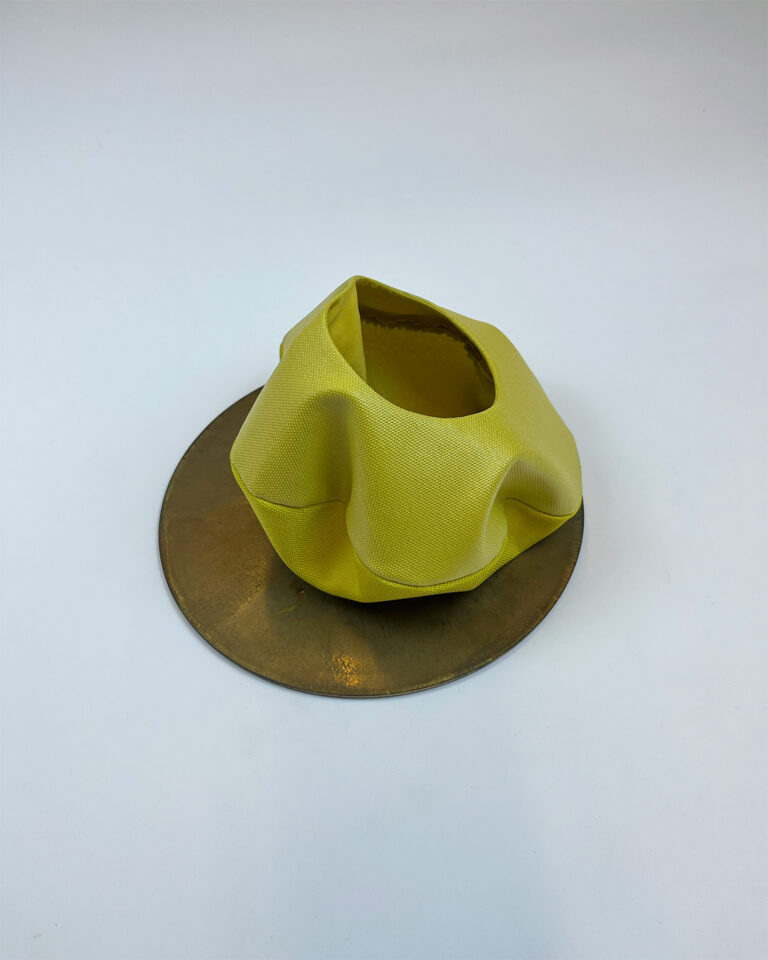
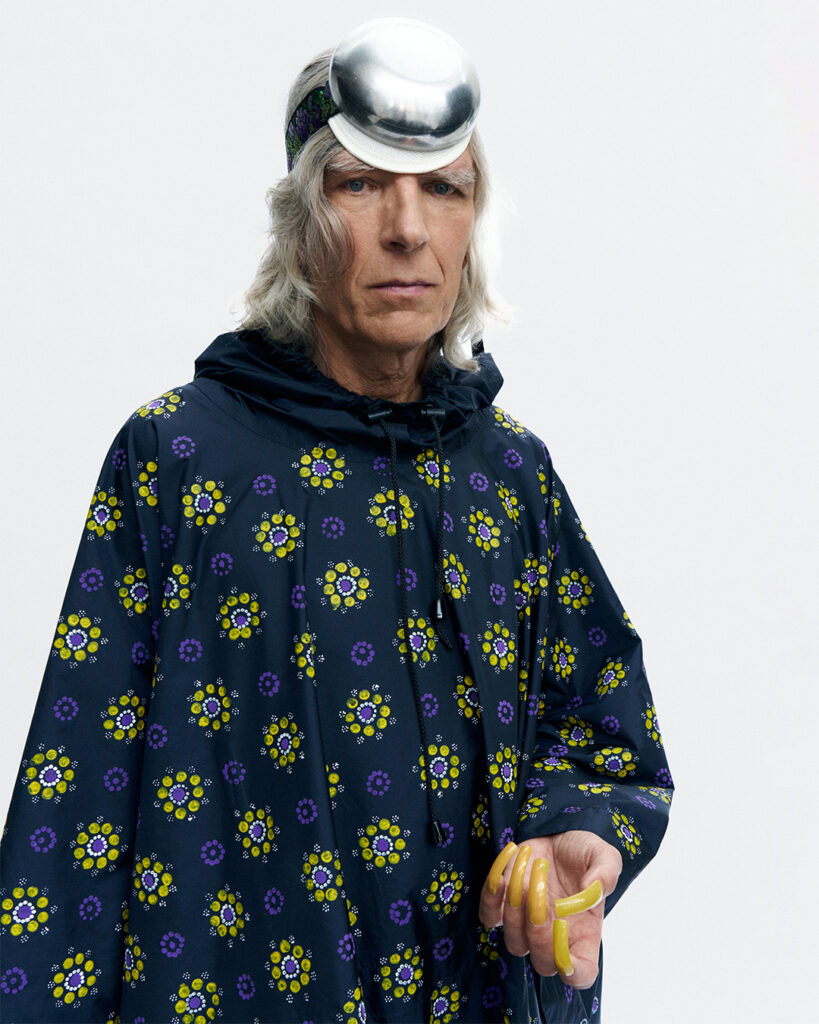
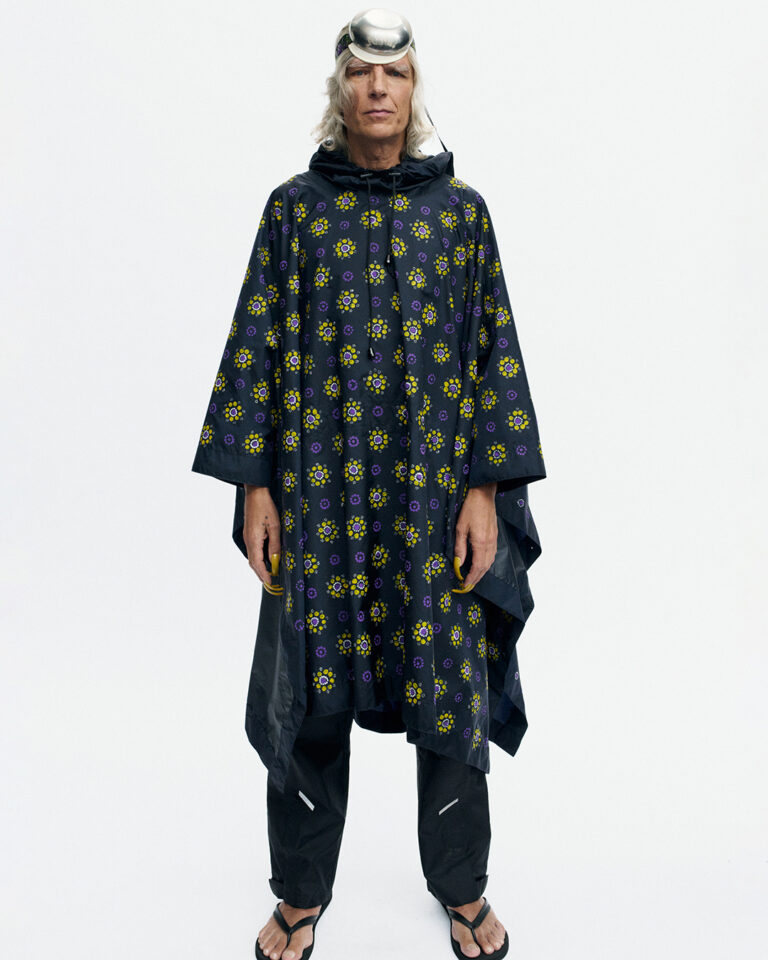
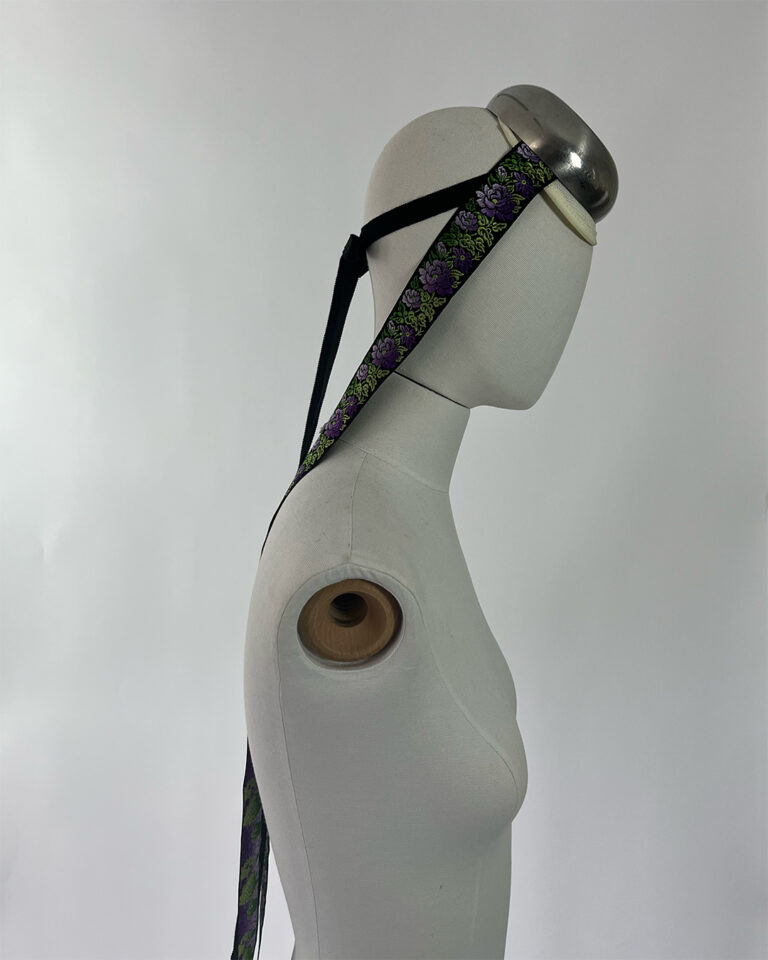
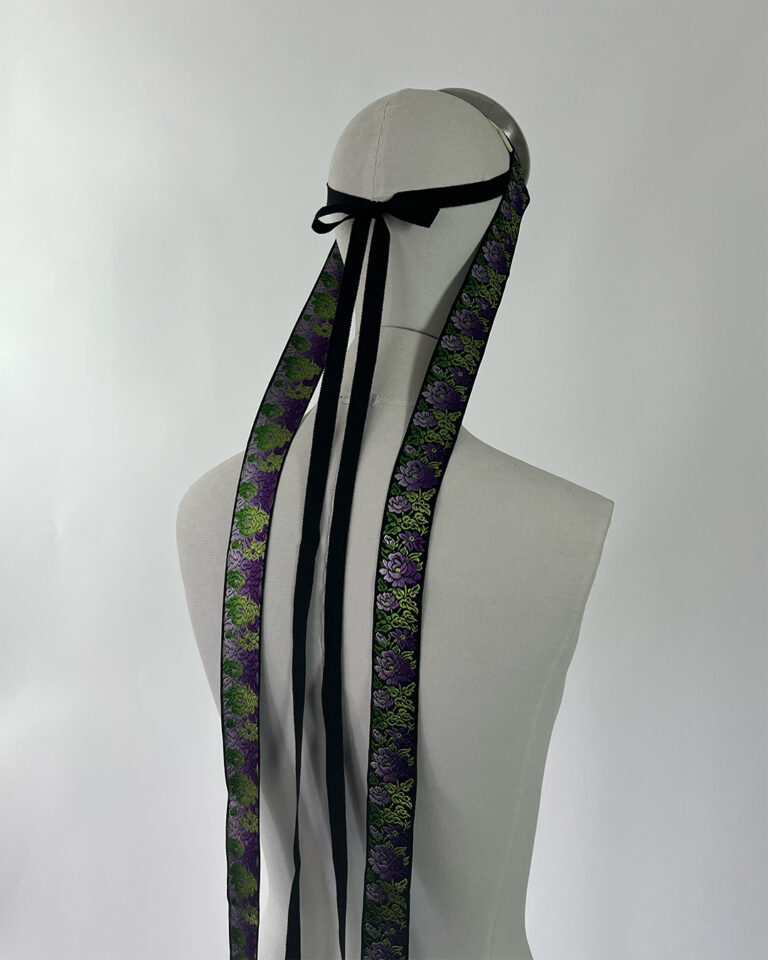
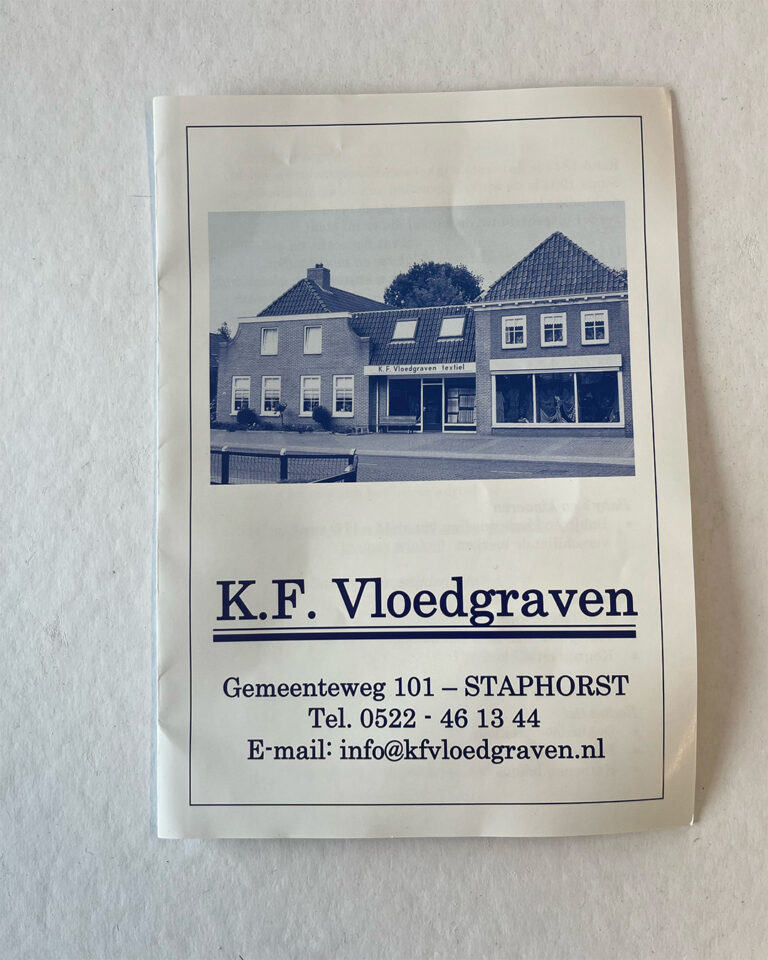
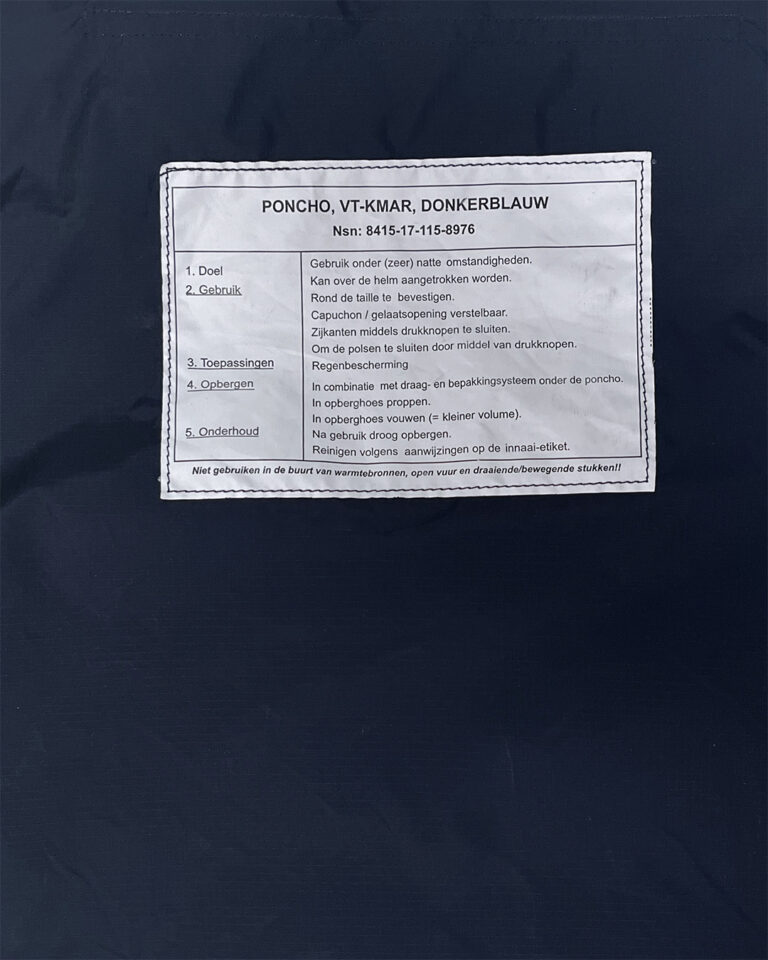
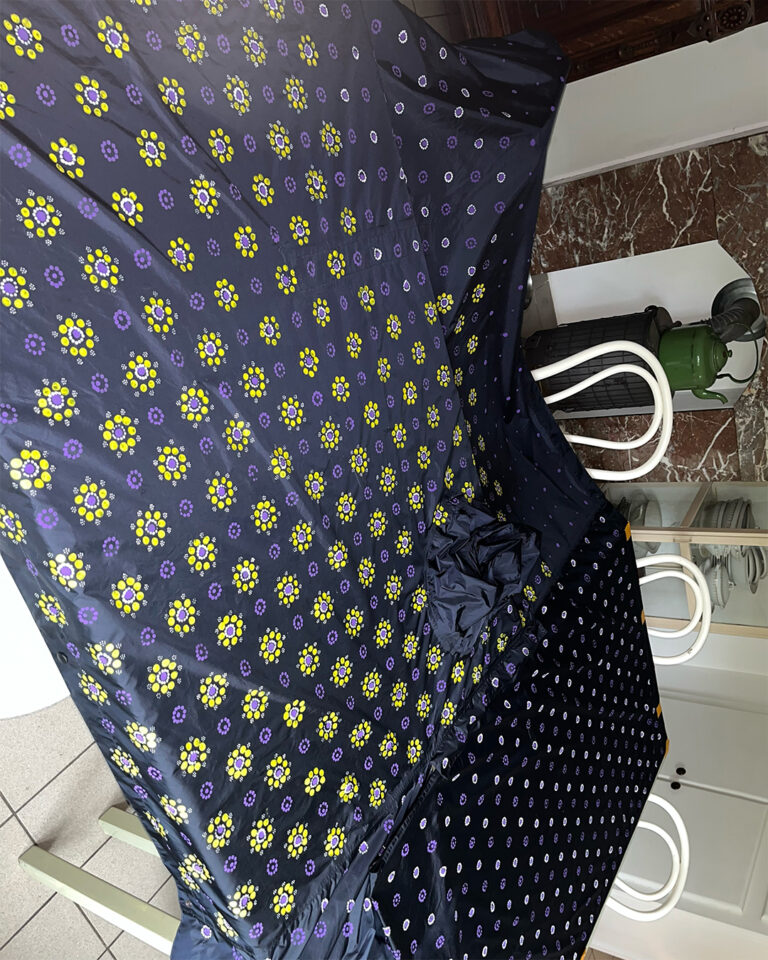
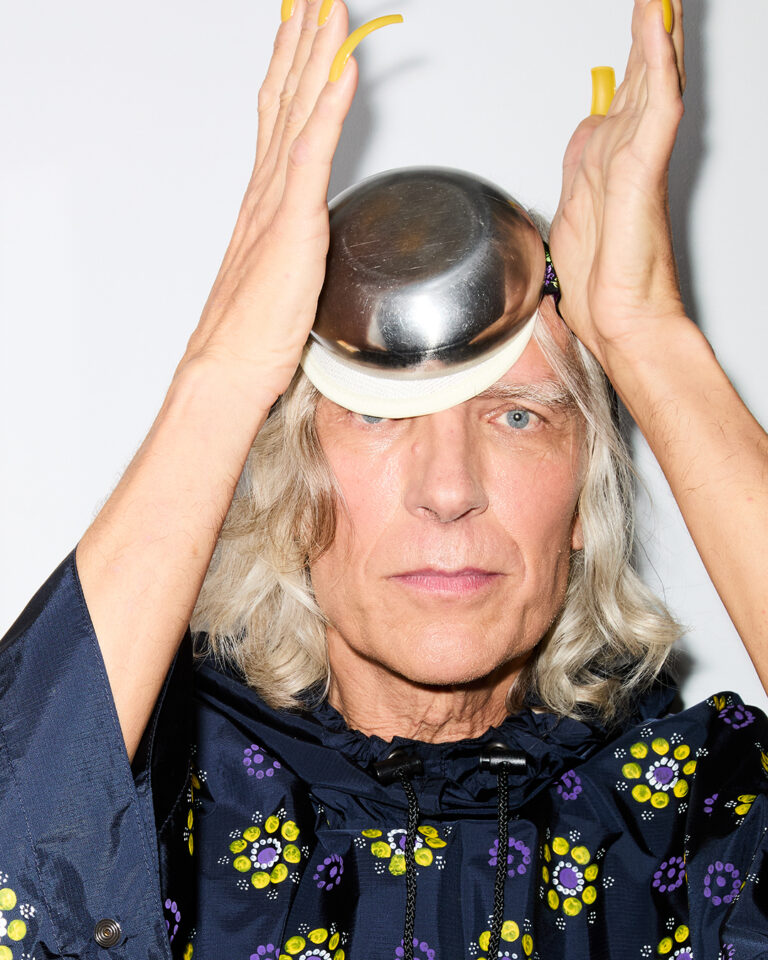
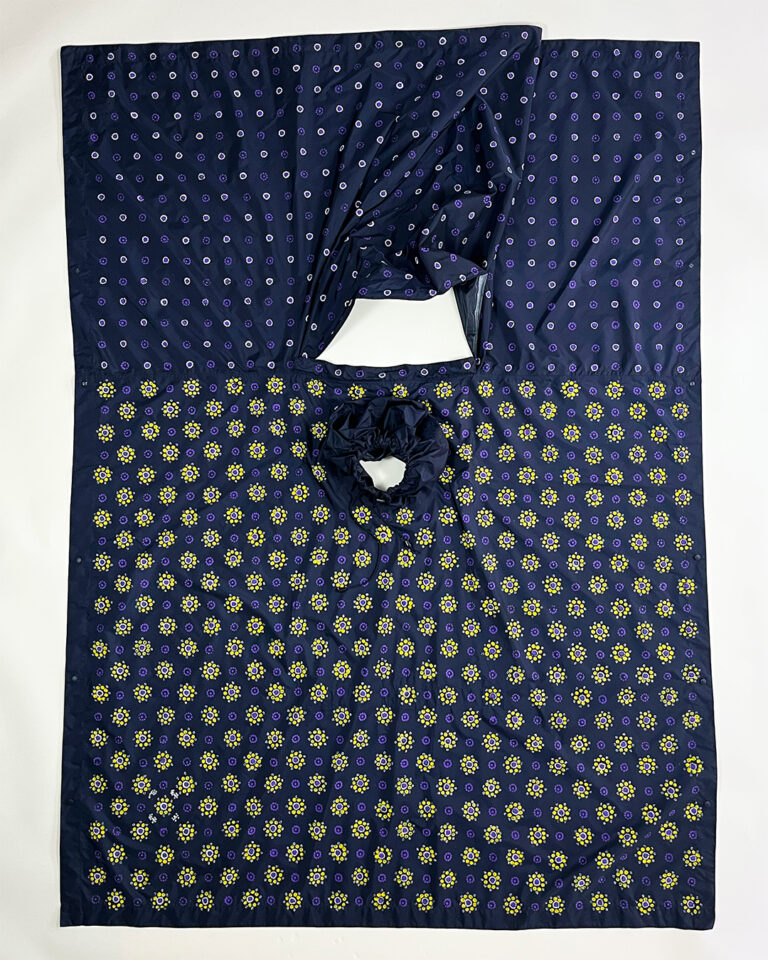
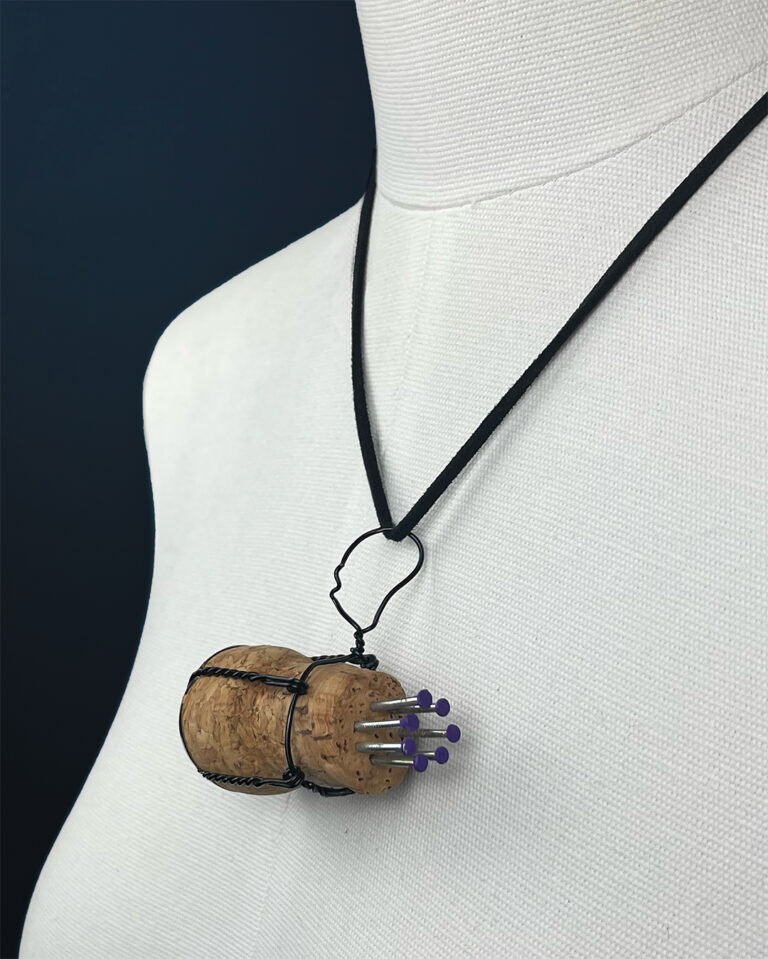
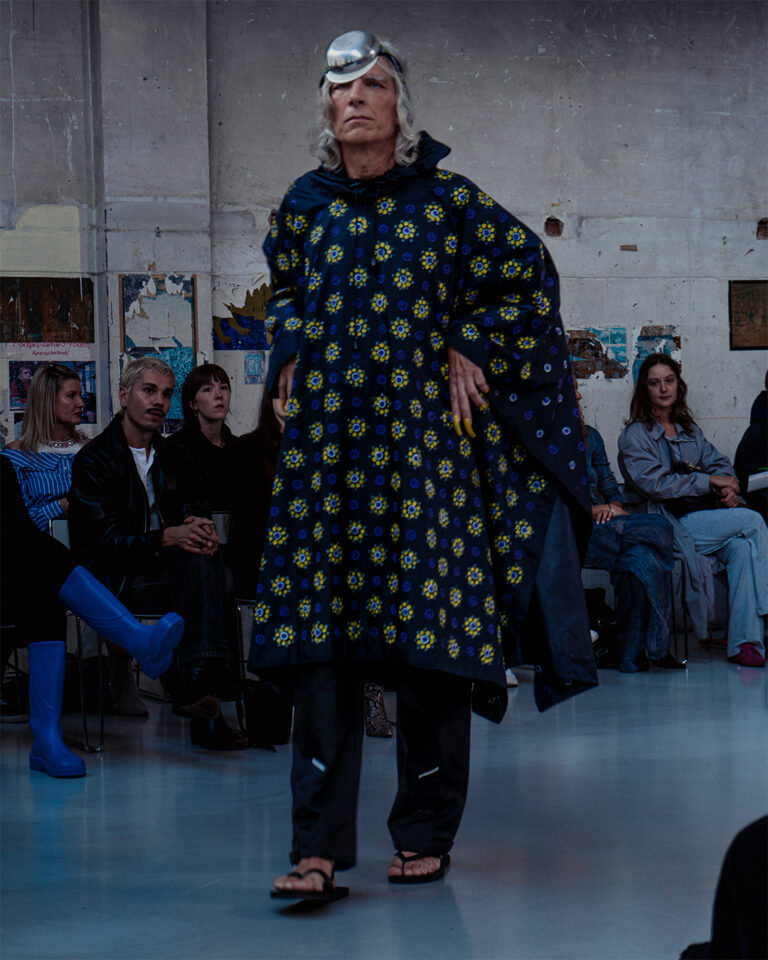
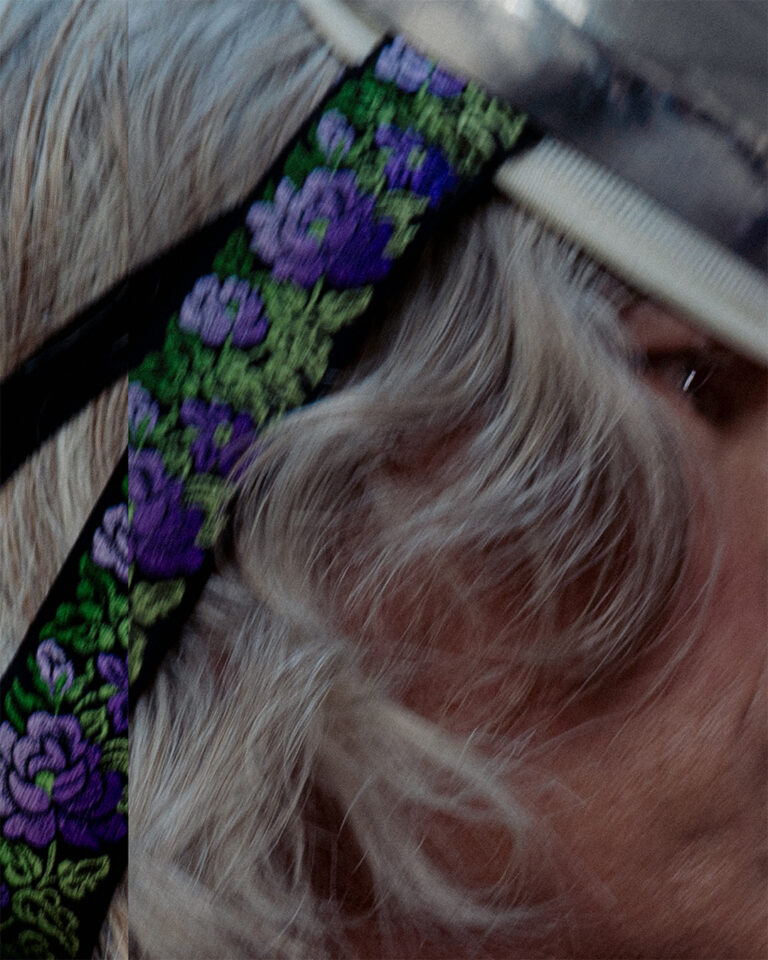
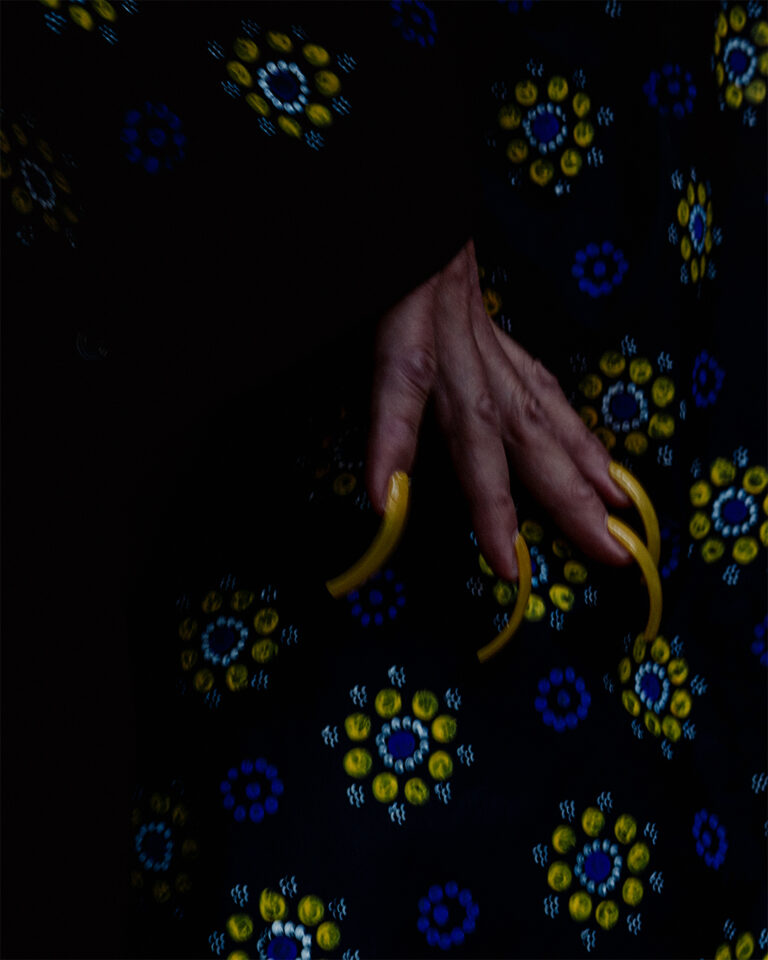
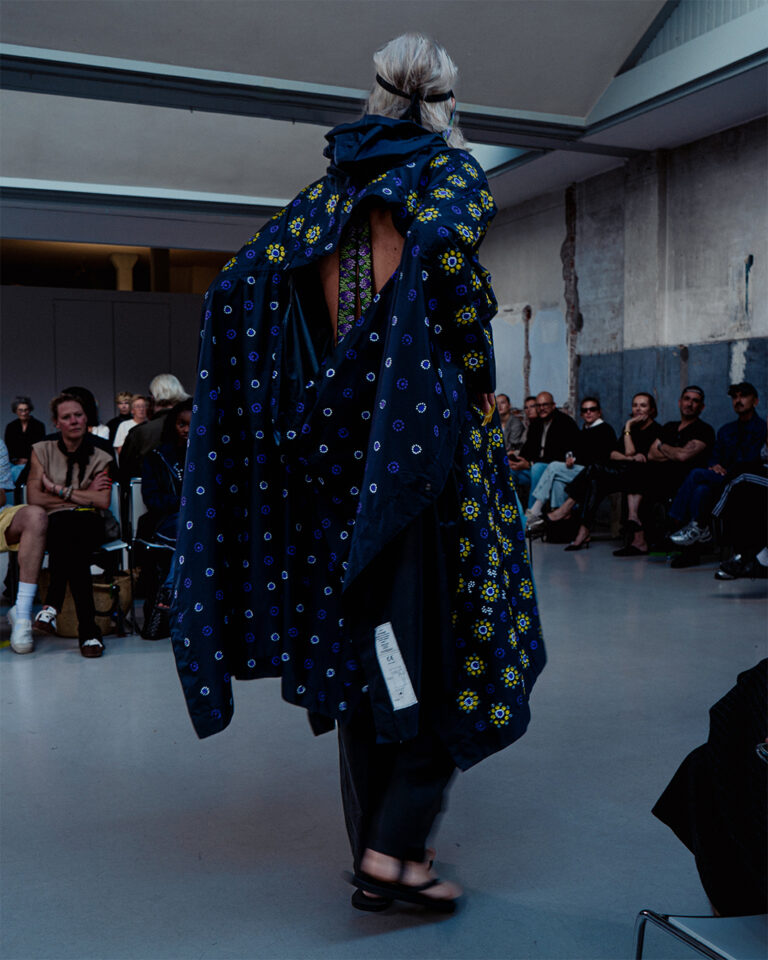
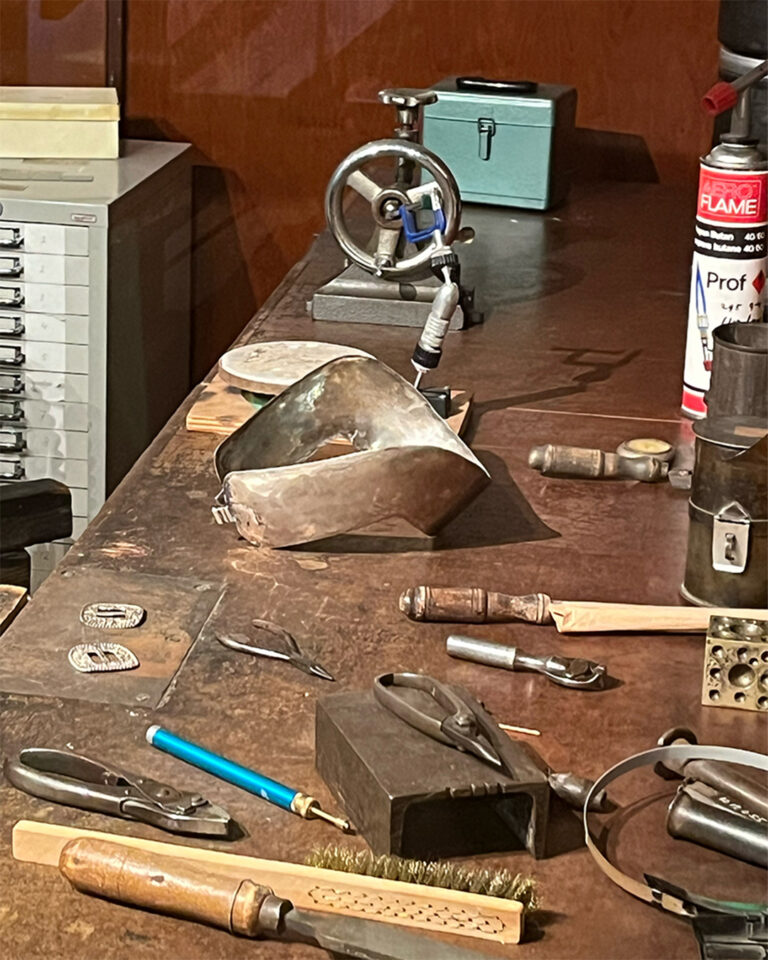
Franklin wears an archetypal dark blue Dutch defence rain poncho, printed in traditional Staphorster stipwerk, metal bowler hat with attached traditional Staphorst silk ribbons from Vloedgraven, cork-stamp muselet necklace, and Thuisbezorgd (Just Eat) rain pants.
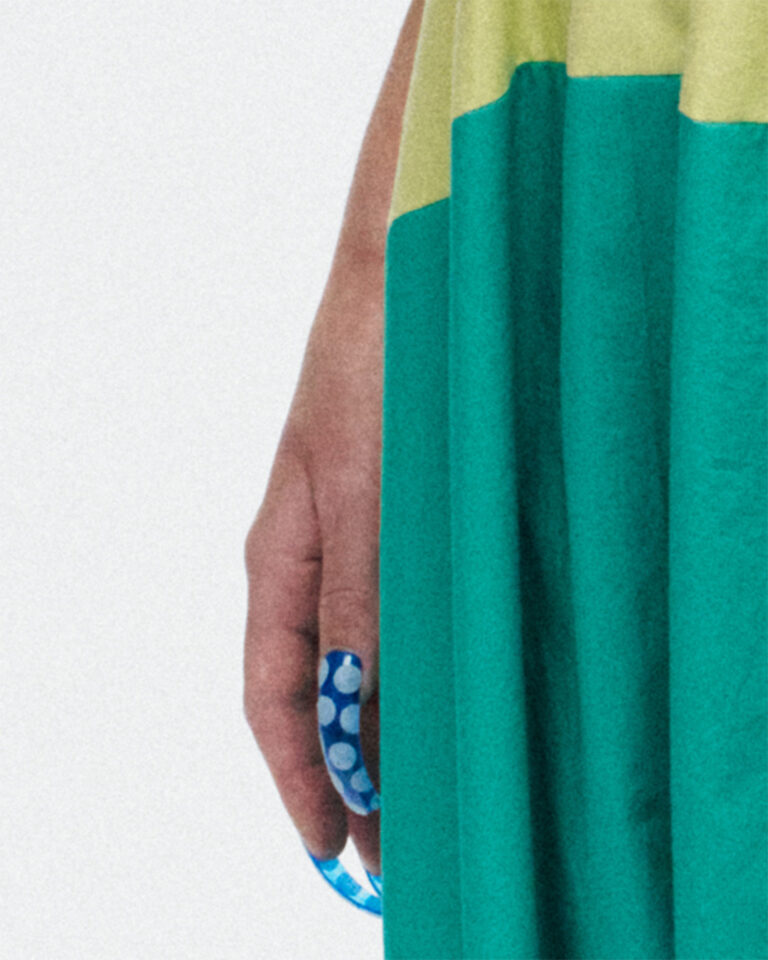
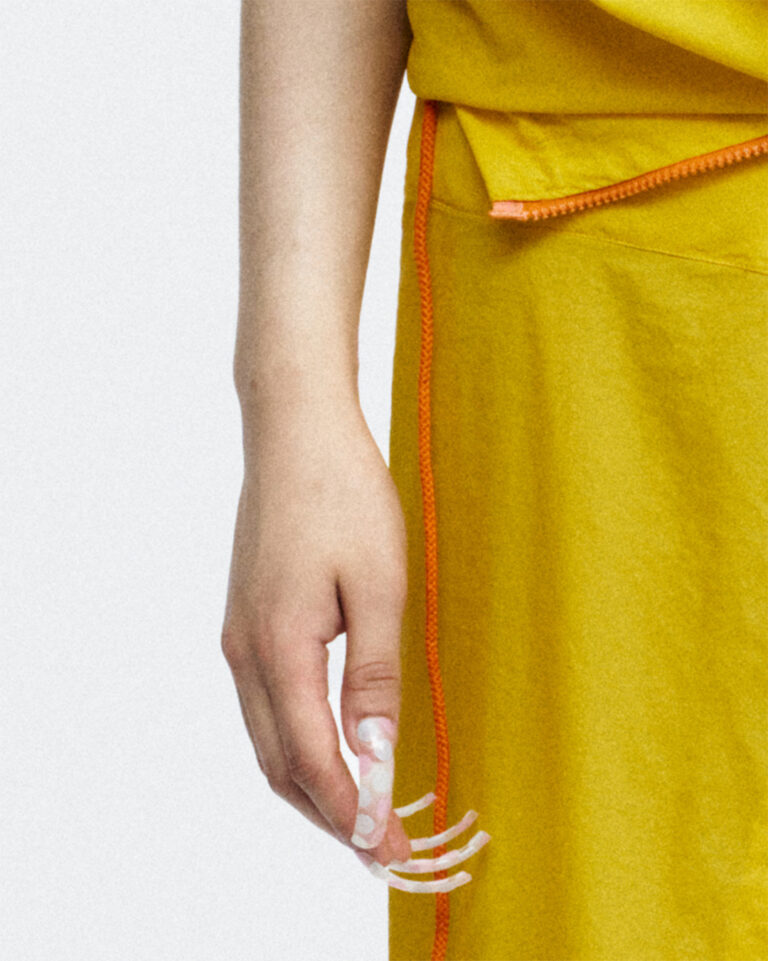
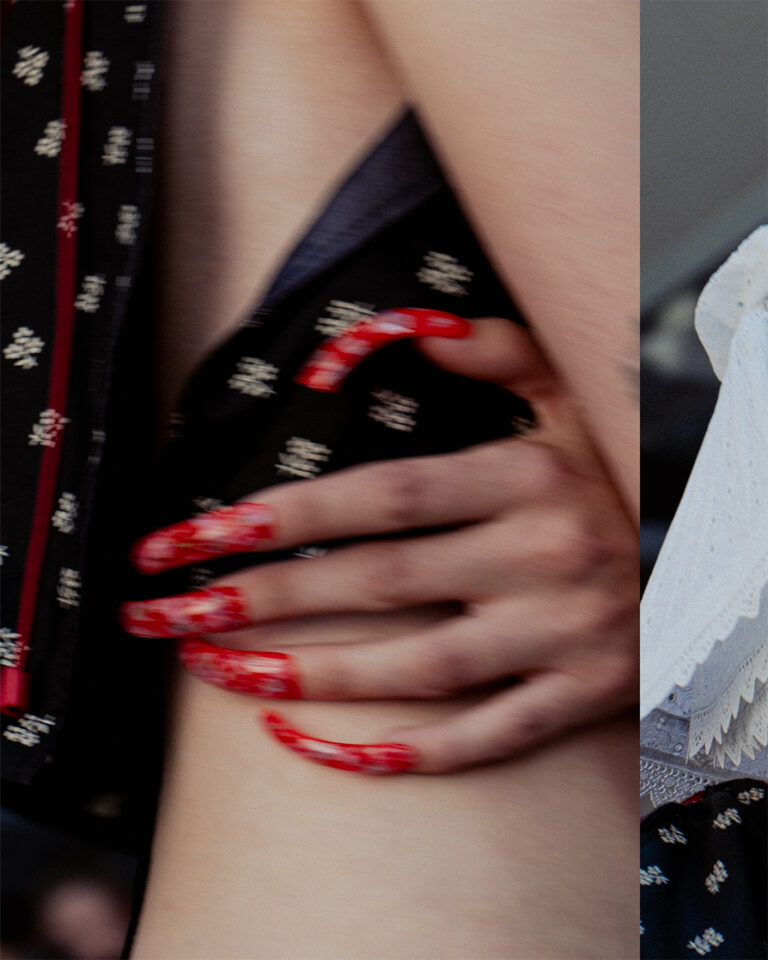
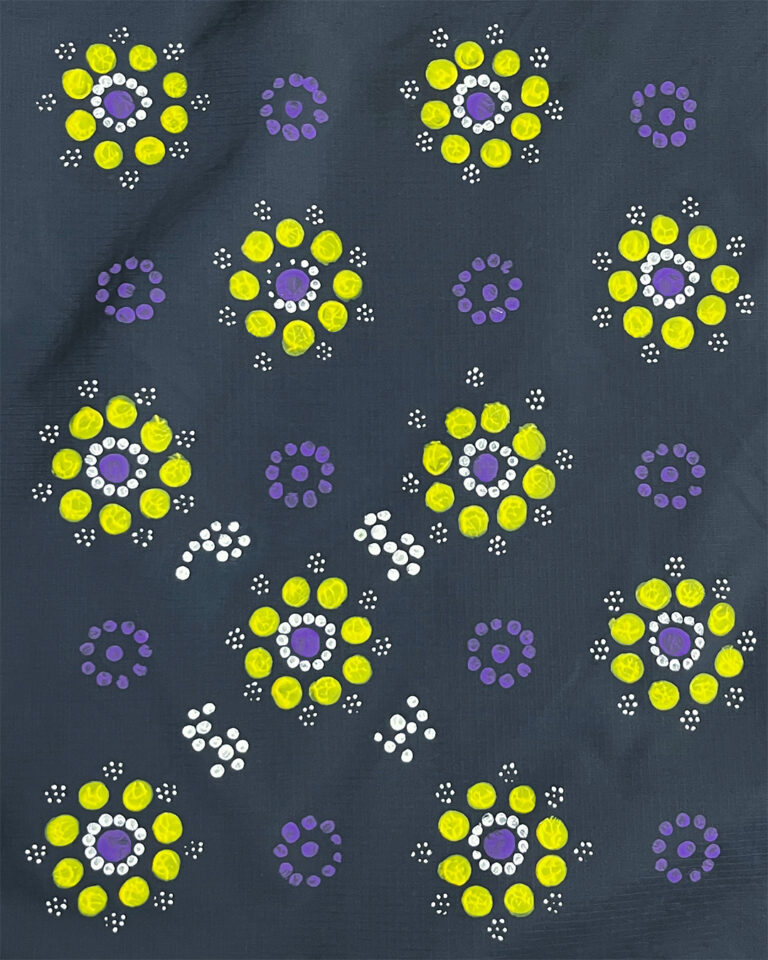
A recurring motif in rainwear and my previous work is the use of polka dots, further developed through Staphorster stipwerk. This traditional Dutch craft is a printing technique in which stamps made of a wooden or cork block, into which nails are hammered, are dipped into paint and pressed onto fabric to create rhythmic patterns of dots. The technique carries a system of colour, form, and meaning, connected to local identity and regional dress.
Working with the Staphorster Stipwerk Foundation, an expert guided me through both the technical aspects and the cultural context of this heritage, allowing me to integrate the motif into the work in a careful, respectful, and contemporary way. This knowledge allows the stipwerk to function not simply as decoration, but as a carrier of cultural memory.
In my practice, I investigate how craftsmanship can function as a counterforce within a fashion system driven by speed, consumption, and the exhaustion of materials and labour. By placing the repetitive, manual process at the centre, it emphasises the value of time, attention, and collectivity.


dertien,
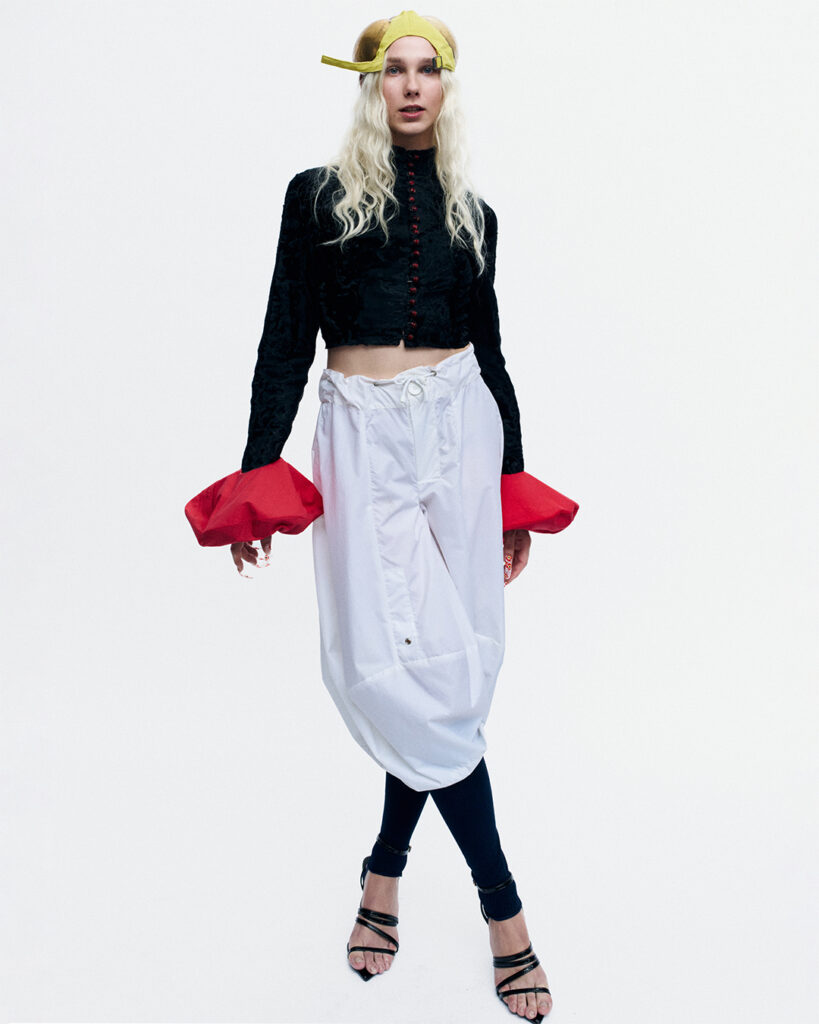
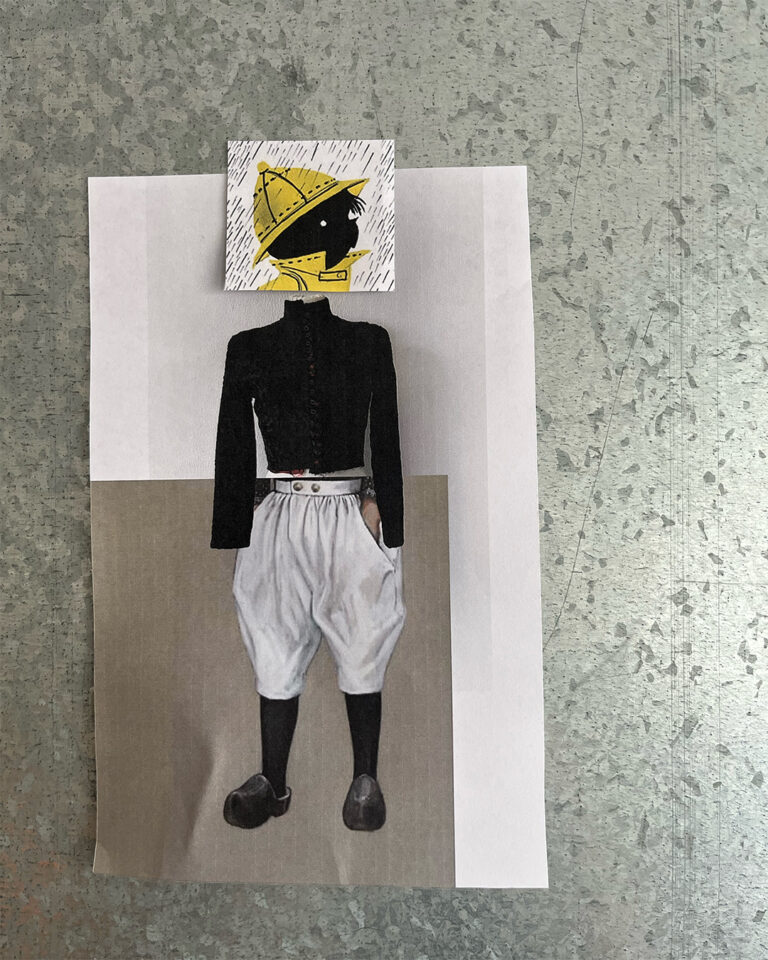
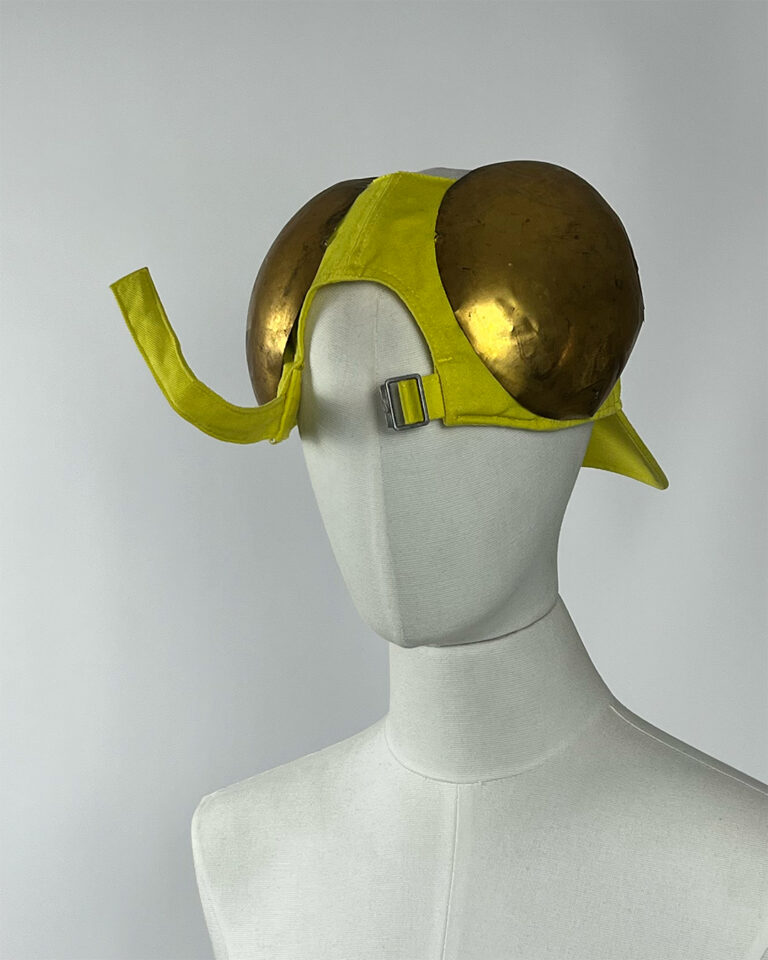
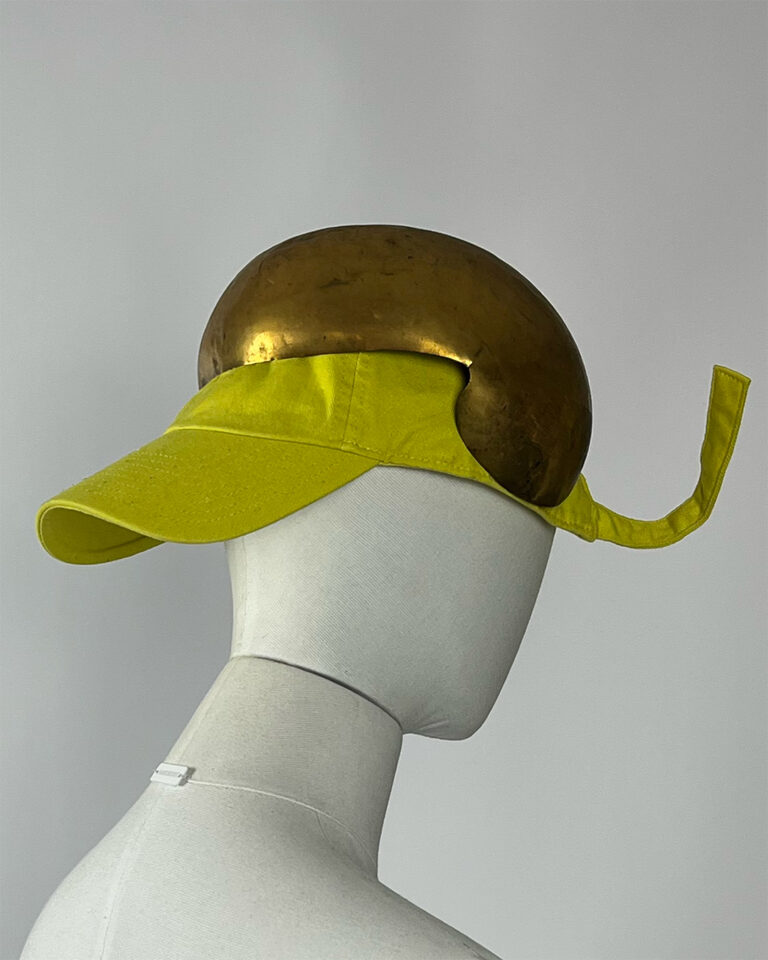
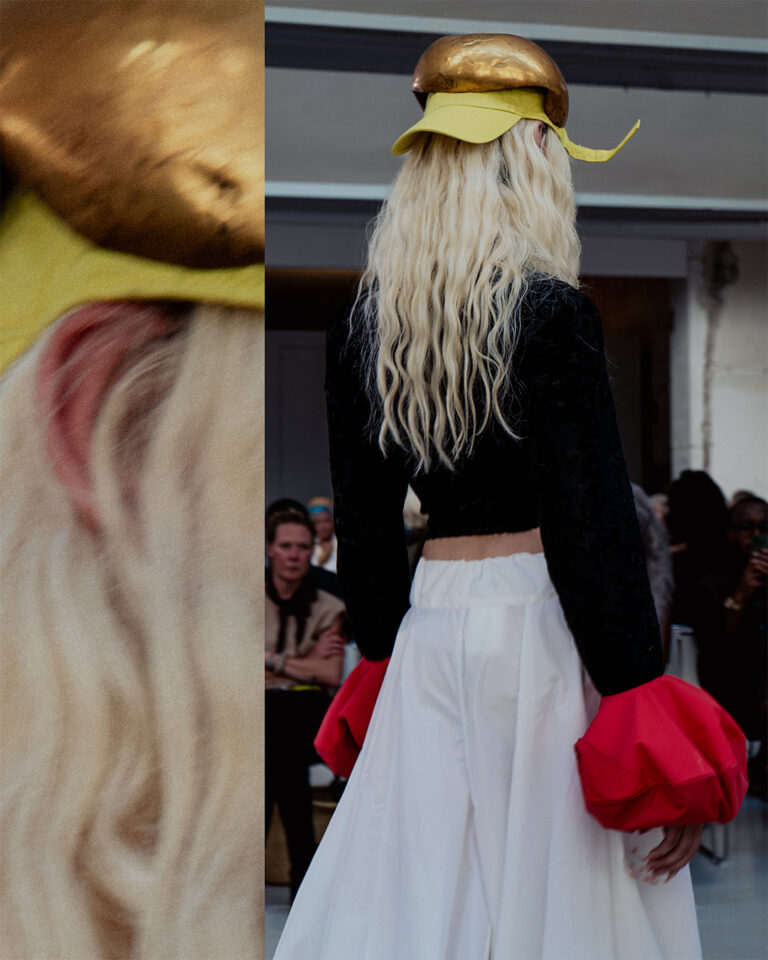
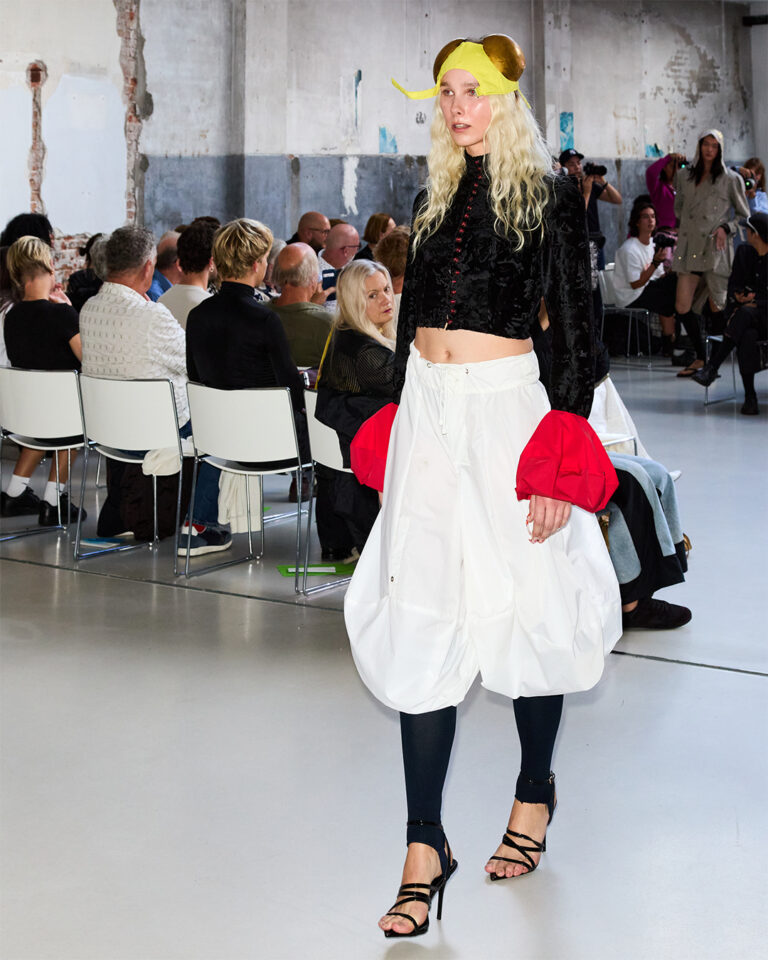
Fadime wears yellow Nike sports cap with brass oorijzer (ear iron) from West Friesland, dating from mid- to late 19th century (c. 1825–1880), a metal band (beugel) designed to hold lace caps in place as part of traditional women’s regional dress in the Netherlands.
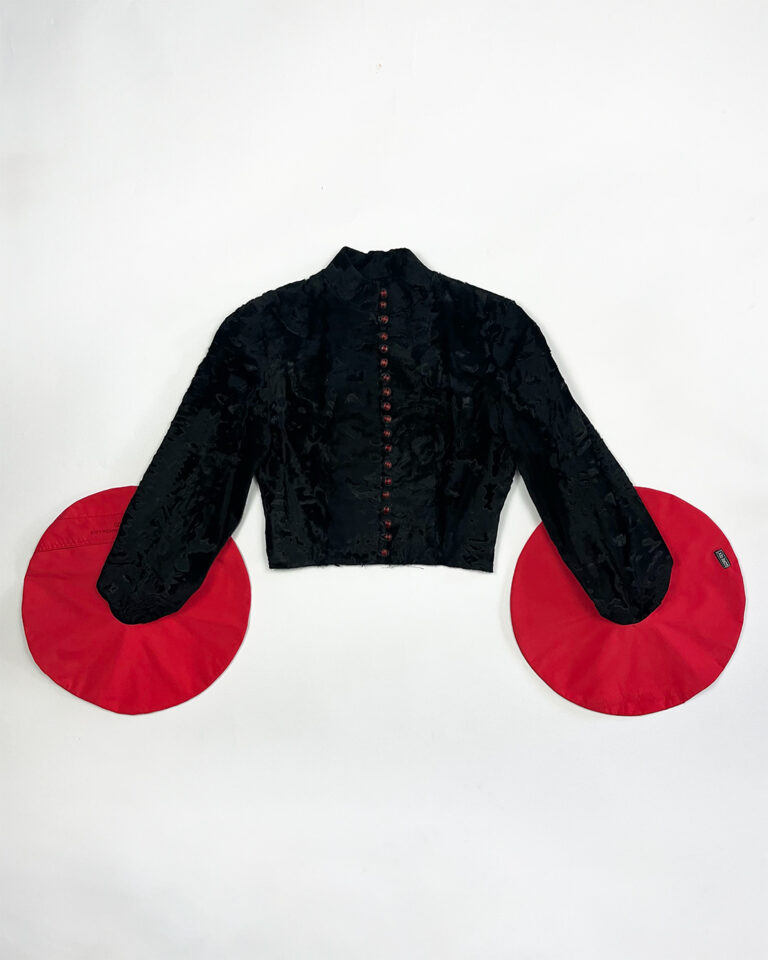
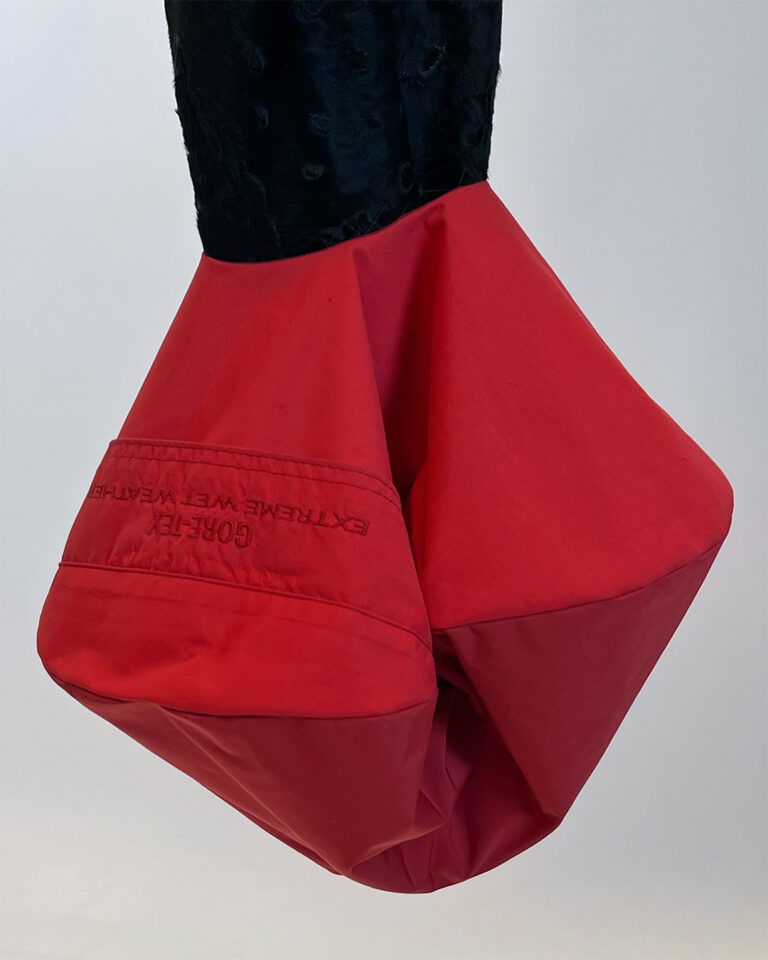
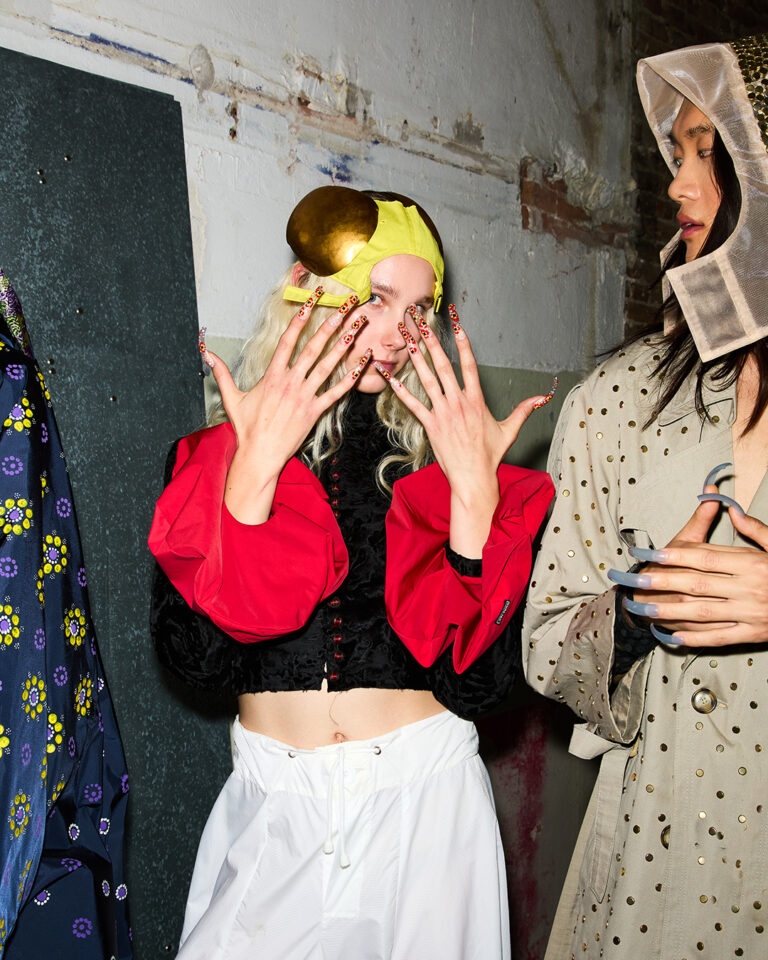
Upcycled antique moiré lamb fur jacket, dating from around 1975 and originally produced by French fur house Litz, with attached two-toned Gore-Tex arm saucer made out of upcycled Bermudes and Mammut rain- and hardshell jackets.
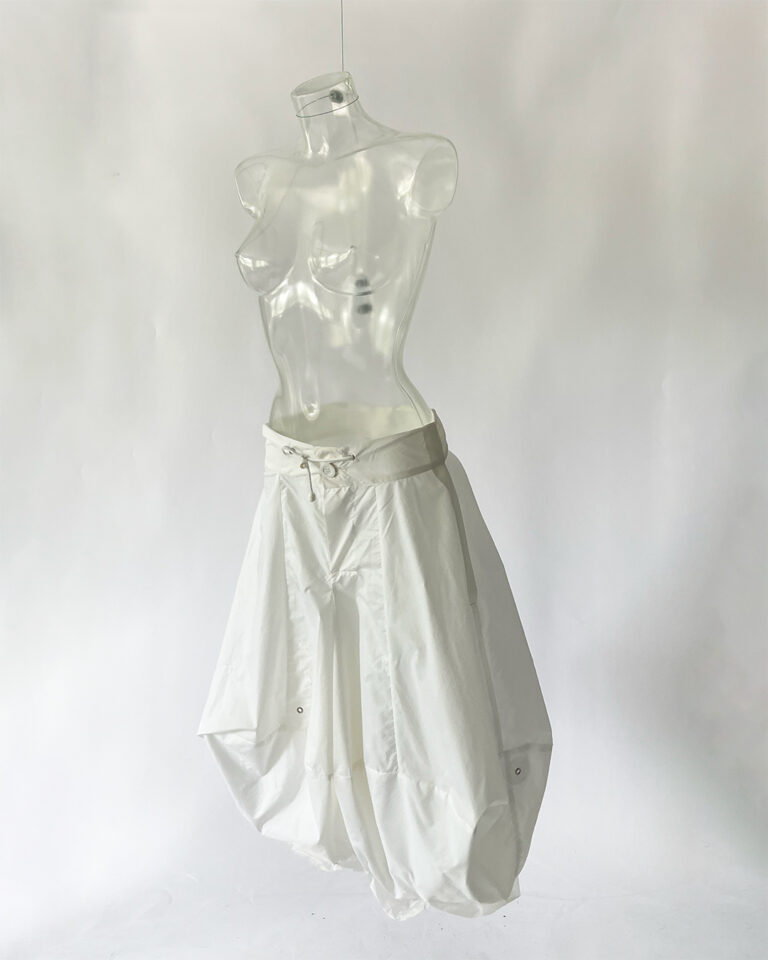
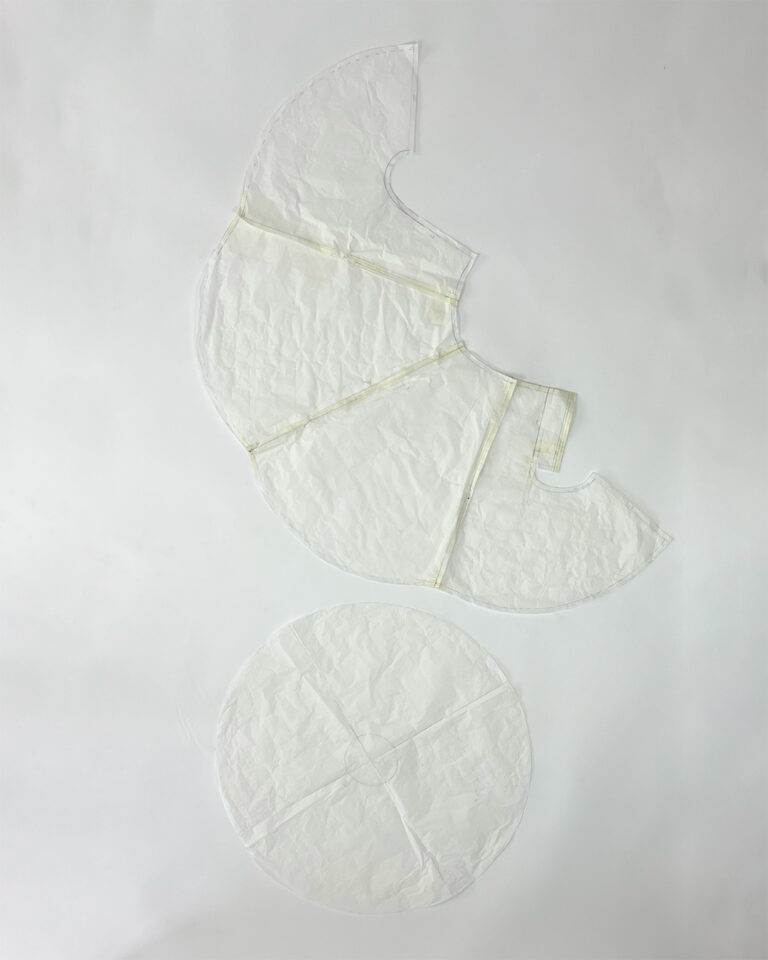
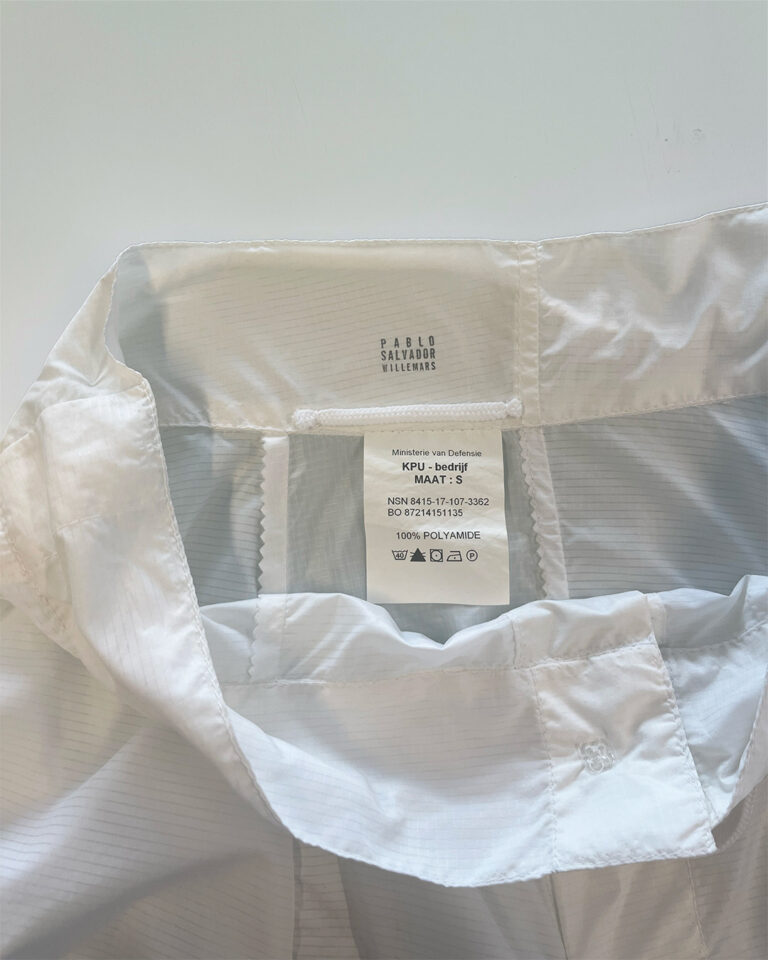
Cirkel fisher shorts made out of three Dutch Defence arctic parkas and trousers dating June 15 1993
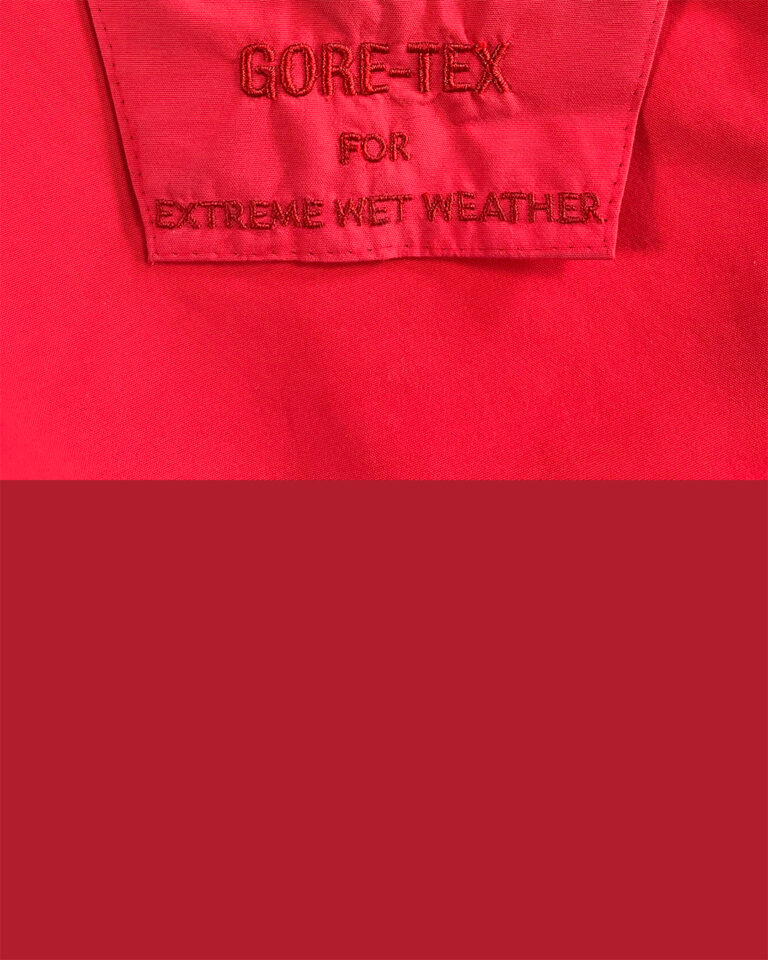
Gore-Tex was first introduced to the market in 1976, marking a major development in waterproof clothing since Charles Macintosh’s waterproof double-texture fabrics. Rather than relying on a coated surface alone, Gore-Tex introduced a membrane-based approach to waterproofness and breathability, changing the possibilities of technical rainwear


viertien,
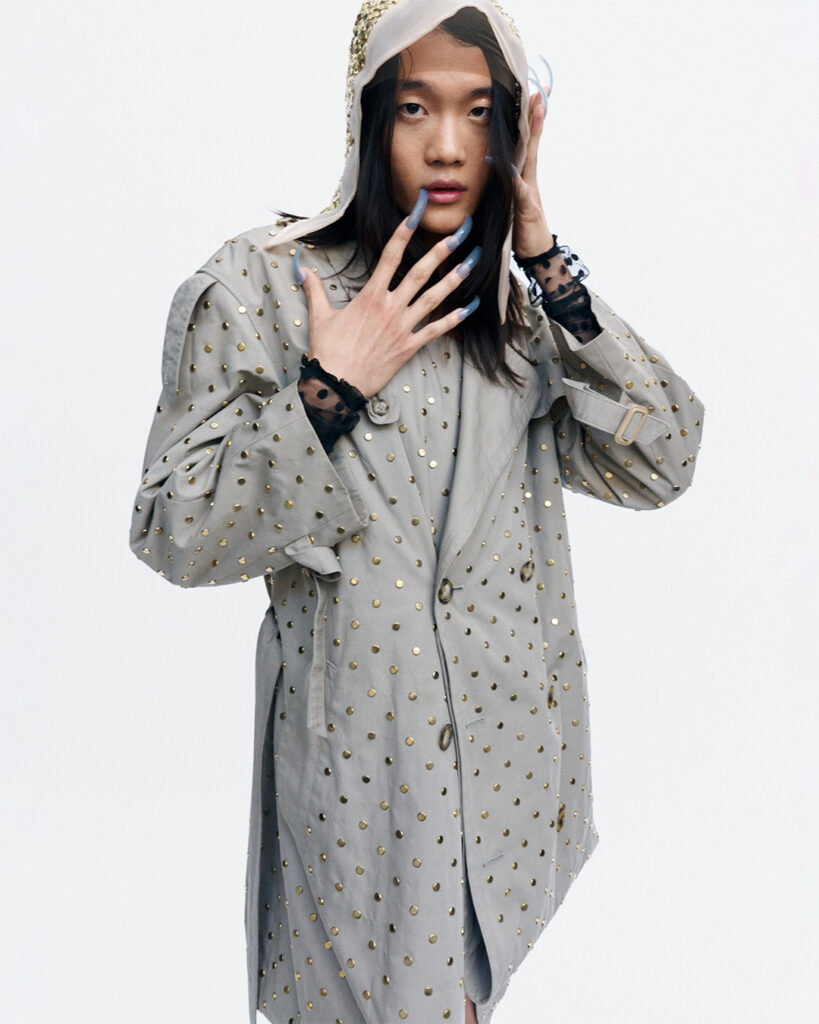
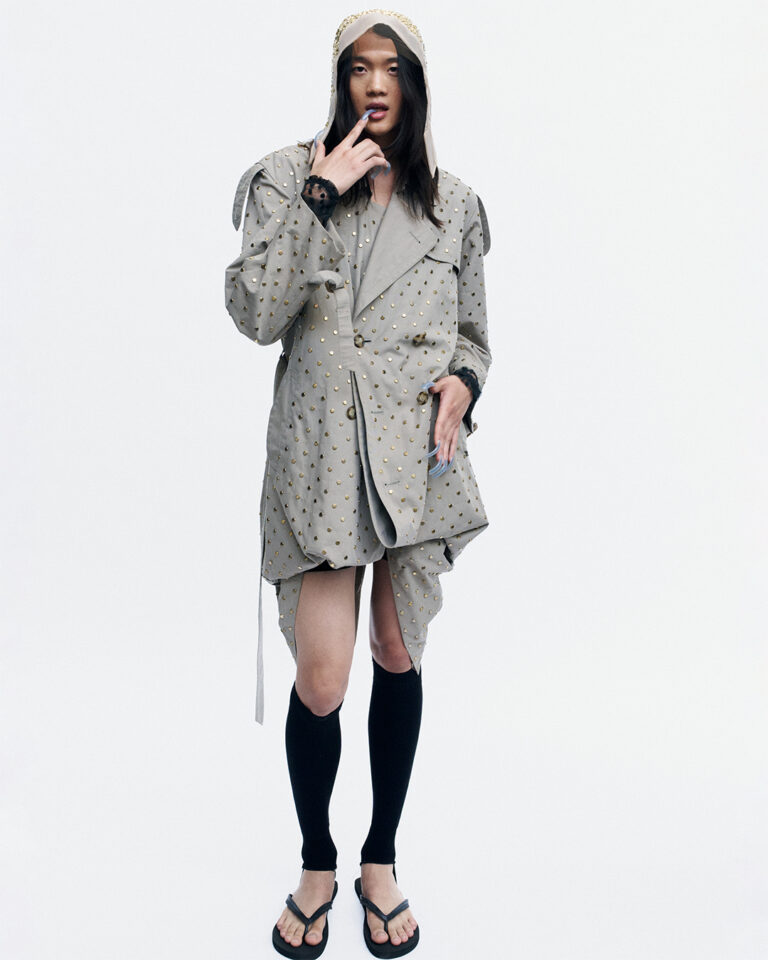
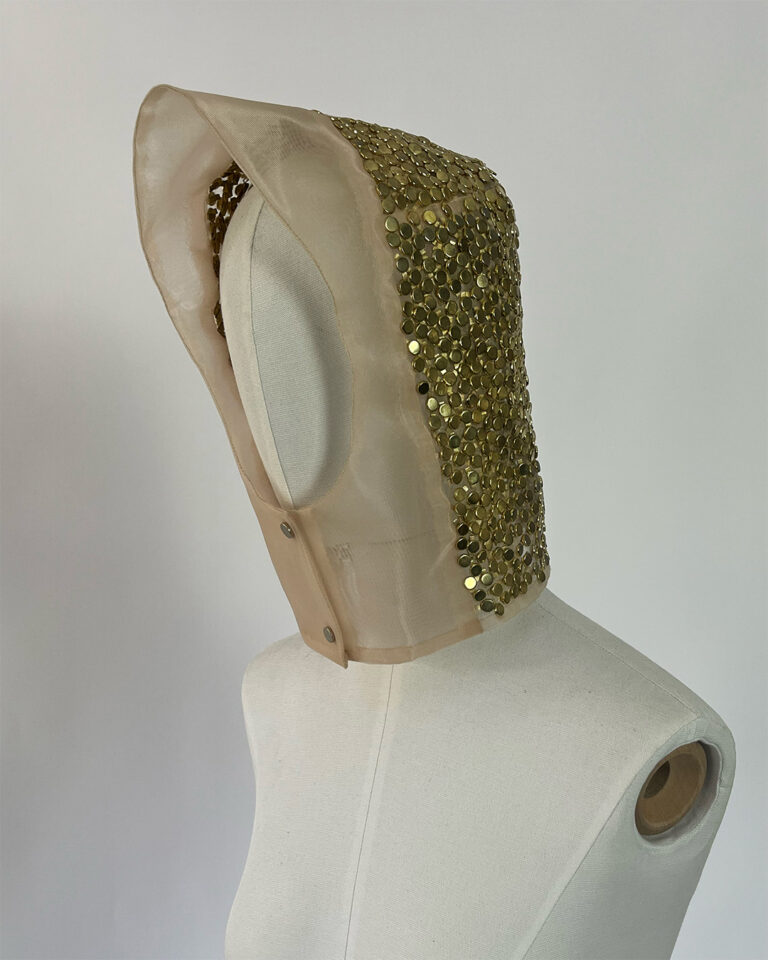
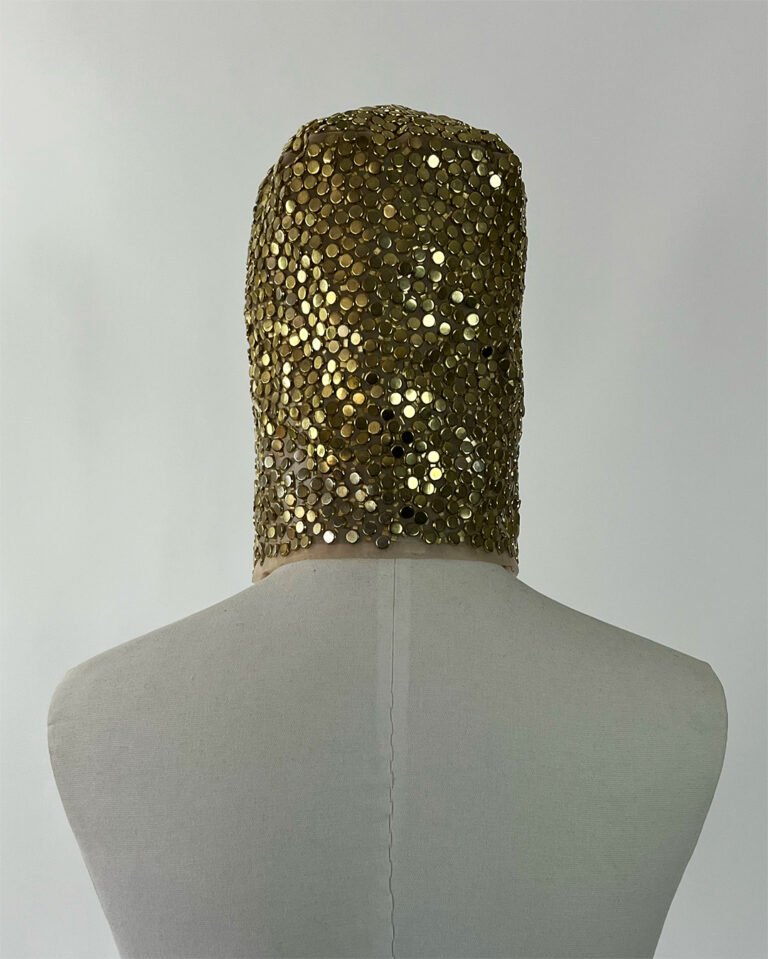
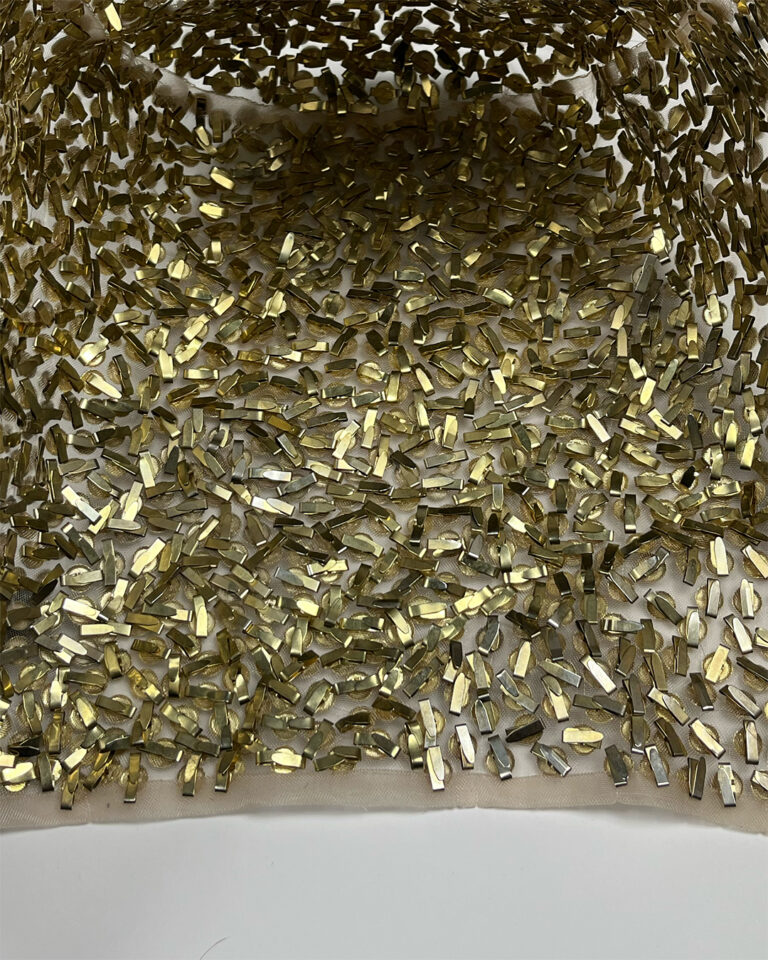
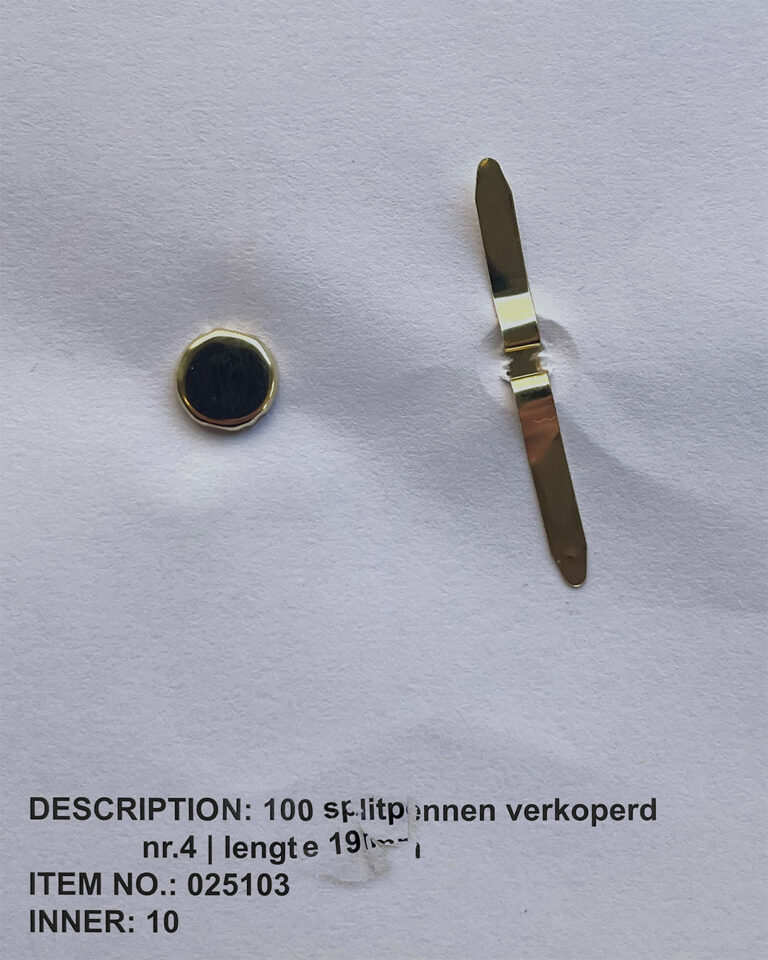
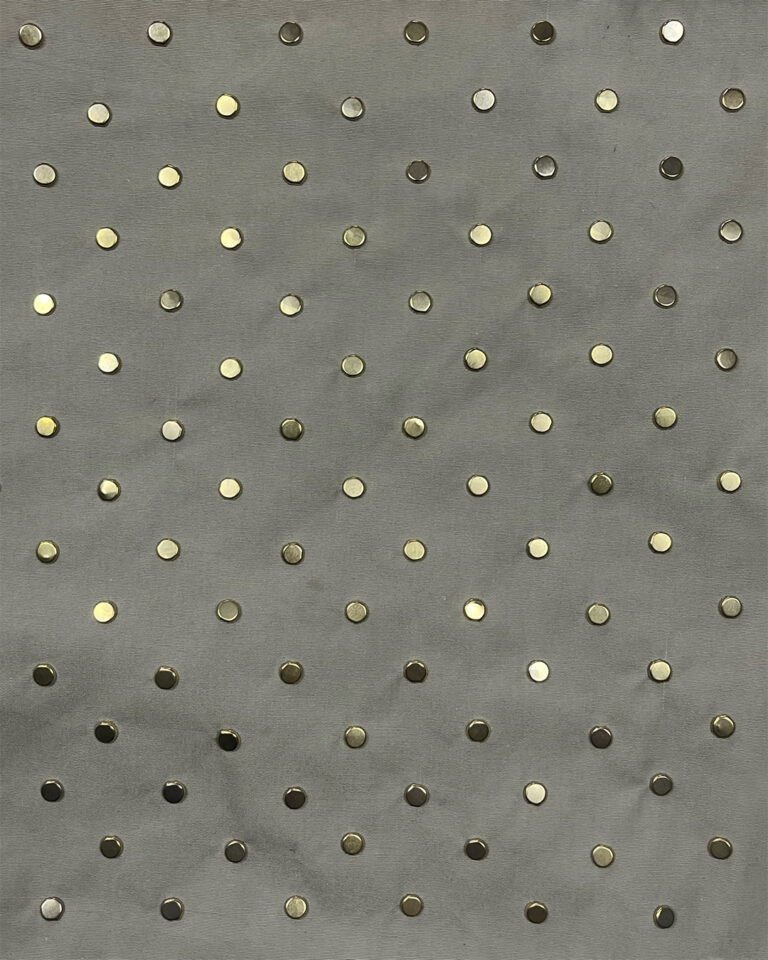
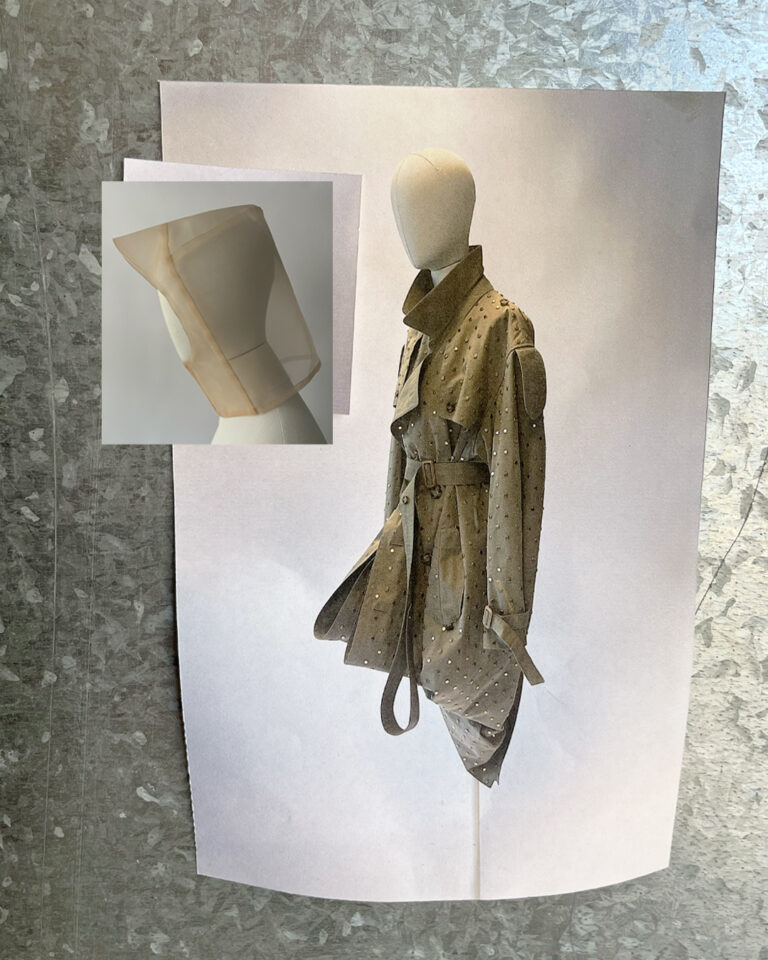
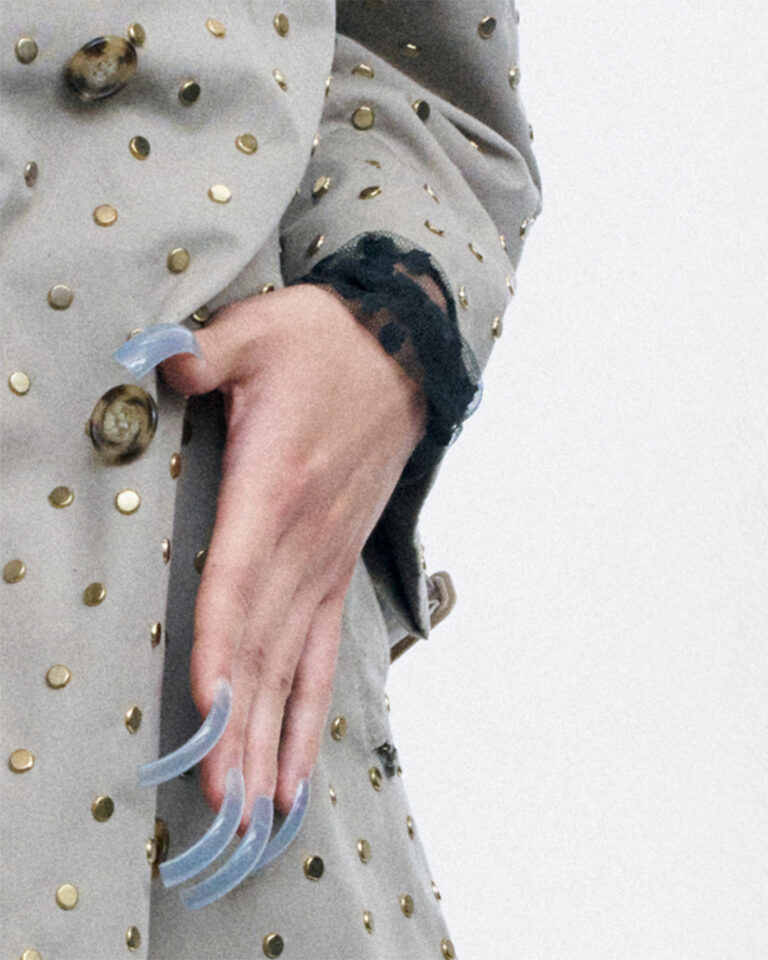
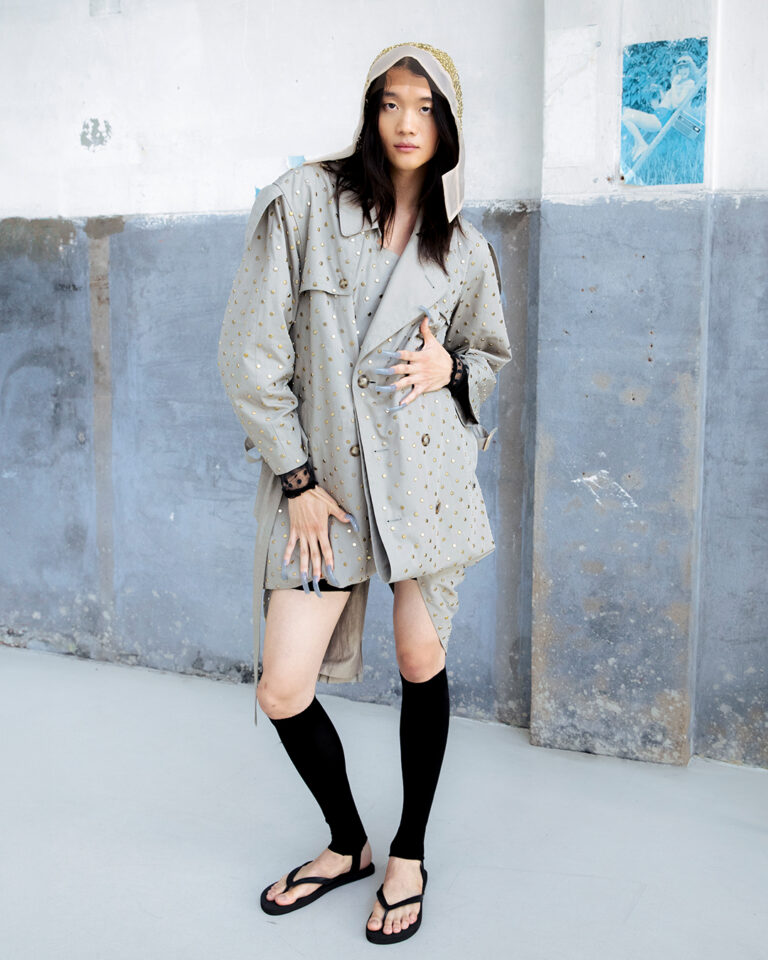
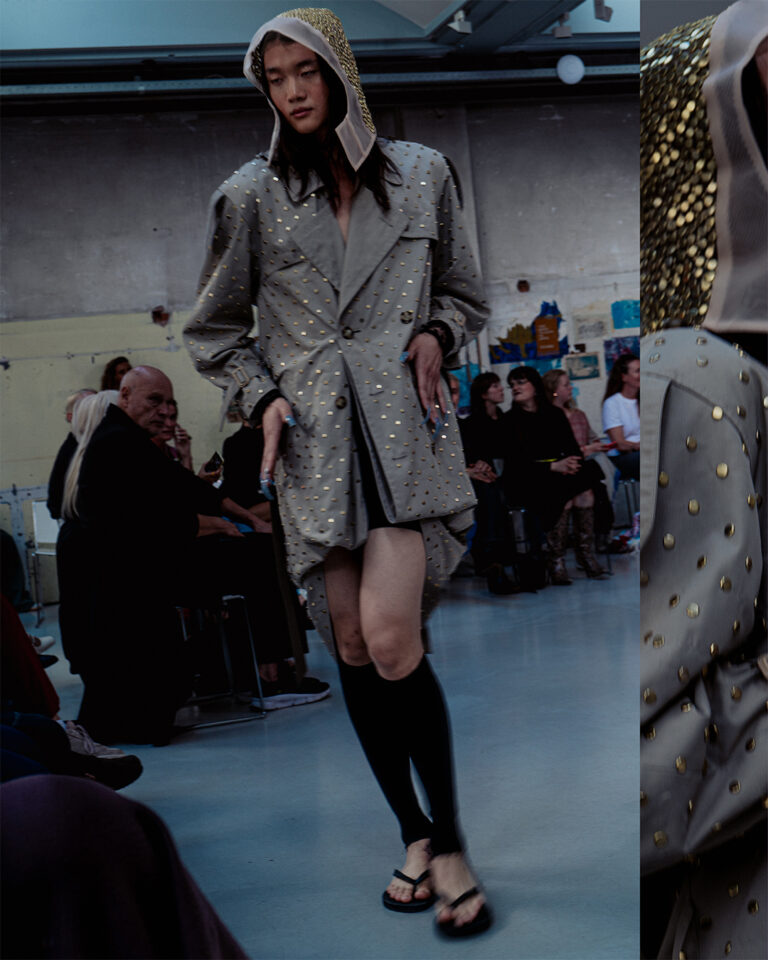
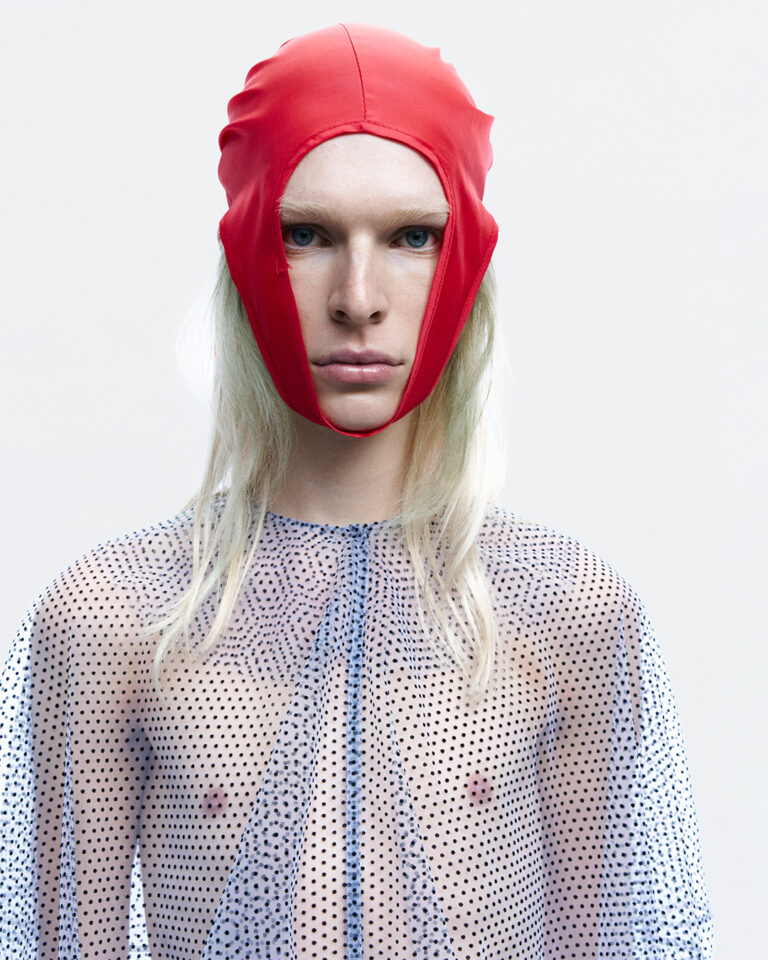
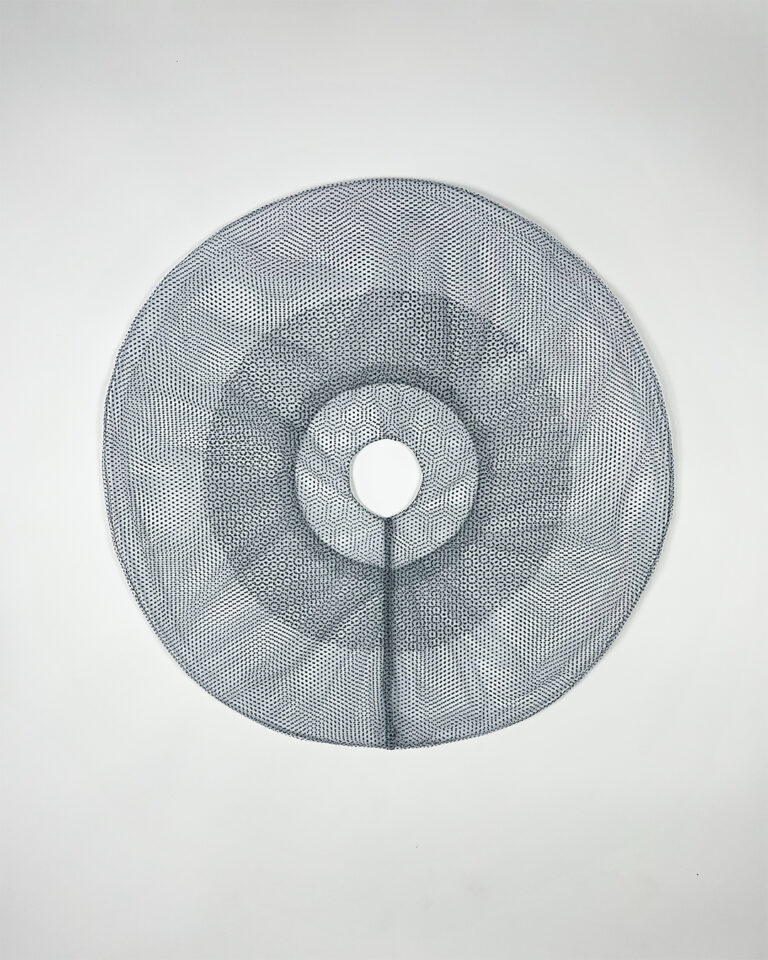
Jie wears folded-under 2240 split pin trench coat, originally produced by Westbury for C&A, black lace polka-dot sleeves, and 1220 split pin translucent capuchon made out of deadstock nylon mesh


vijftien,
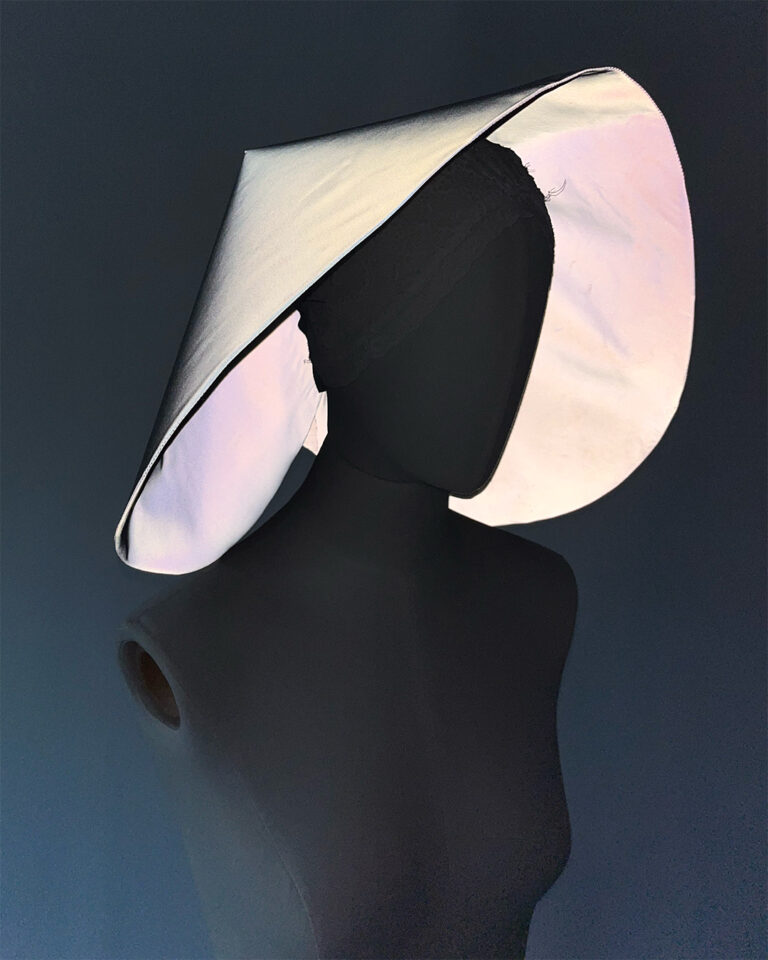
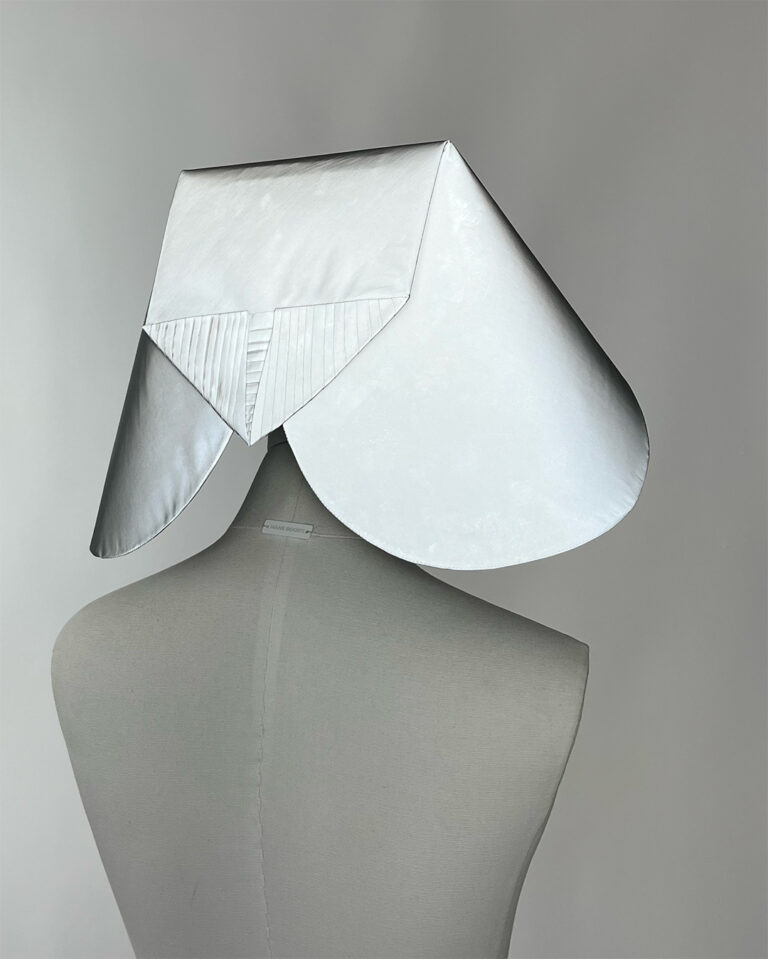
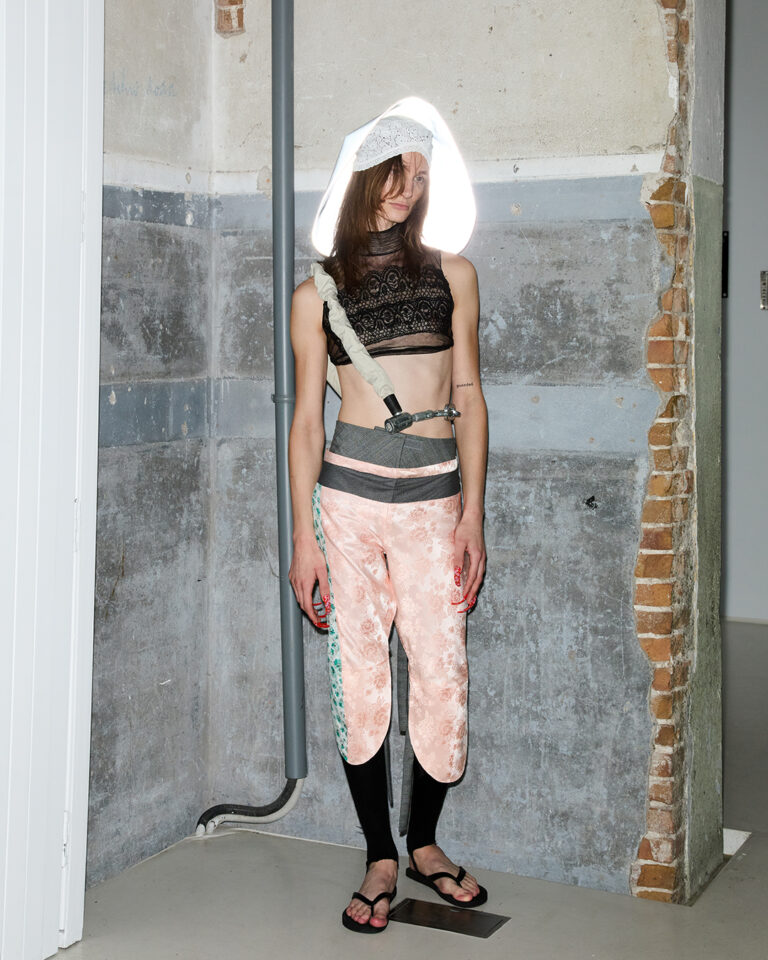
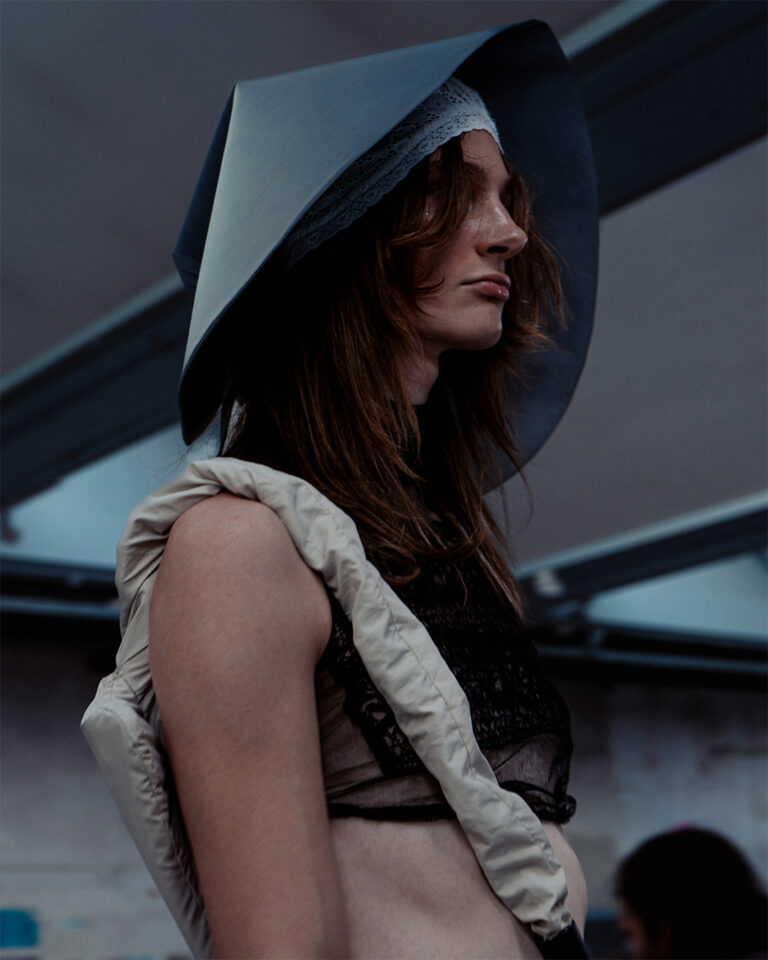
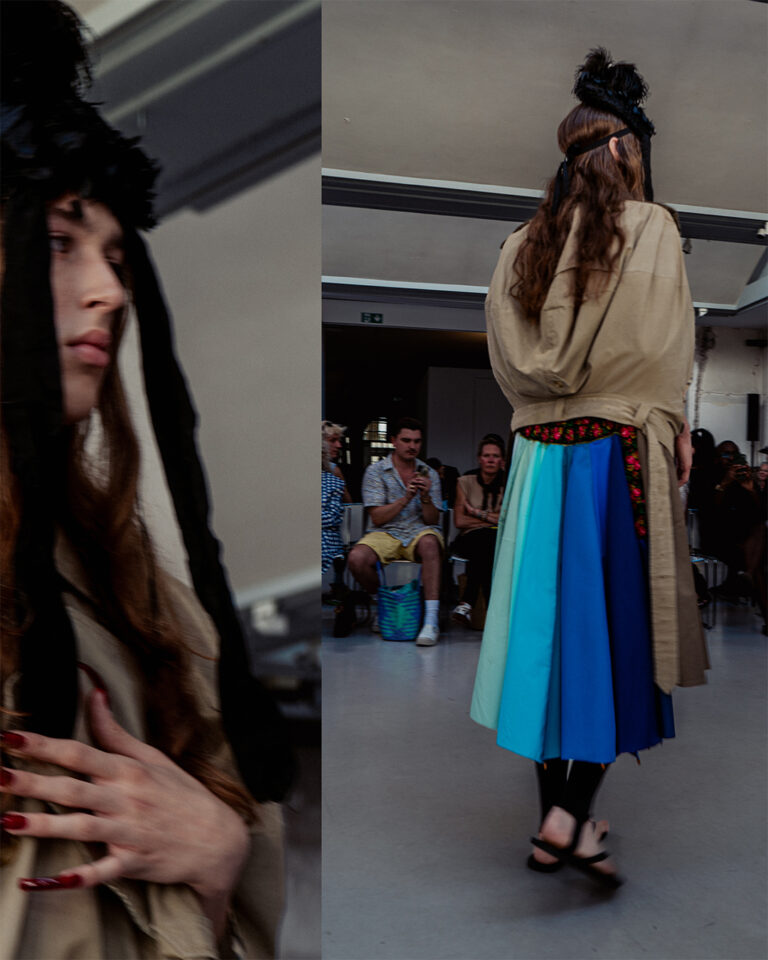
Emma wears a 3M reflective Zuid-Beveland Protestant cap, traditionally made out of lace and worn as part of the regional dress of the former peninsula (schiereiland) Zuid-Beveland in the province of Zeeland. Pattern developed by Jankees Goud for Zeeuws Museum.
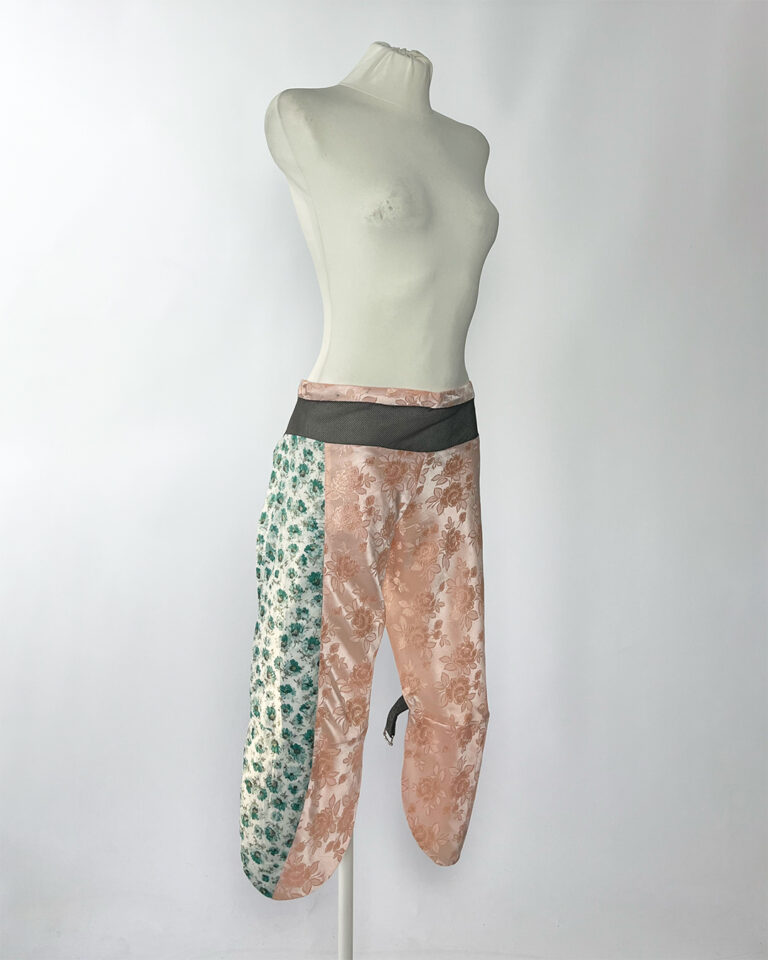
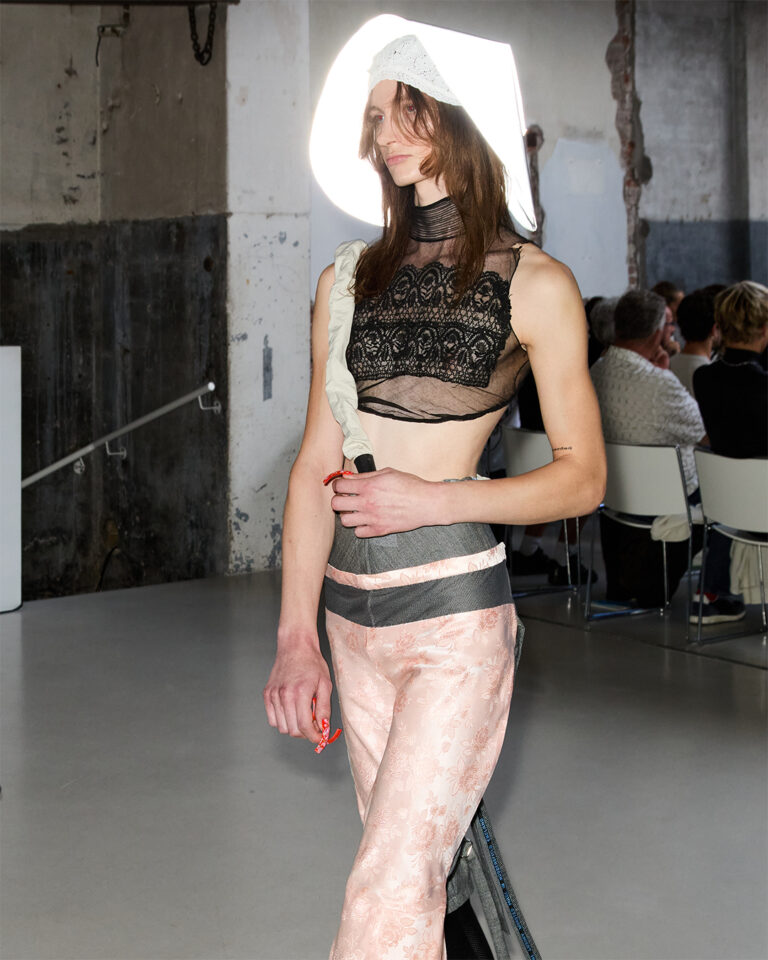
Rain leg made out of original silk and cotton Zeeuwse doek (wrap shawl), worn on grey Holland & Sherry fine wool plaid capri, black antique lace top, and bike chain cover handbag made out of a Charles River Apparel rain jacket, courtesy of Stichting Restore Kringloop / ACV Groep


zestien,
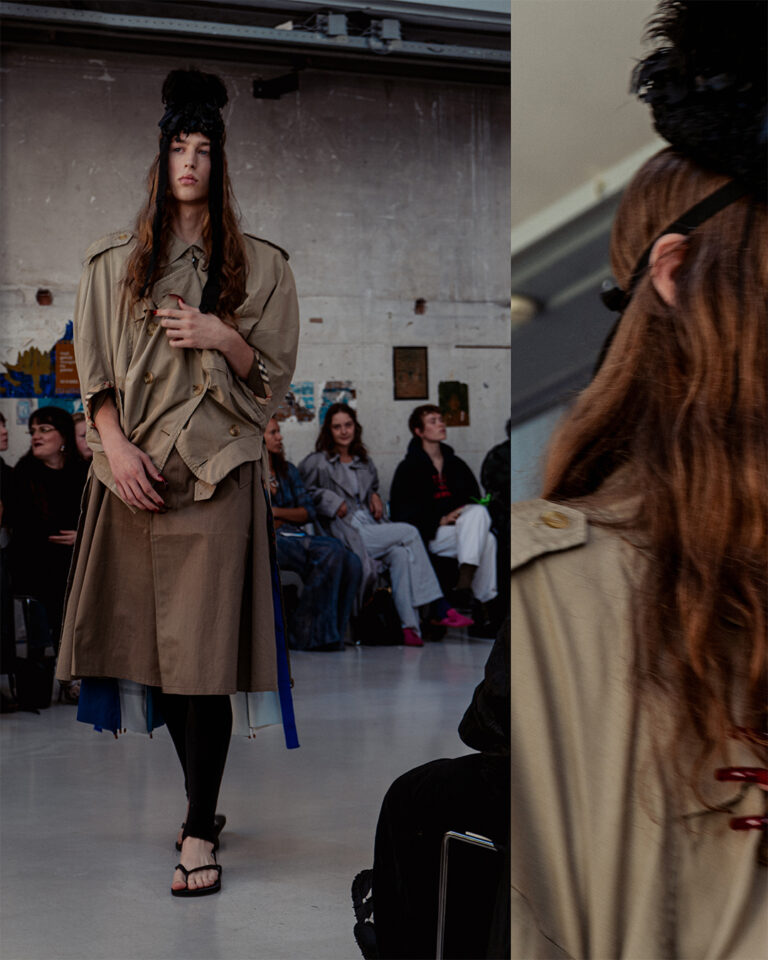
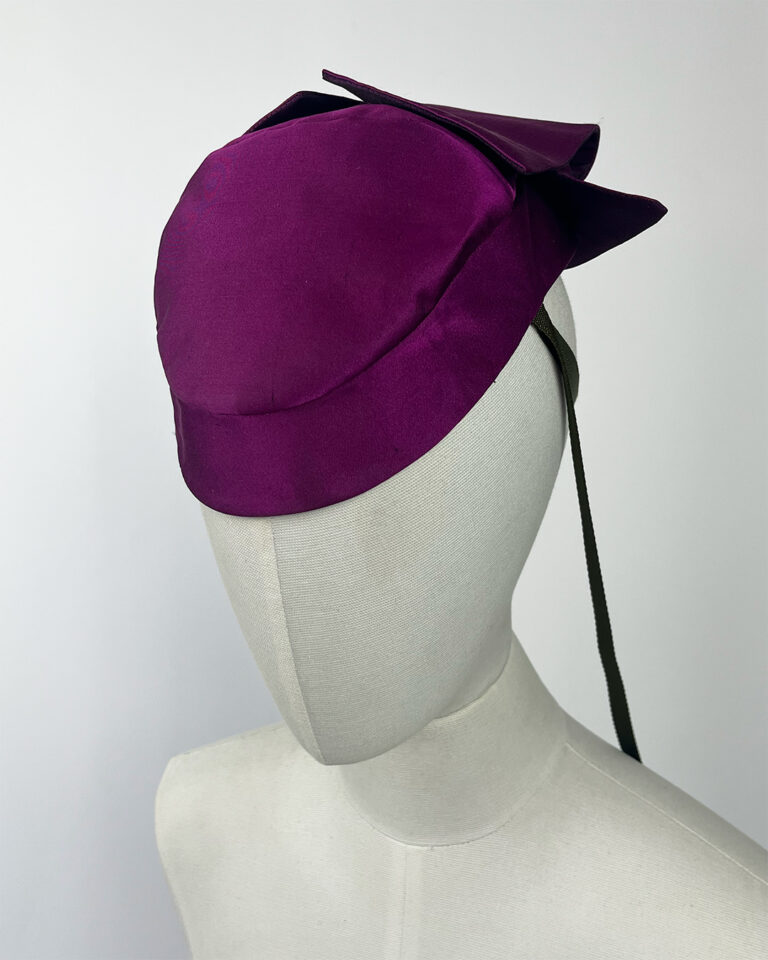
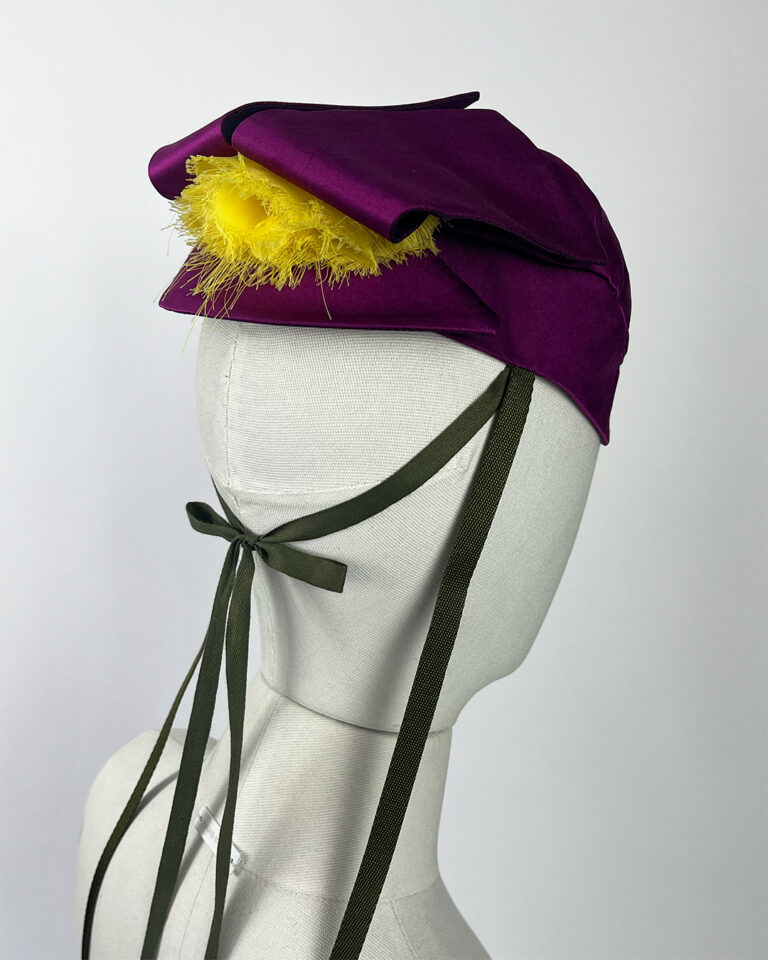
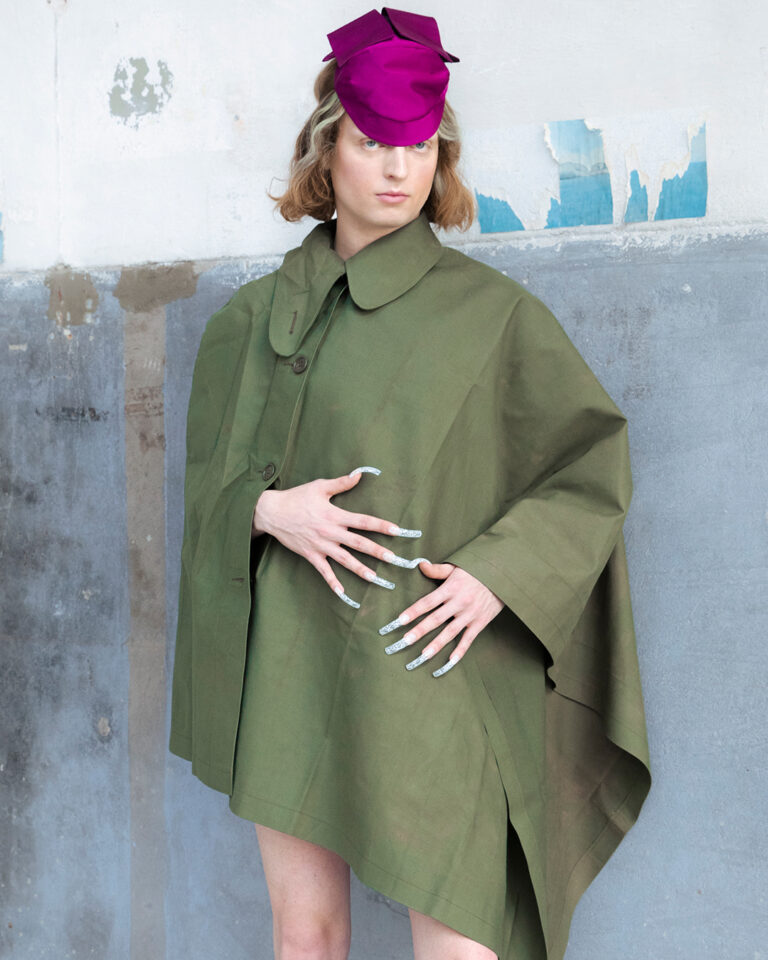
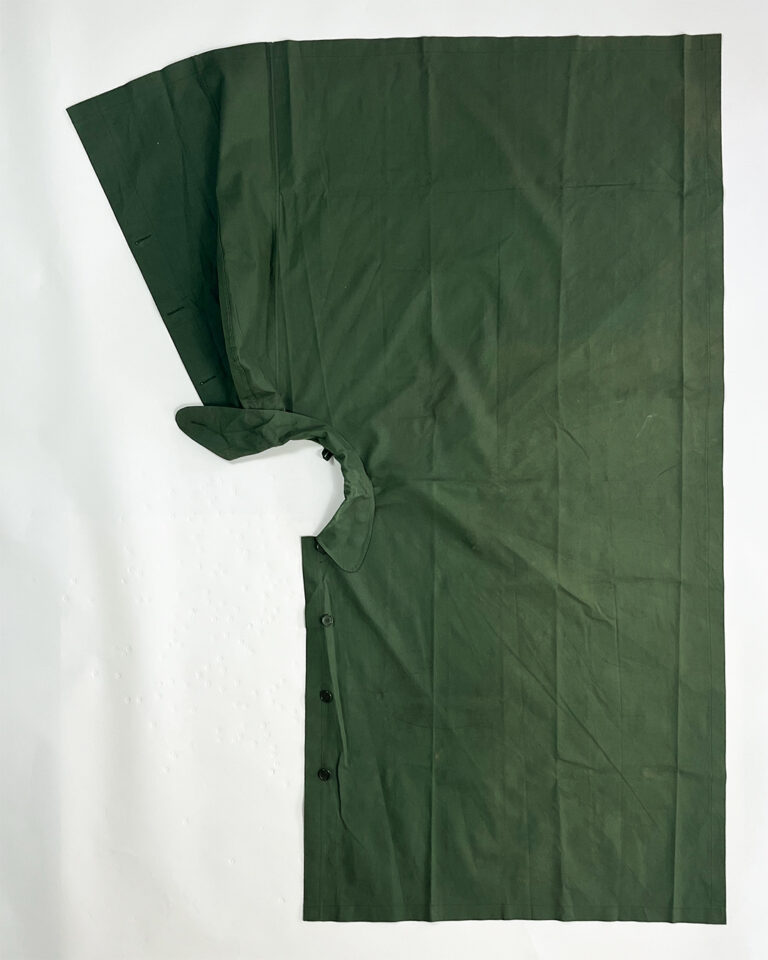
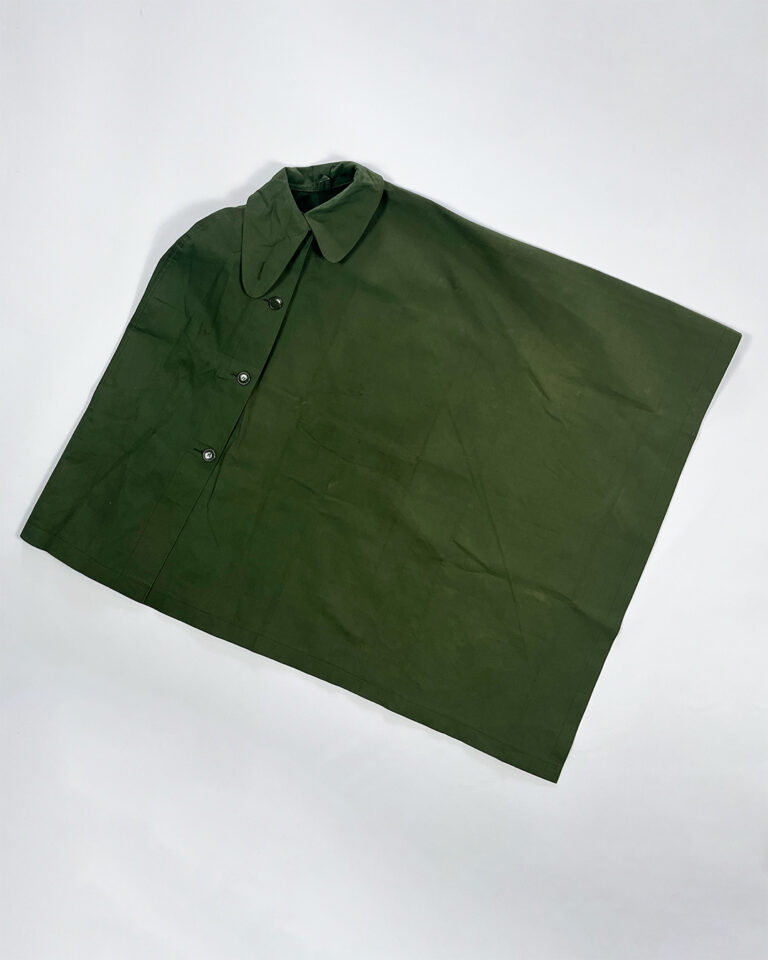
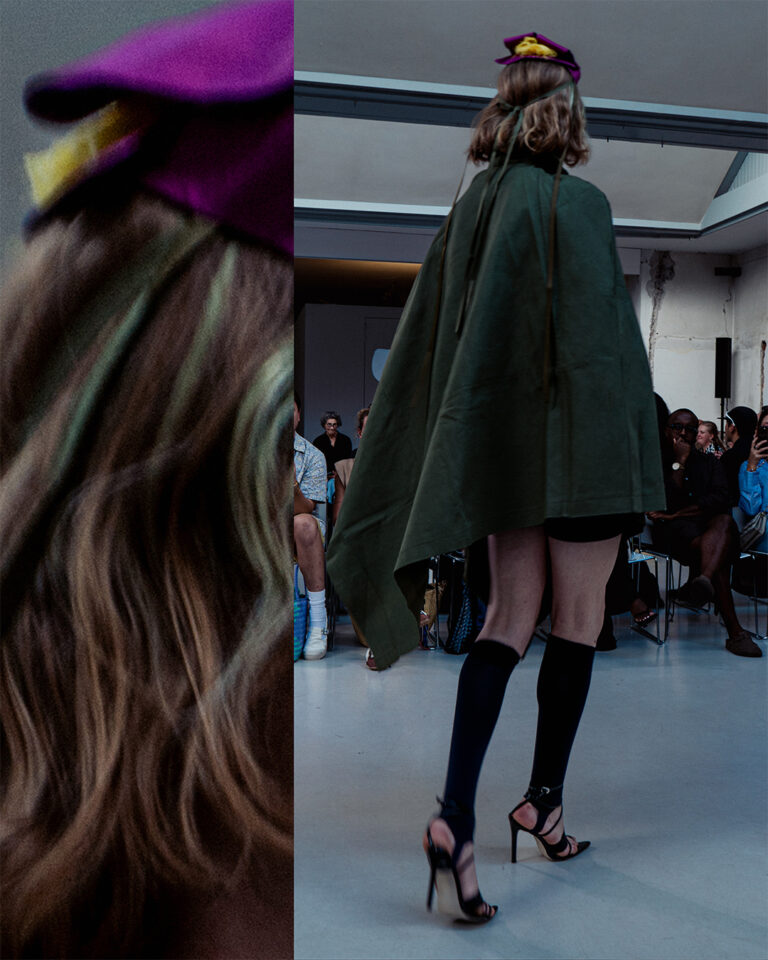
Bink wears archetypal Dutch Defence cape and purple silk plié hat. (opgevouwen)
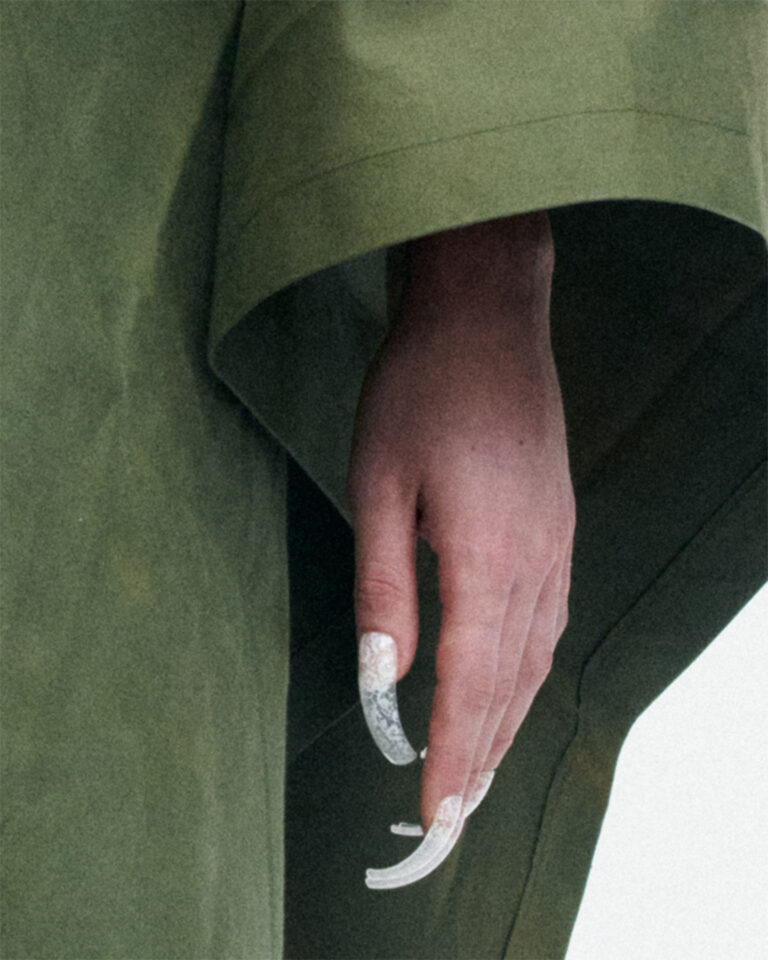
Found as an original piece of Dutch military clothing, this olive-green, densely woven twill regen-/beschermcape of grondzeil (rain protective cape or groundsheet) dates from 1977. Made for the Koninklijke Landmacht and stamped K.L., its function is straightforward: to keep the body and equipment dry while moving and working outdoors.
The cape dates from a period in which Dutch military clothing was developed within the context of the Cold War and the Netherlands’ role within NATO. Only a few years after its production, Dutch land forces were deployed to Lebanon as part of UNIFIL. There is no evidence that this particular cape was used in a military deployment. Its history remains unknown. What remains visible, however, is the original intention of the garment.
In Nat bij regen, the cape becomes a garment again, returned to the body, moving through the rain.
You don’t need to be a weatherman to know which way the wind blows


zeventien,
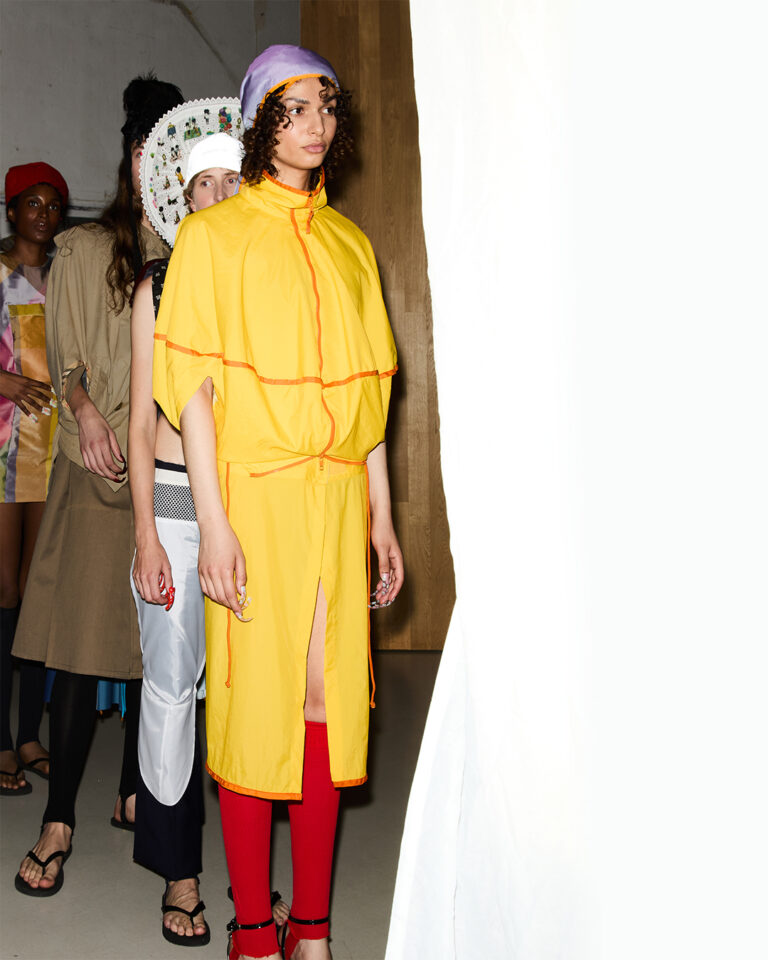
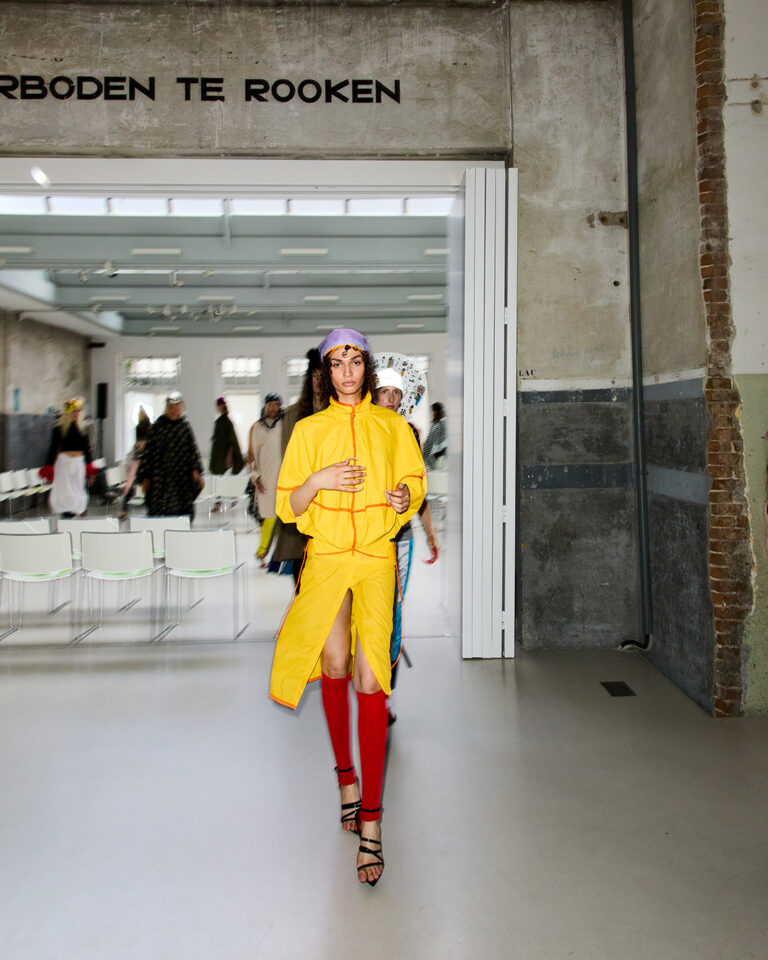
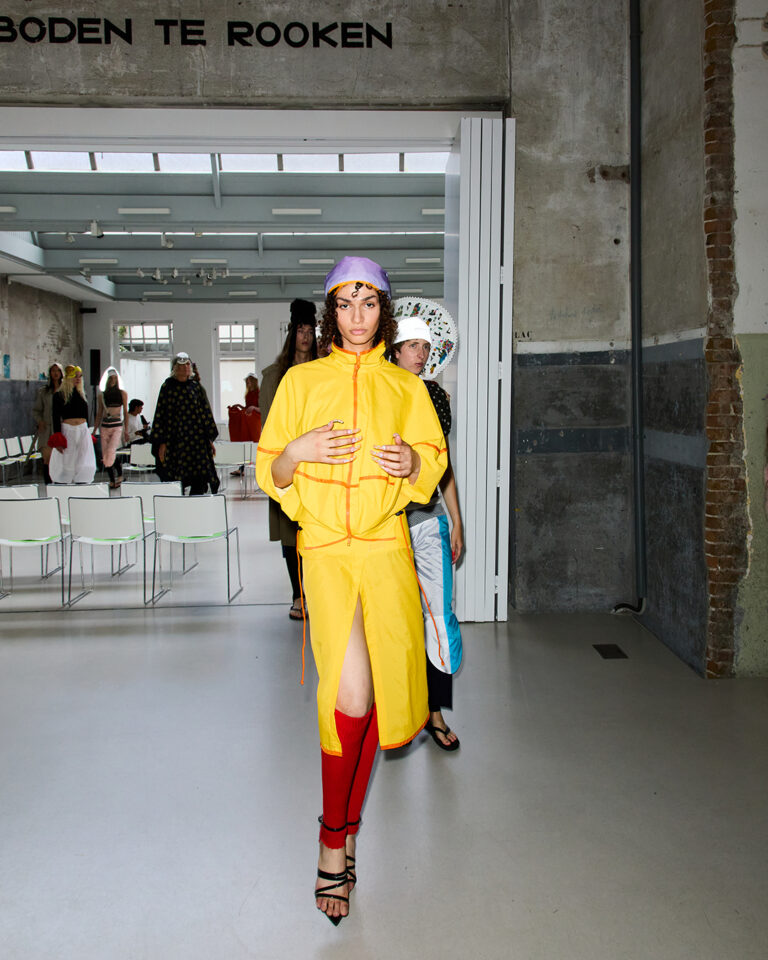
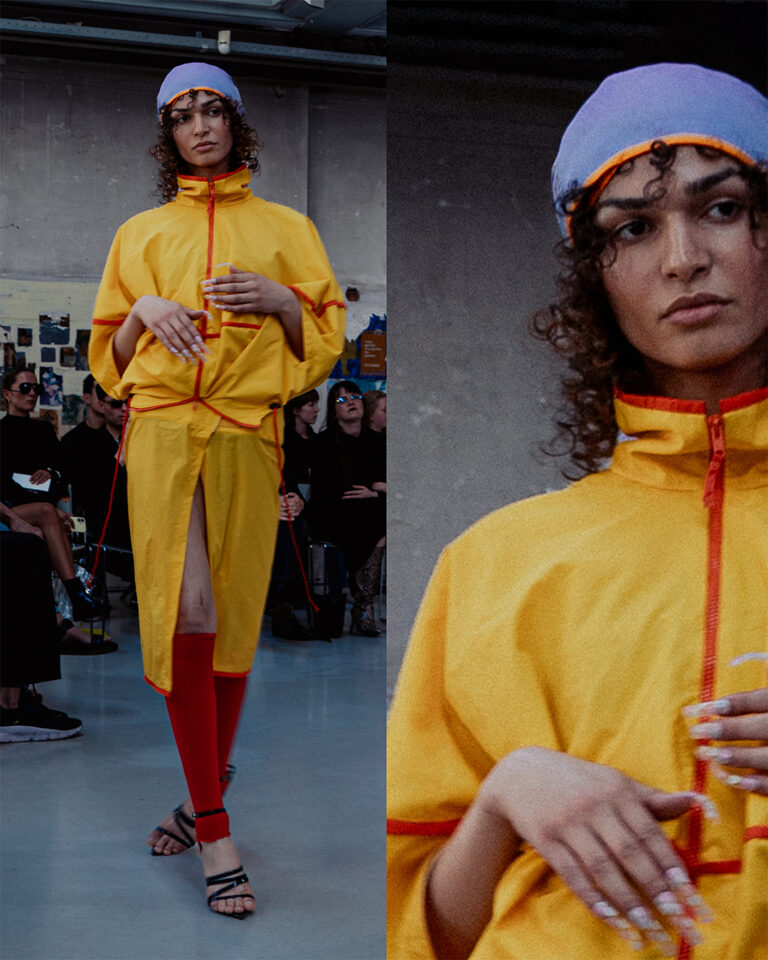
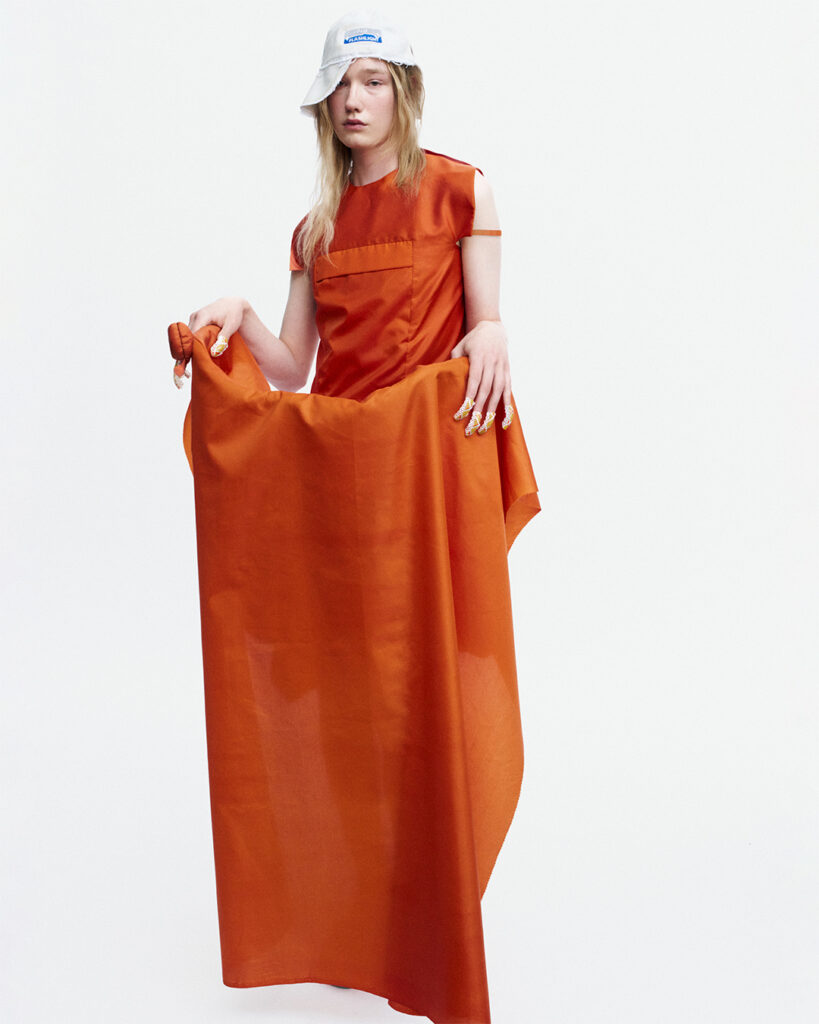
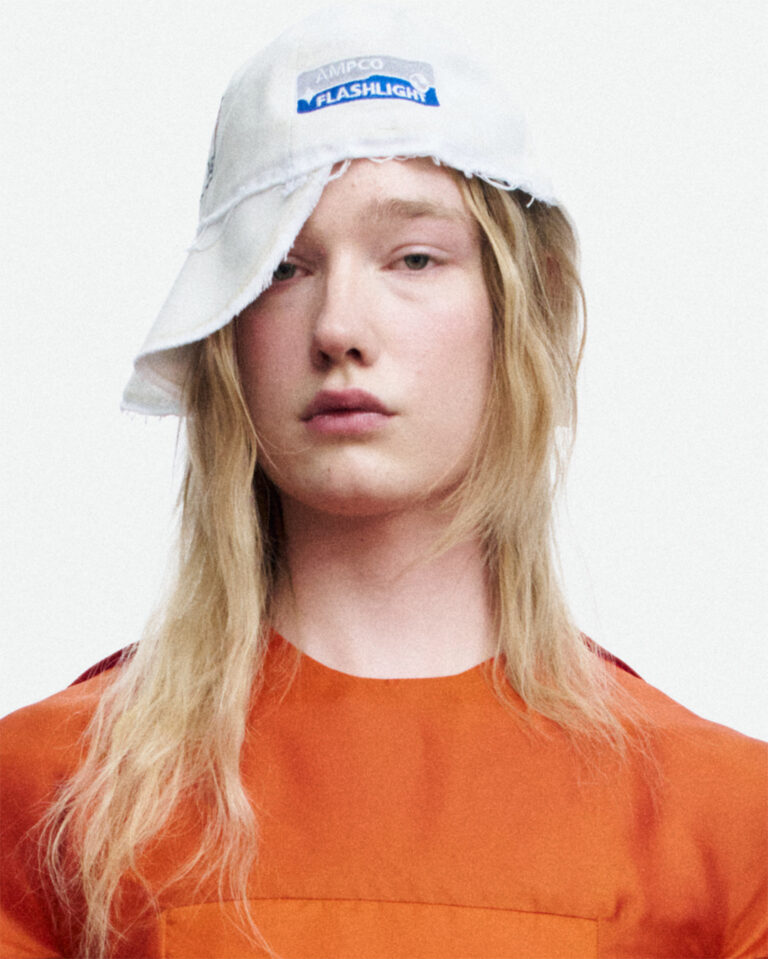
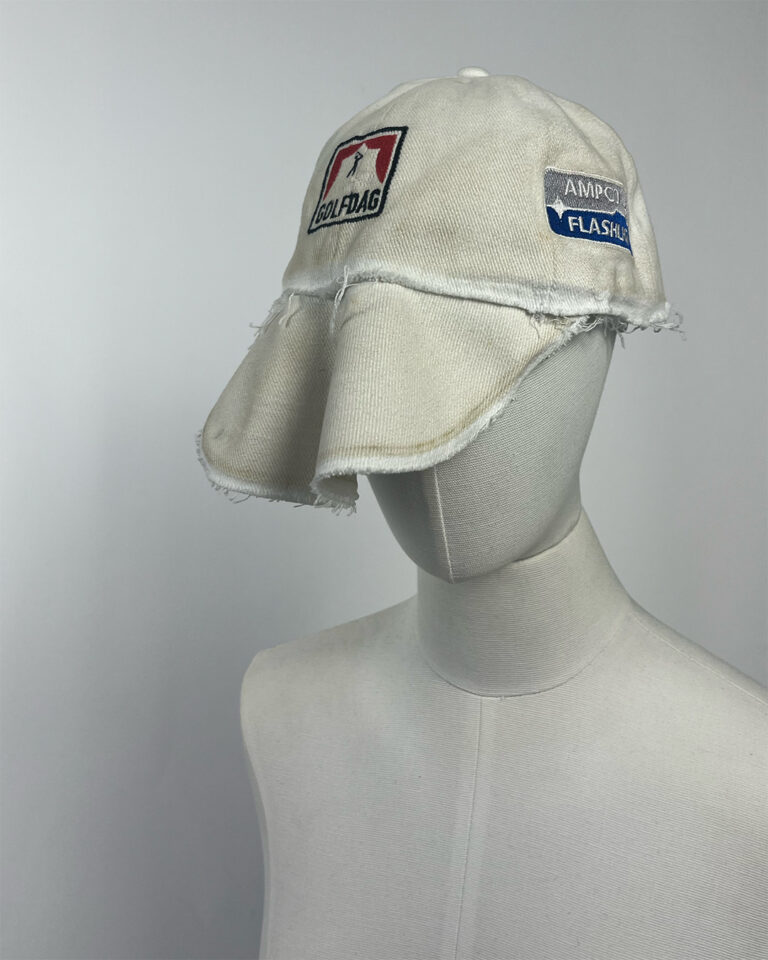
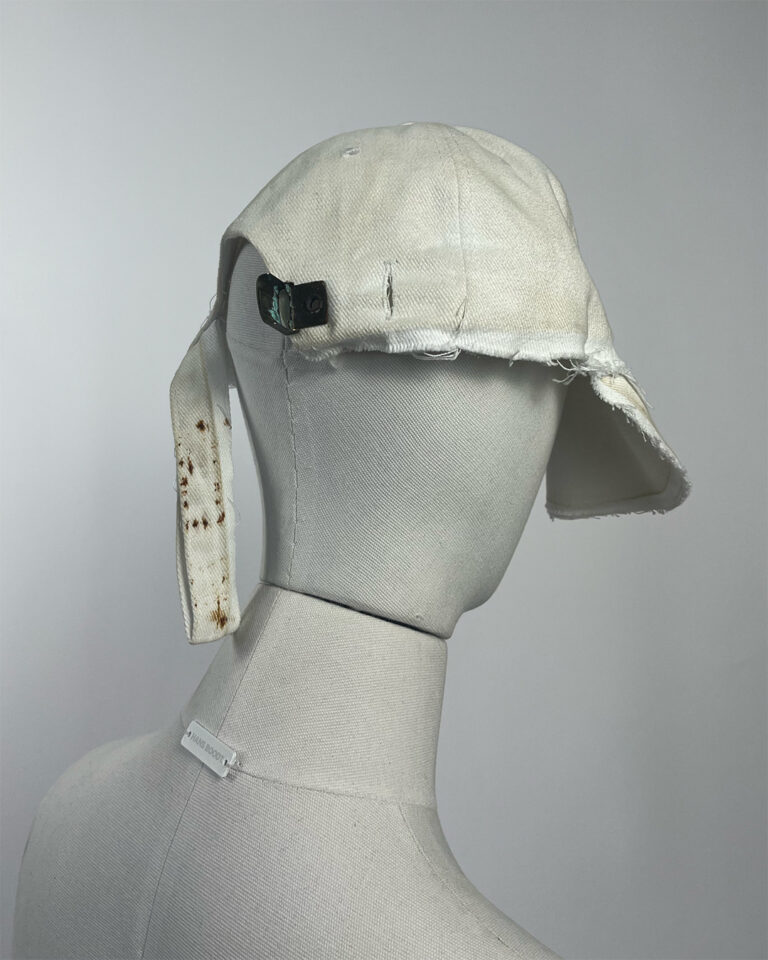
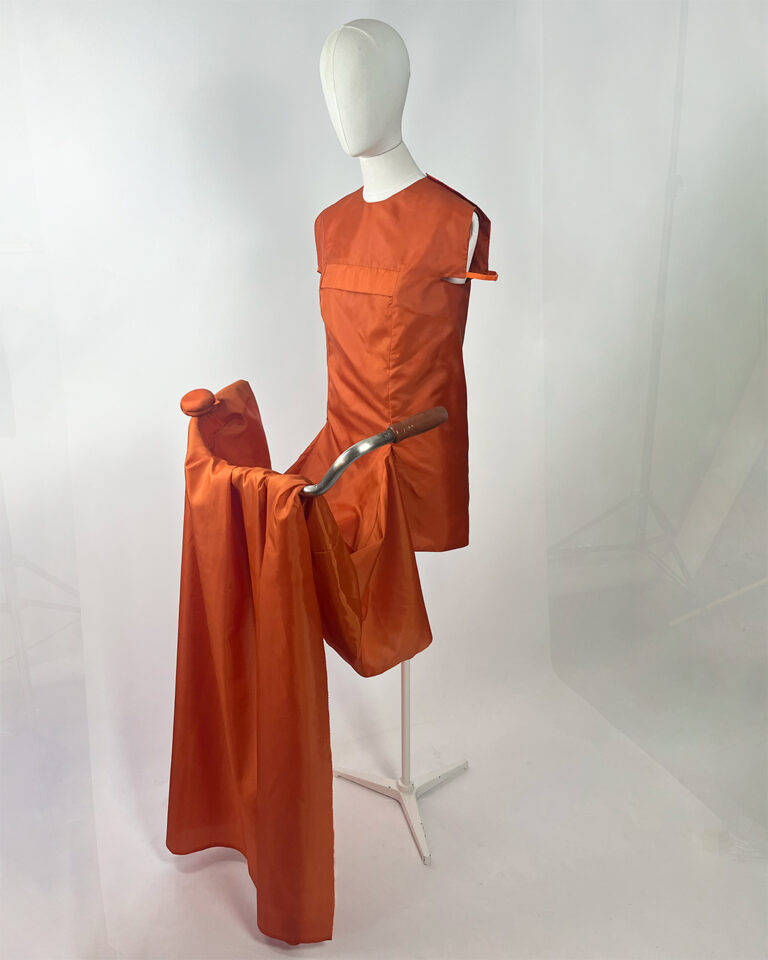
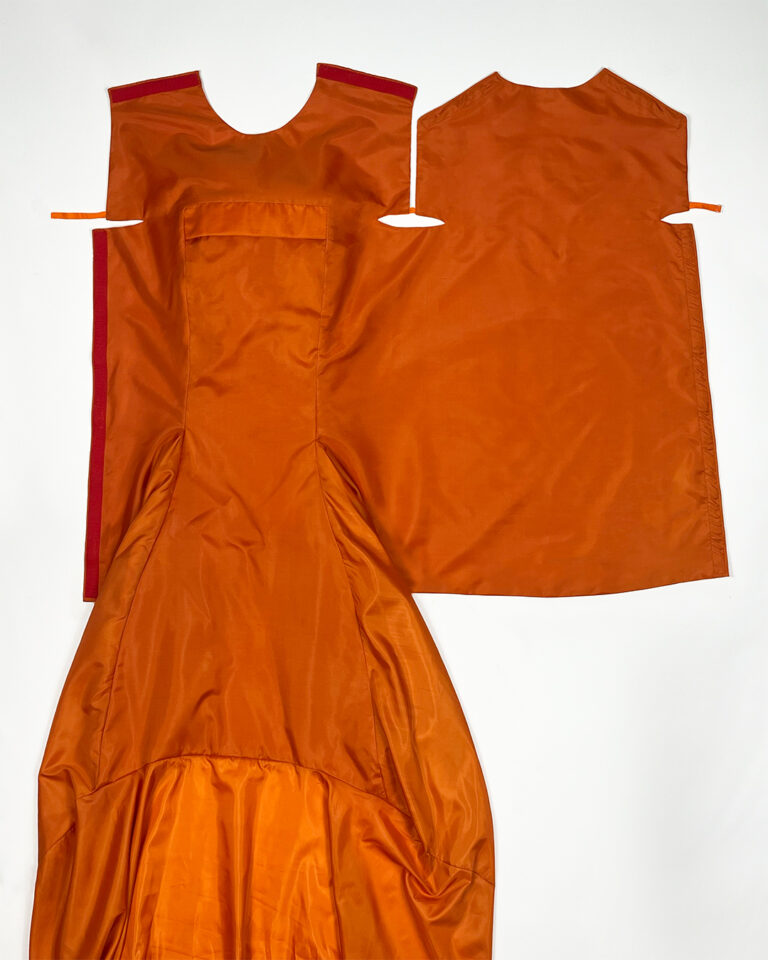
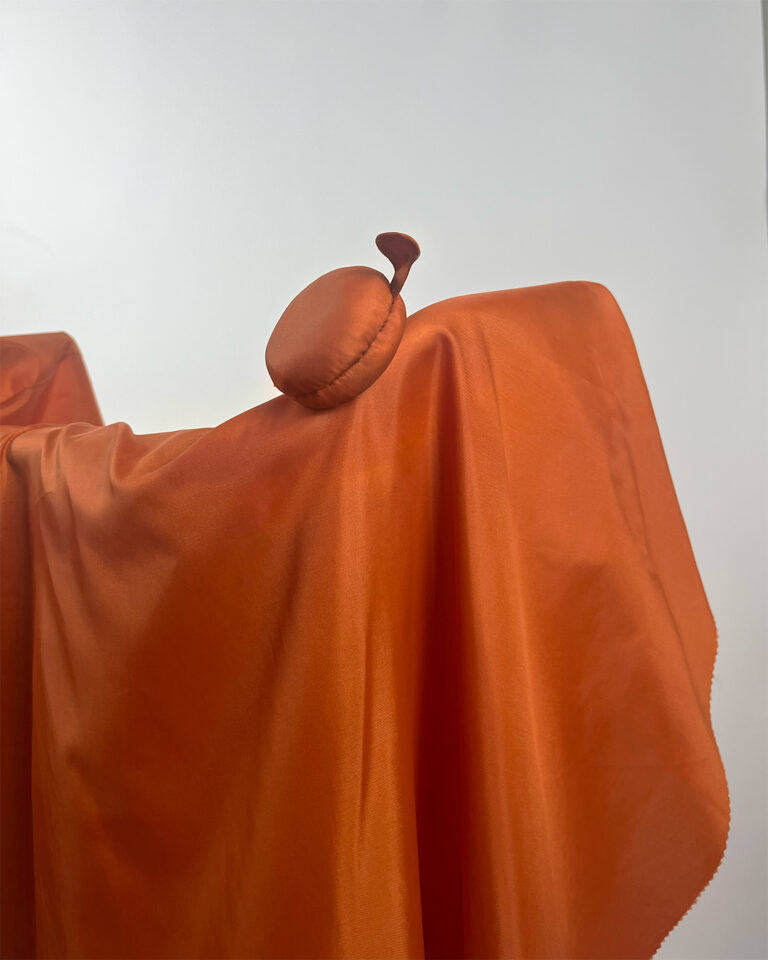
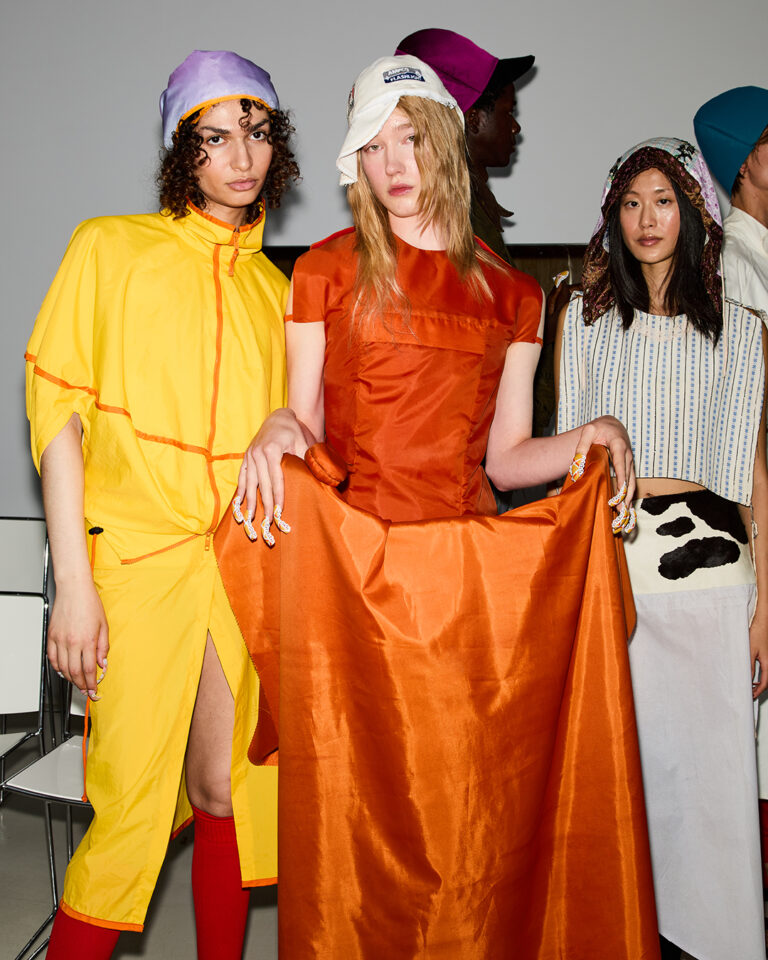
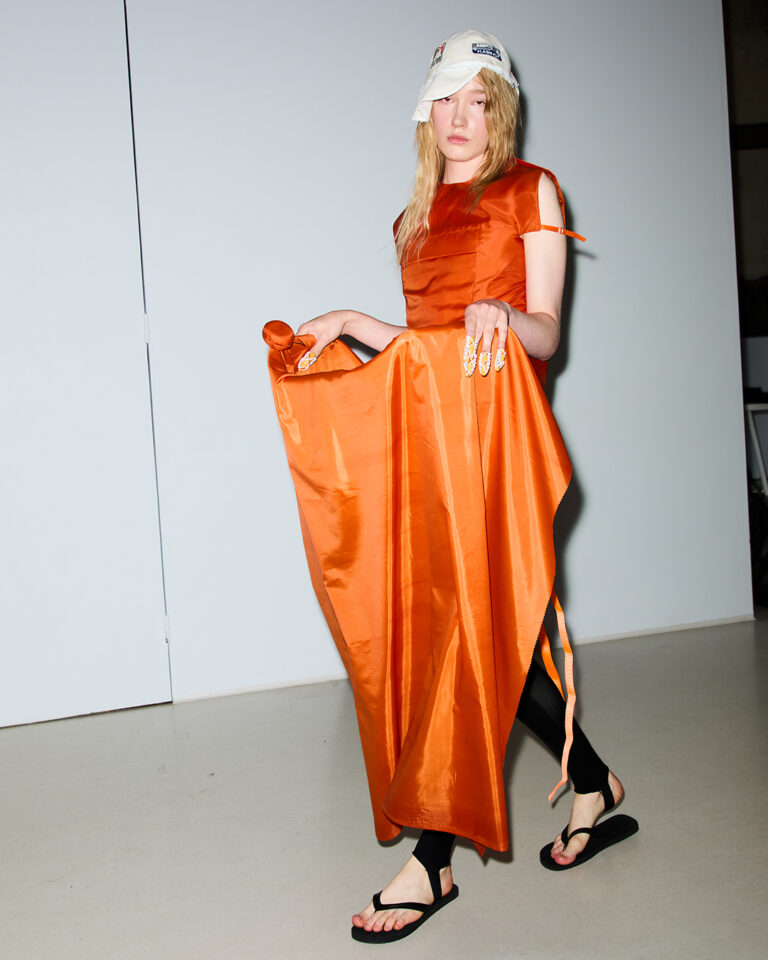
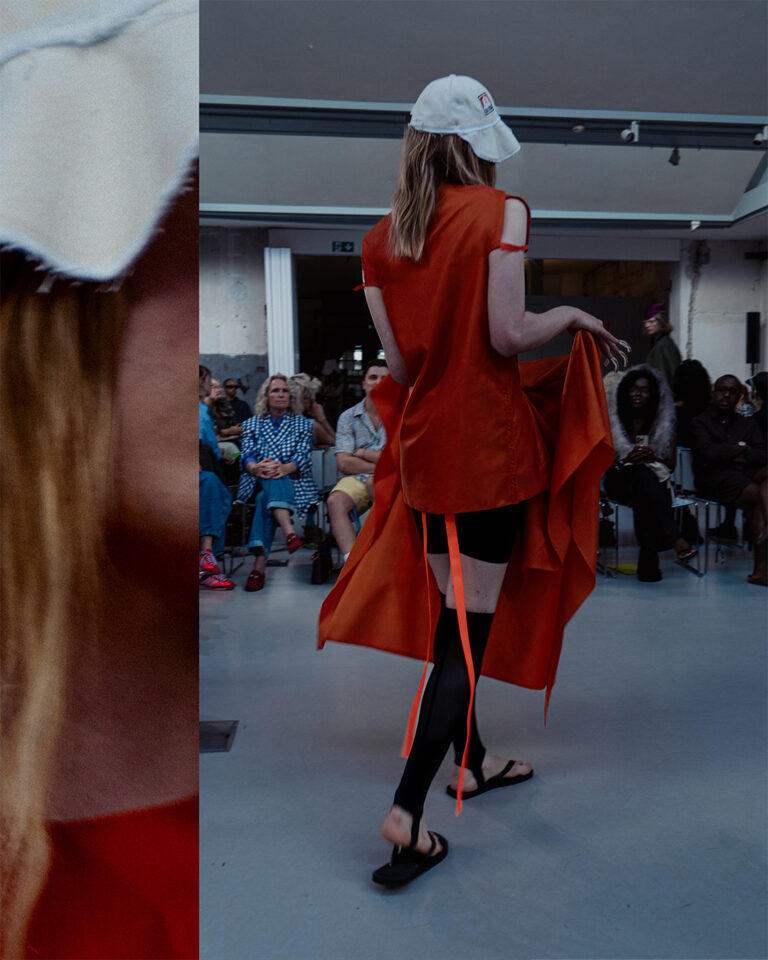
Guus wears soft white cap and orange flat-panel poncho dress with attached bicycle handlebar


achtien,
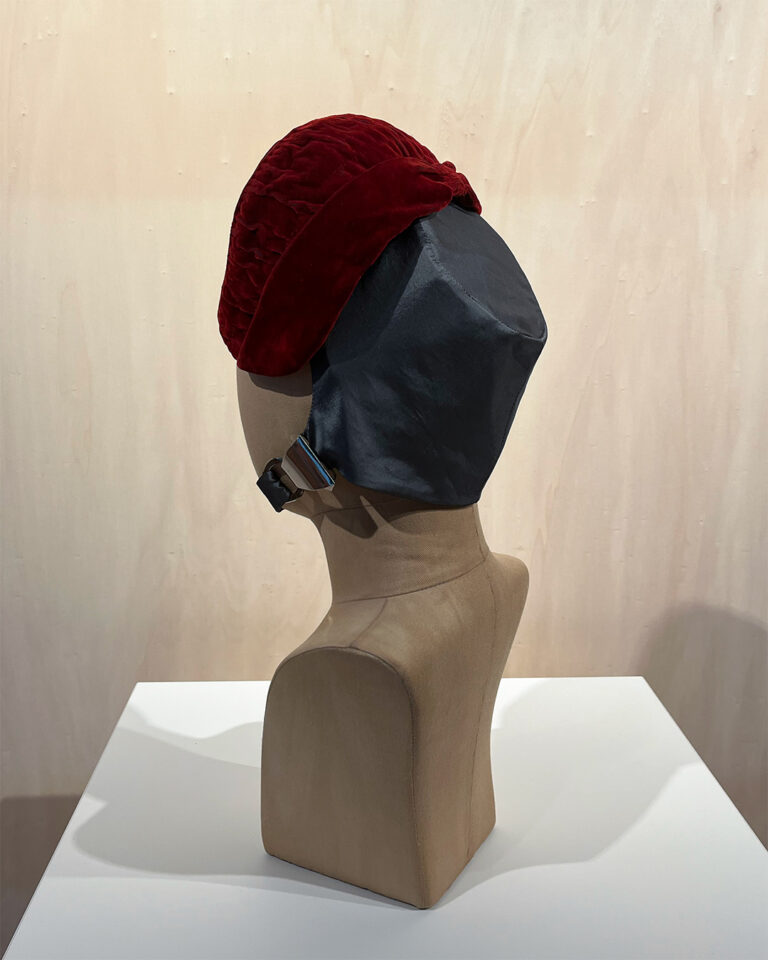
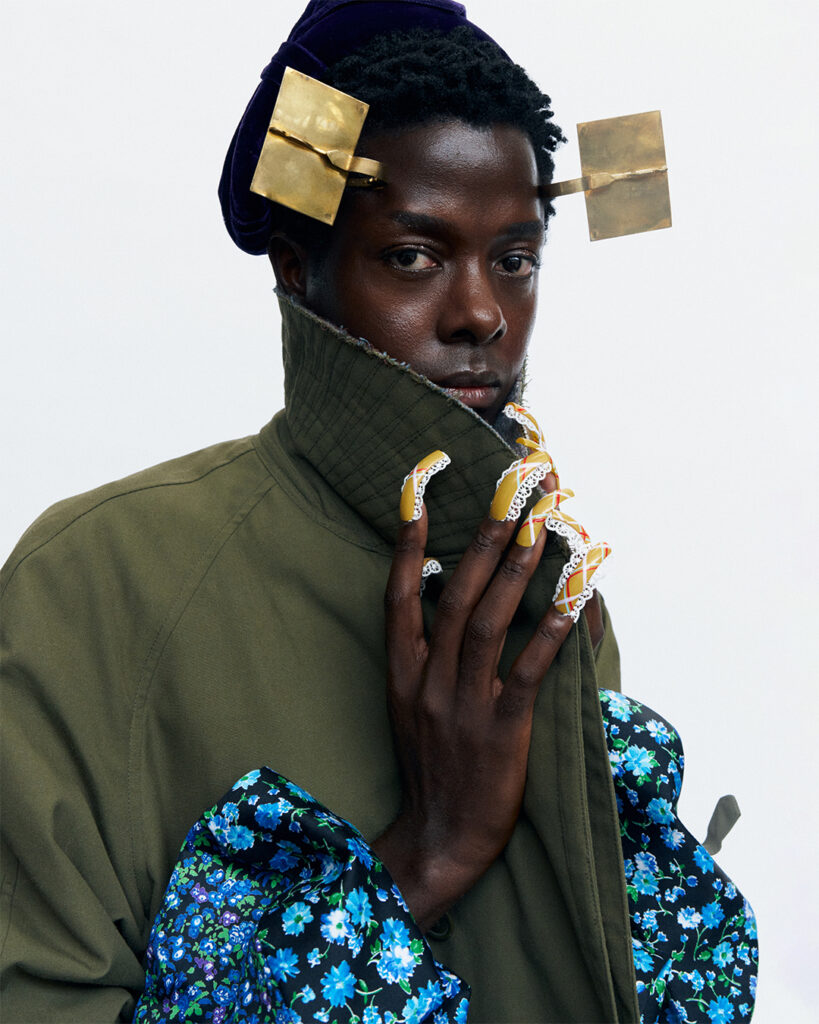
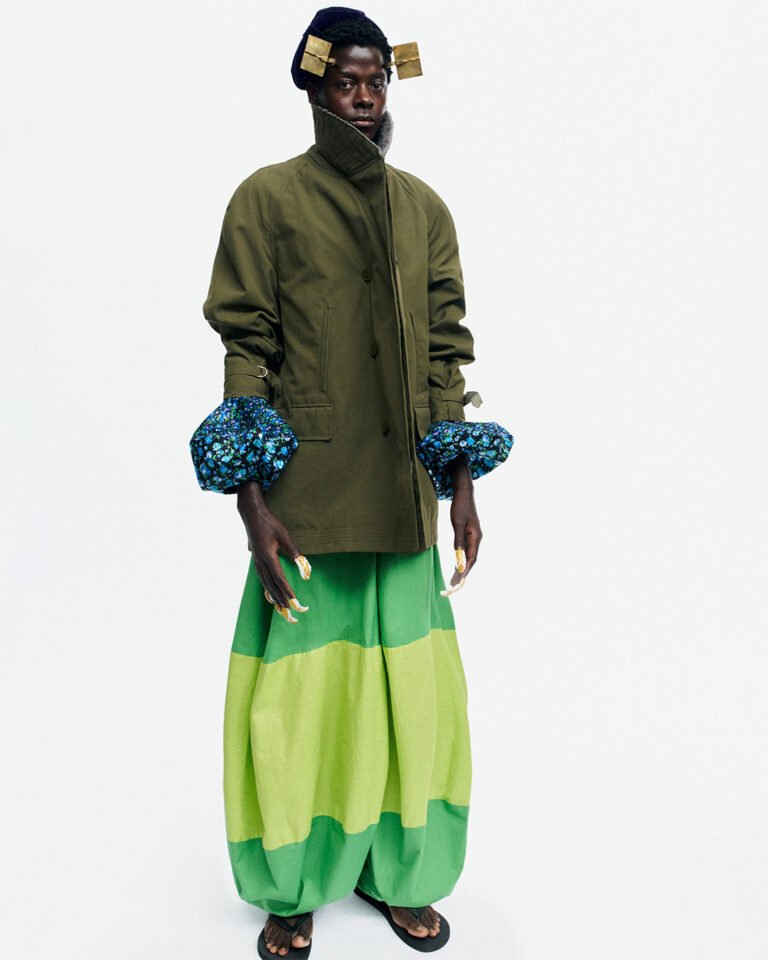
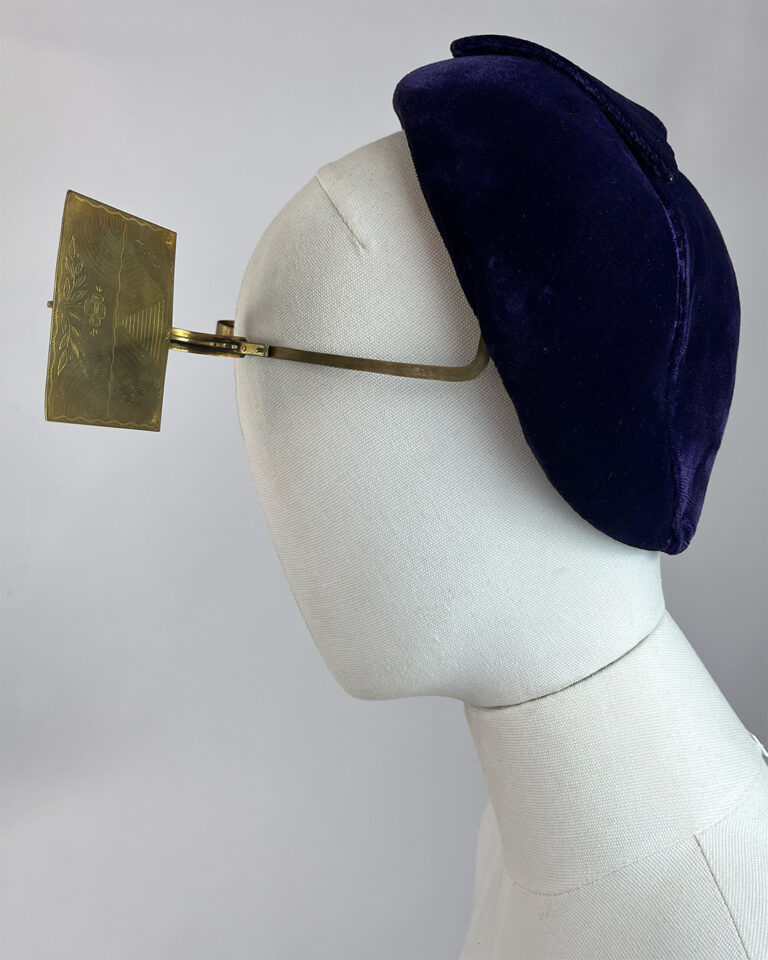
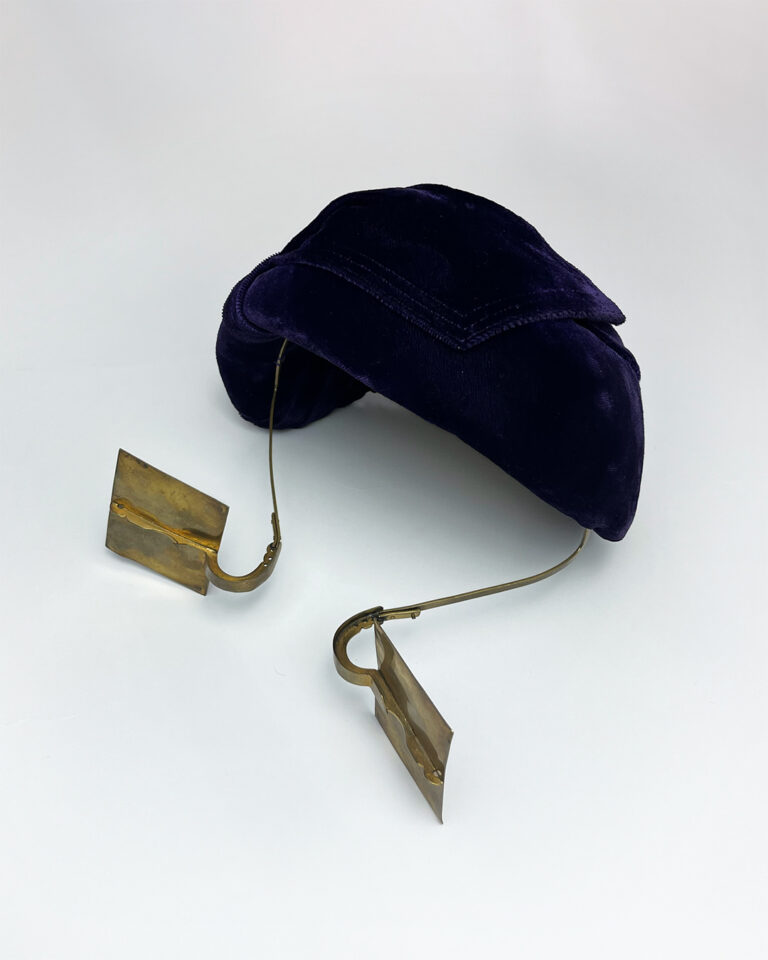
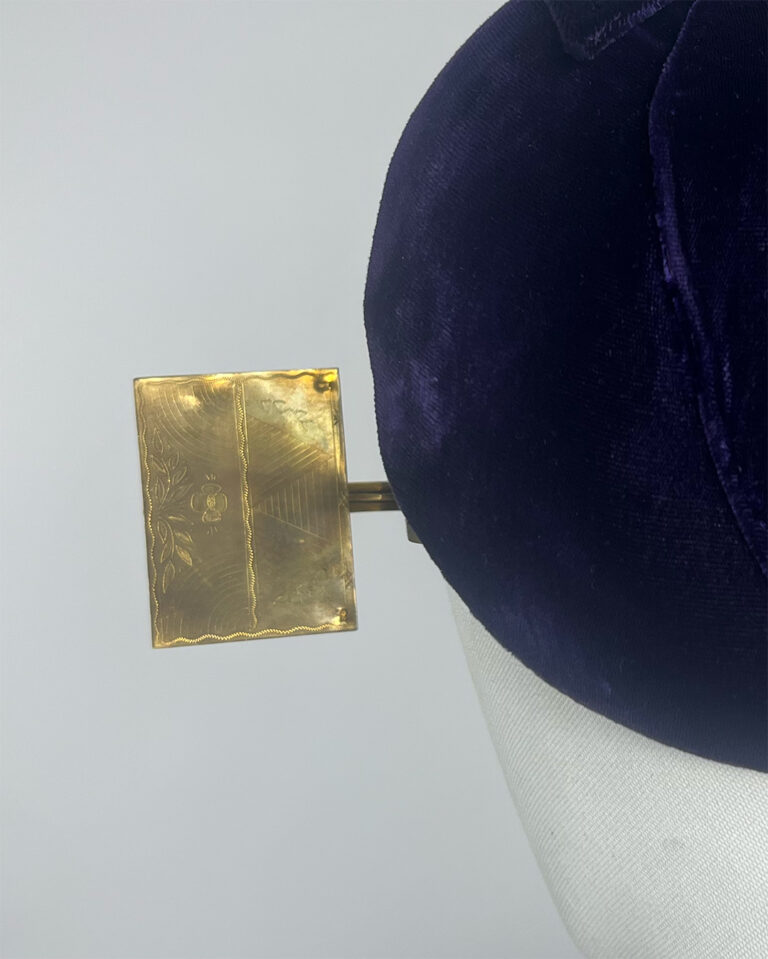
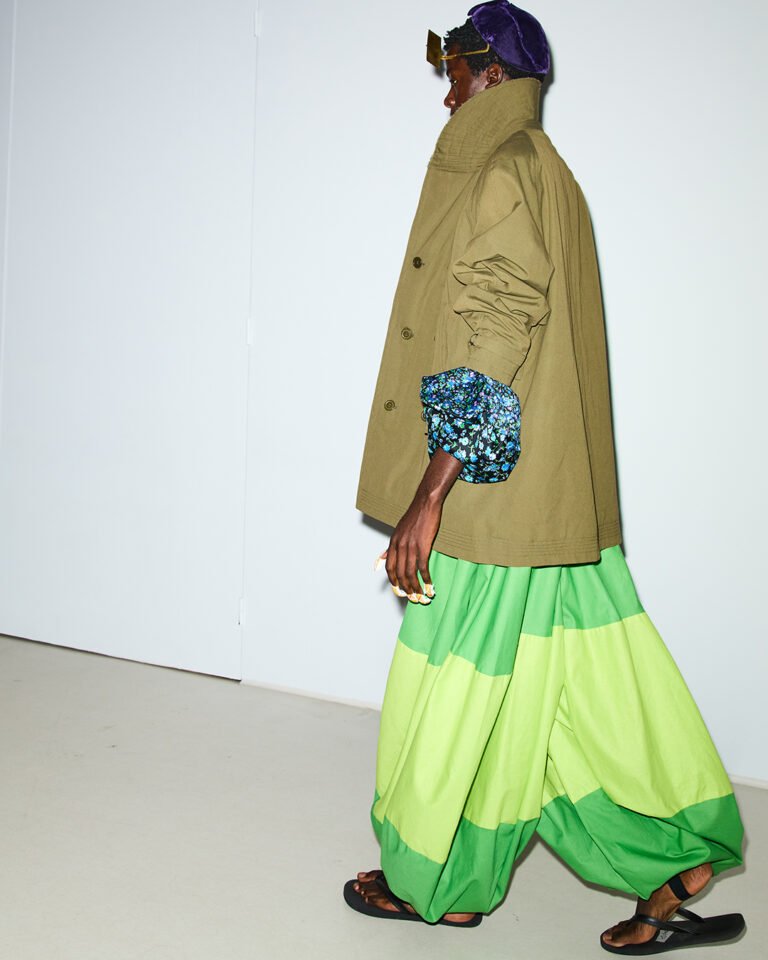
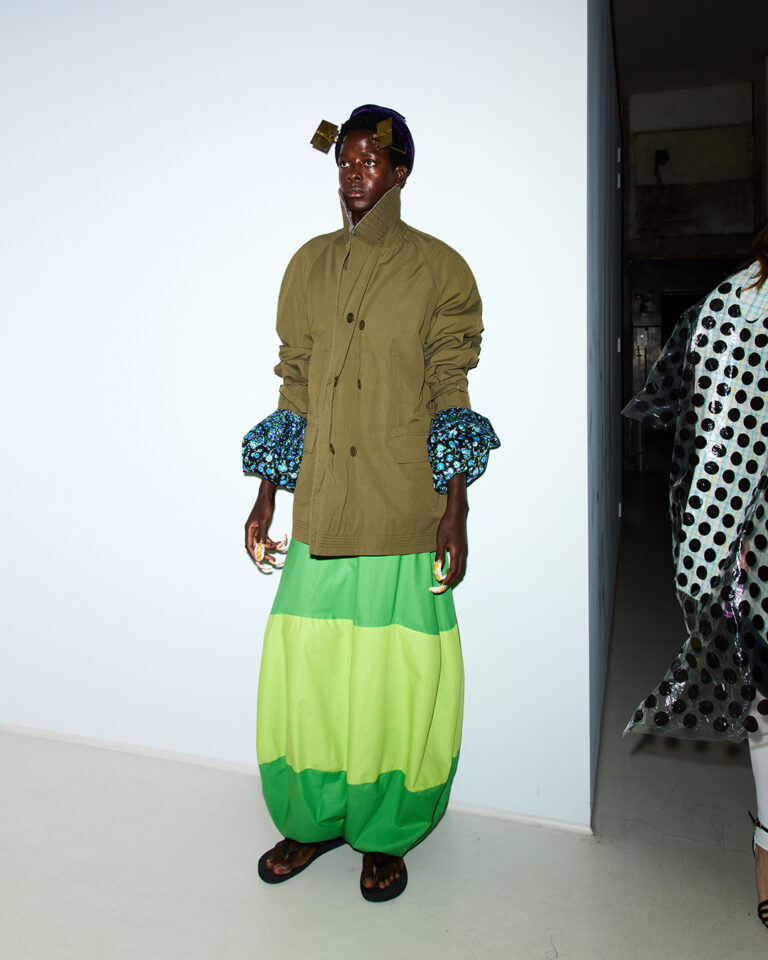
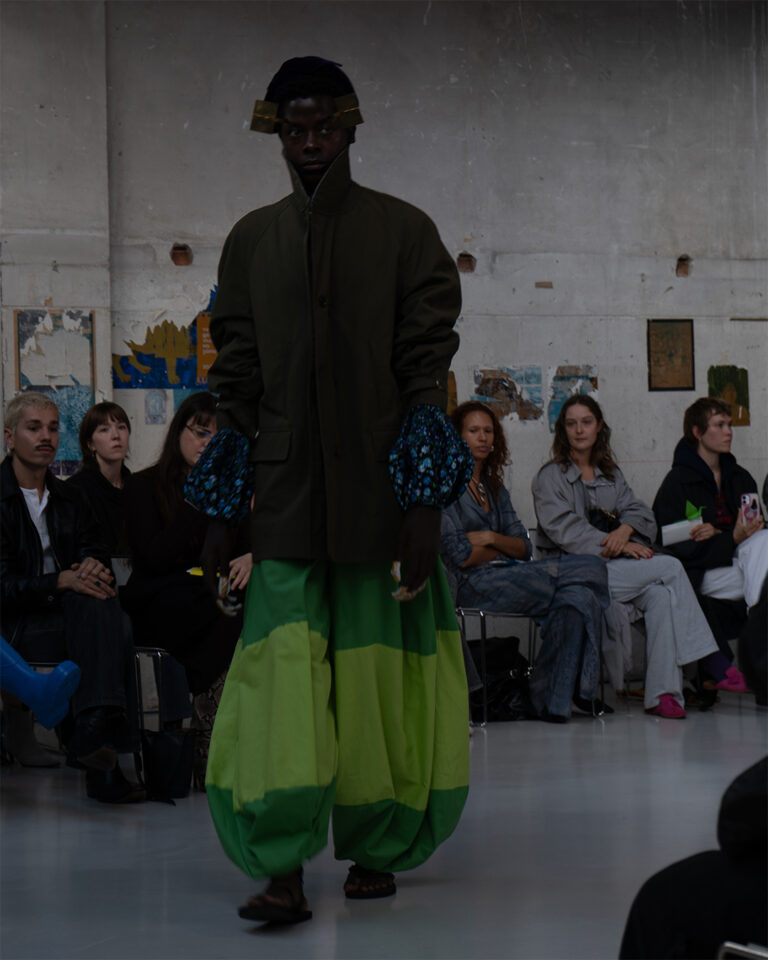
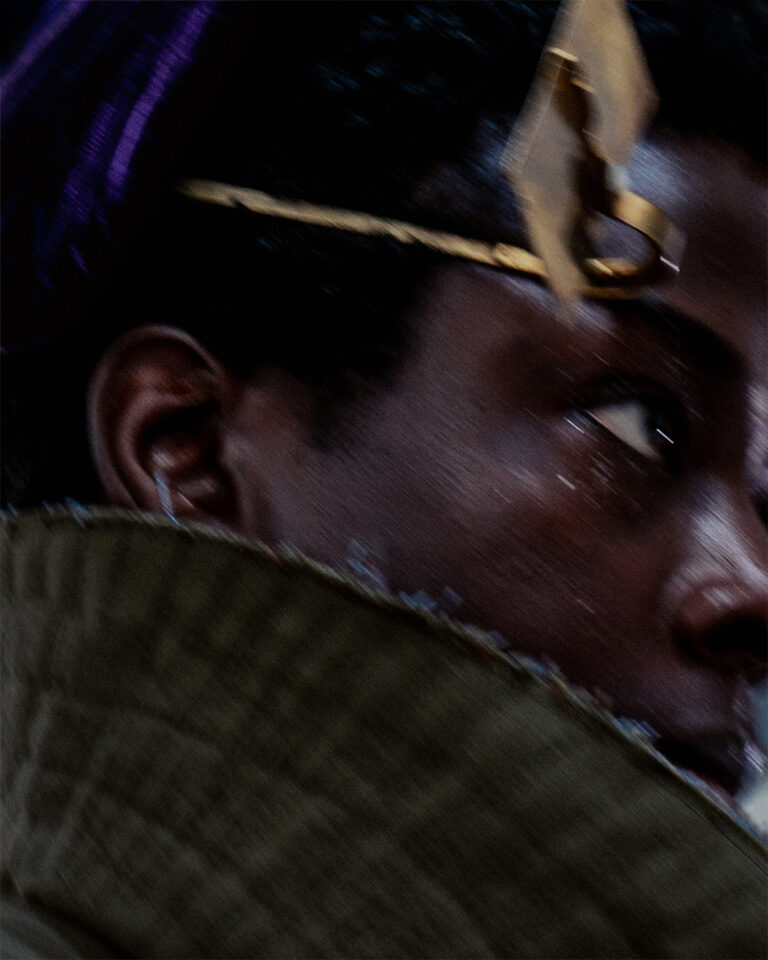
Ivan wears purple antique velvet hat with attached brass Zuid-Beveland stikken (ear iron) oorijzer, dating from circa 1875–1925, originally a practical metal headband used to hold a woman’s cap in place. Engraved with lines and floral motifs.
Flat-closure military jacket with attached two-toned floral arm saucer made out of Staphorster cotton, and two-toned Cirkel fisher trousers


negentien,
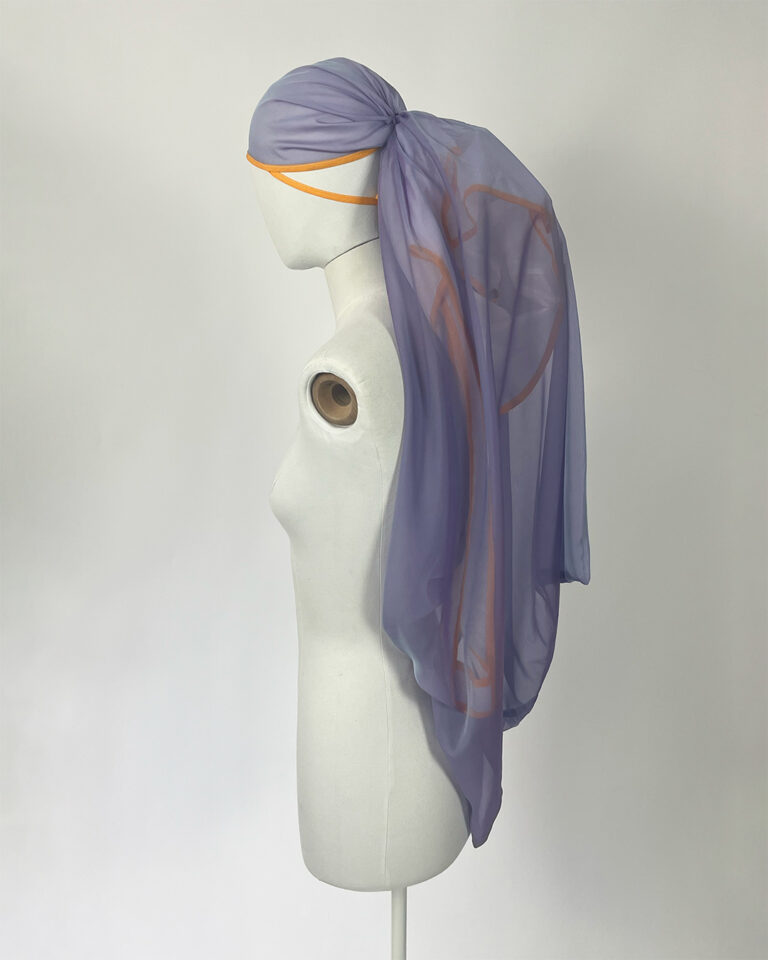
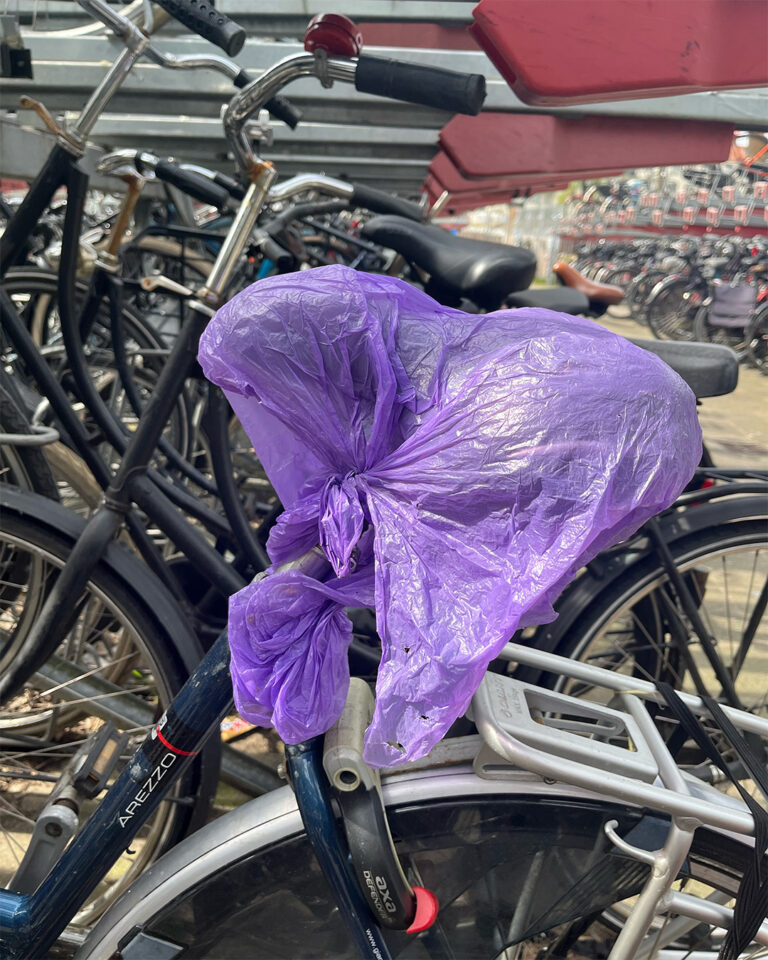
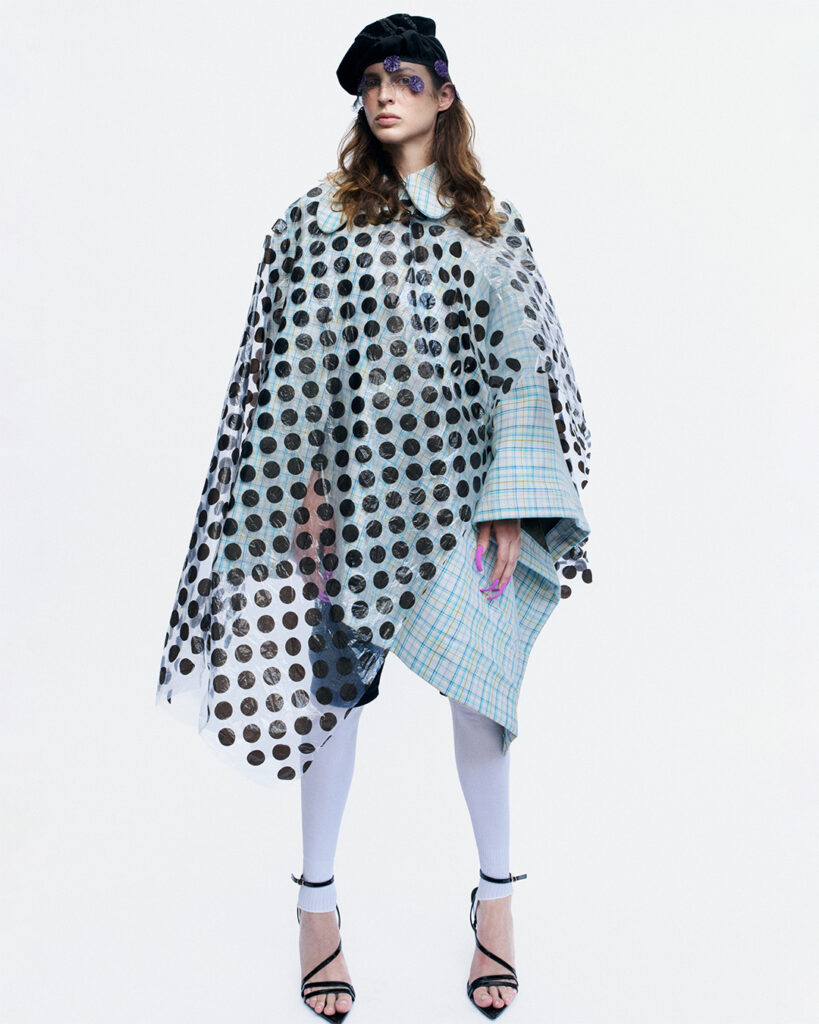
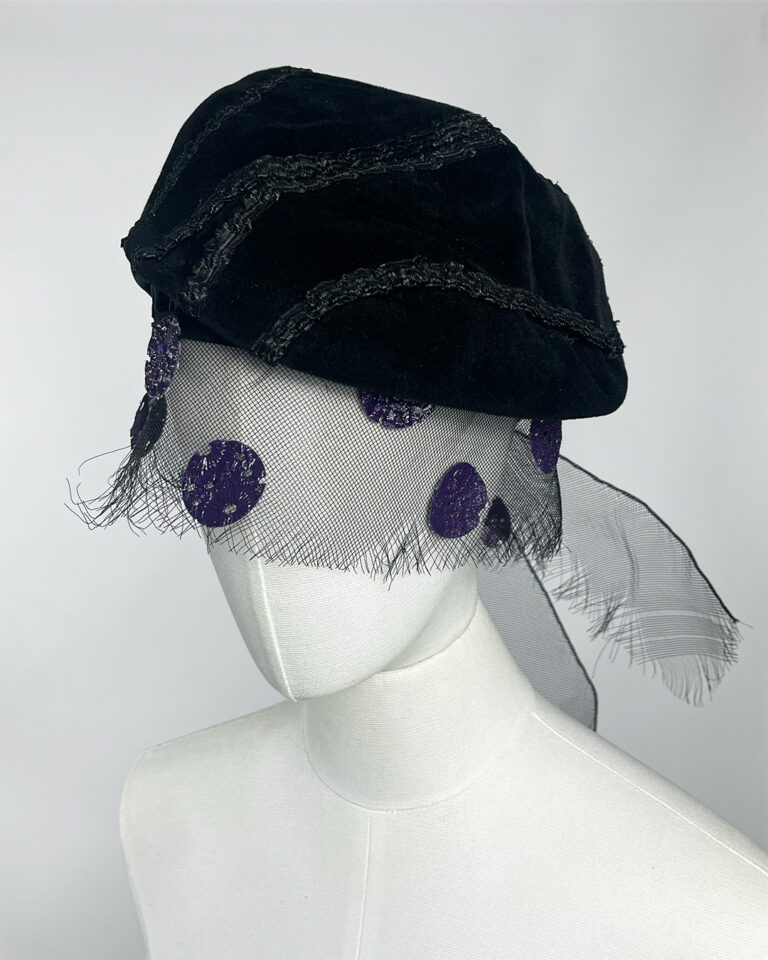
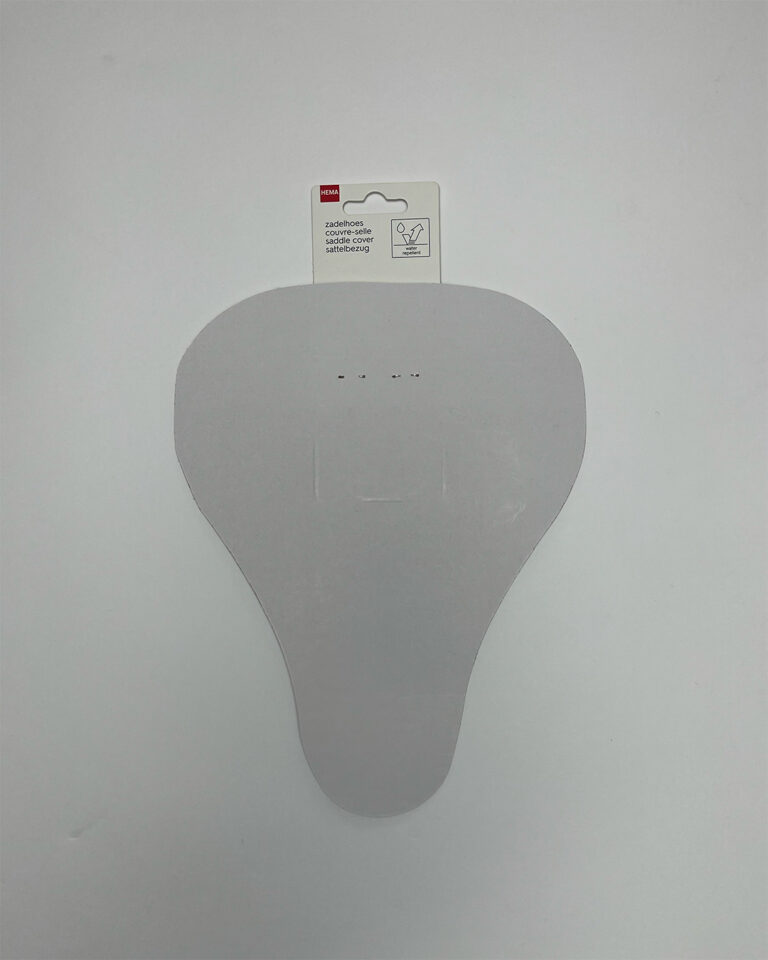
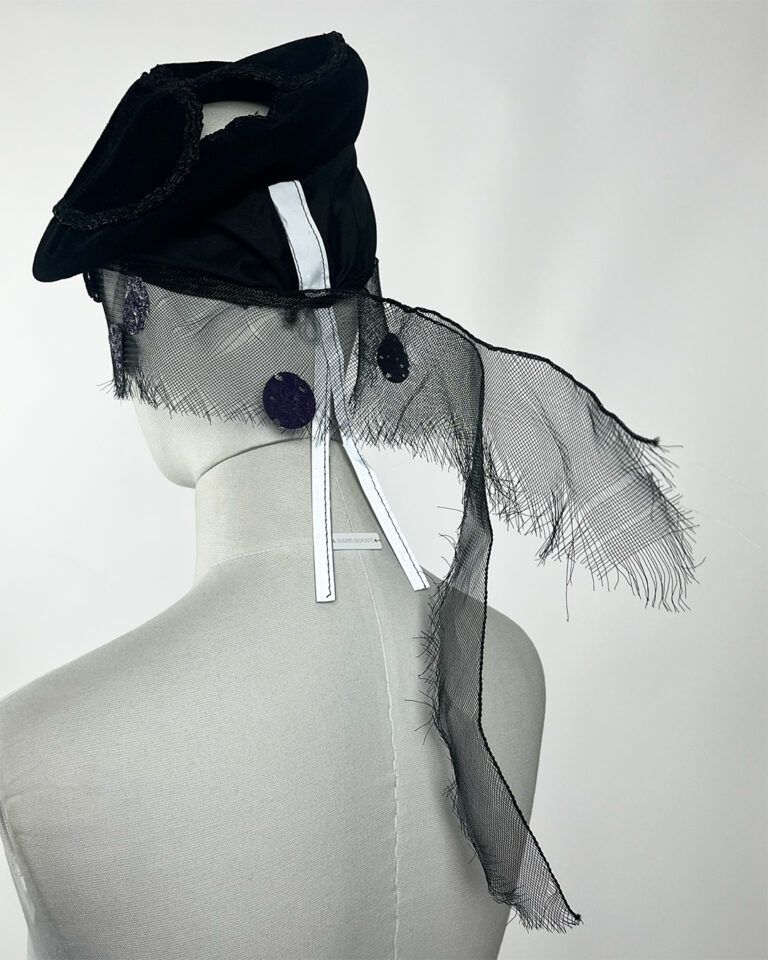
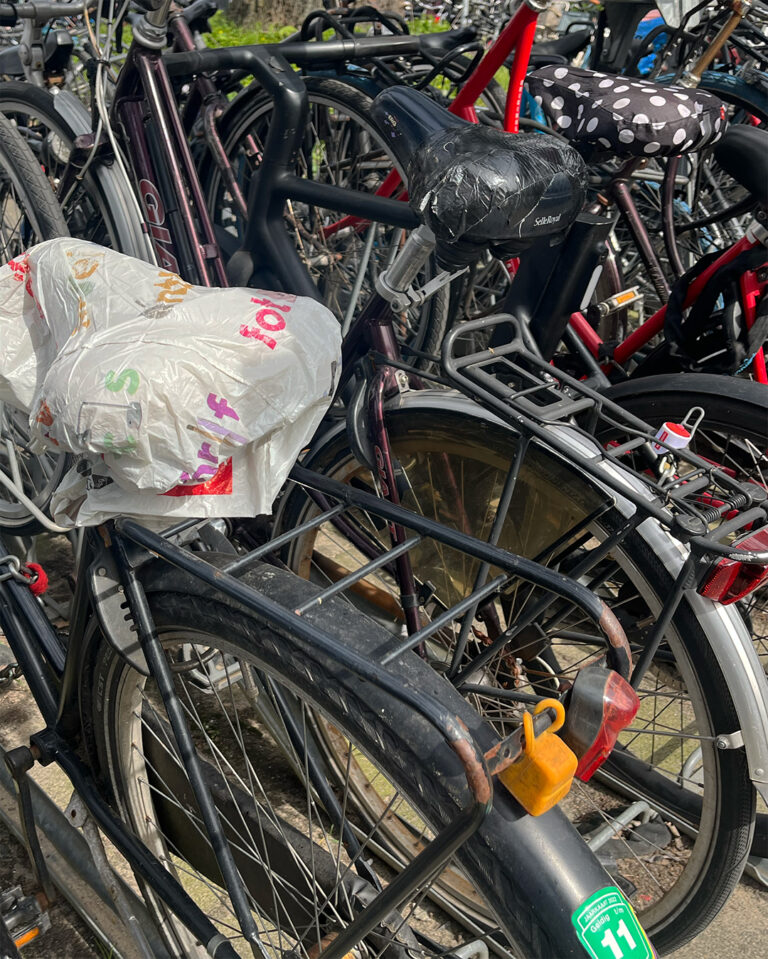
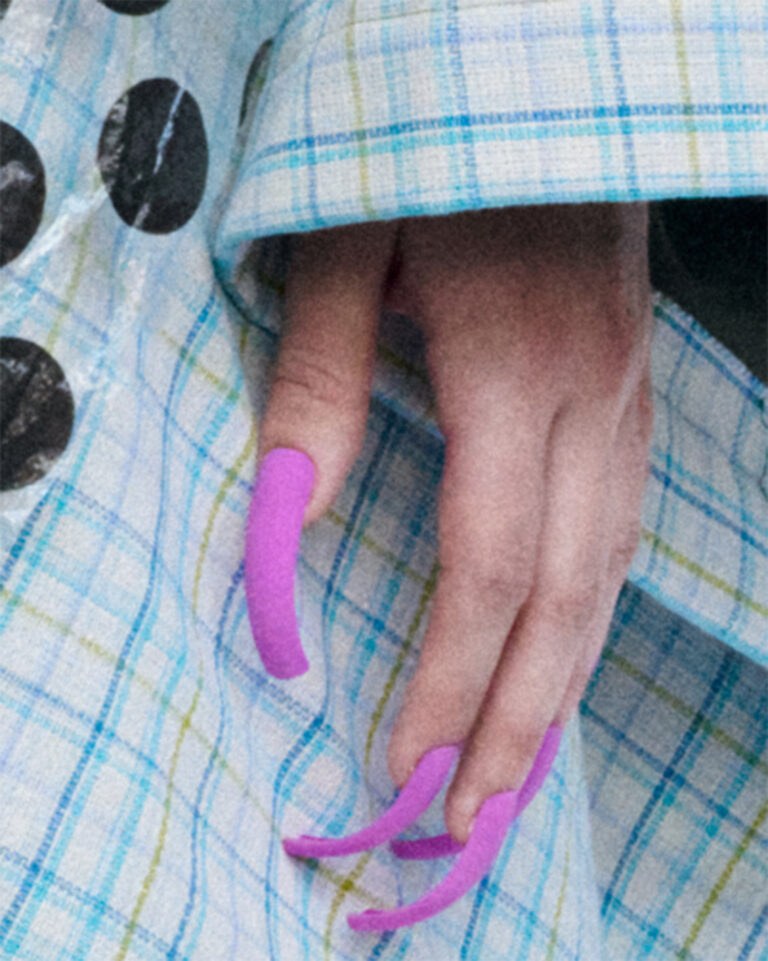
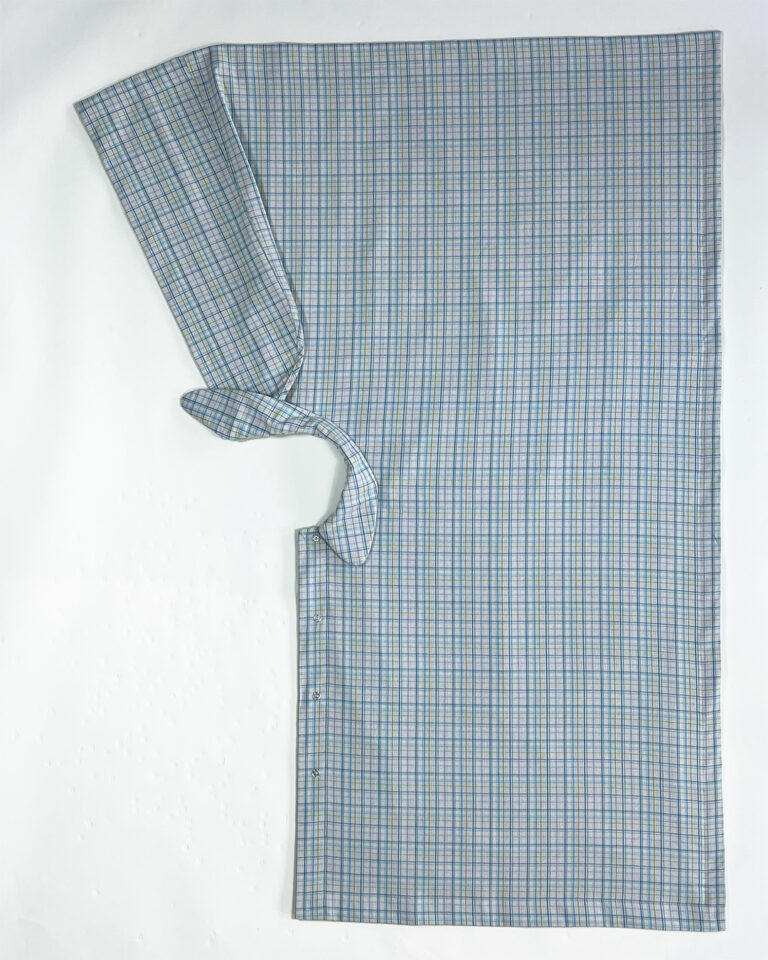
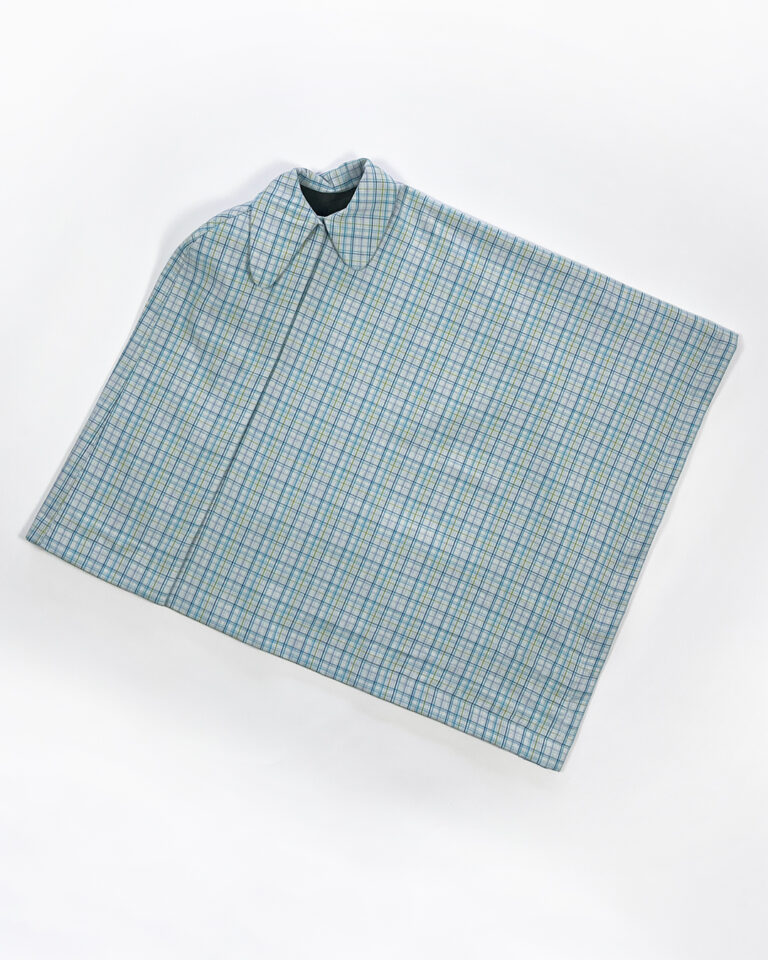
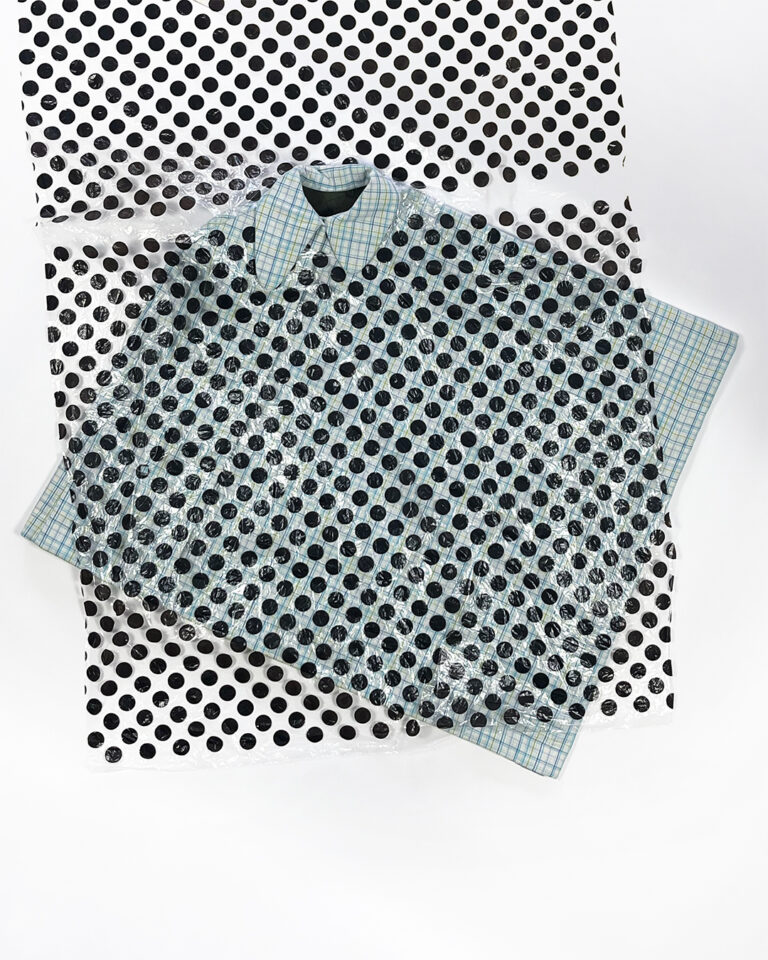
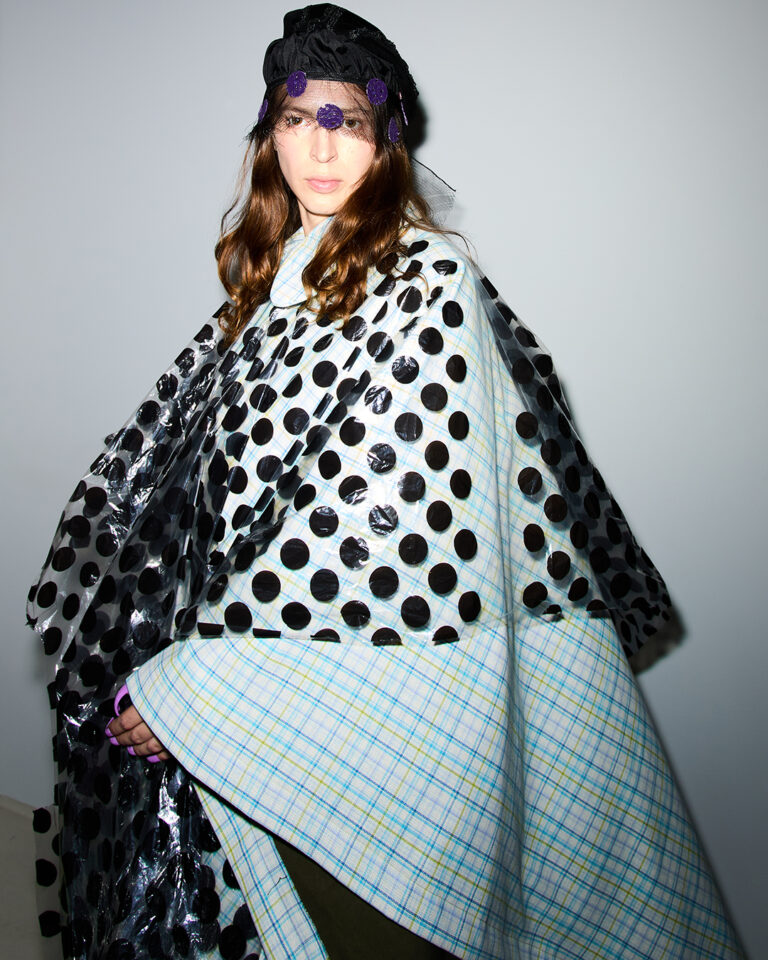
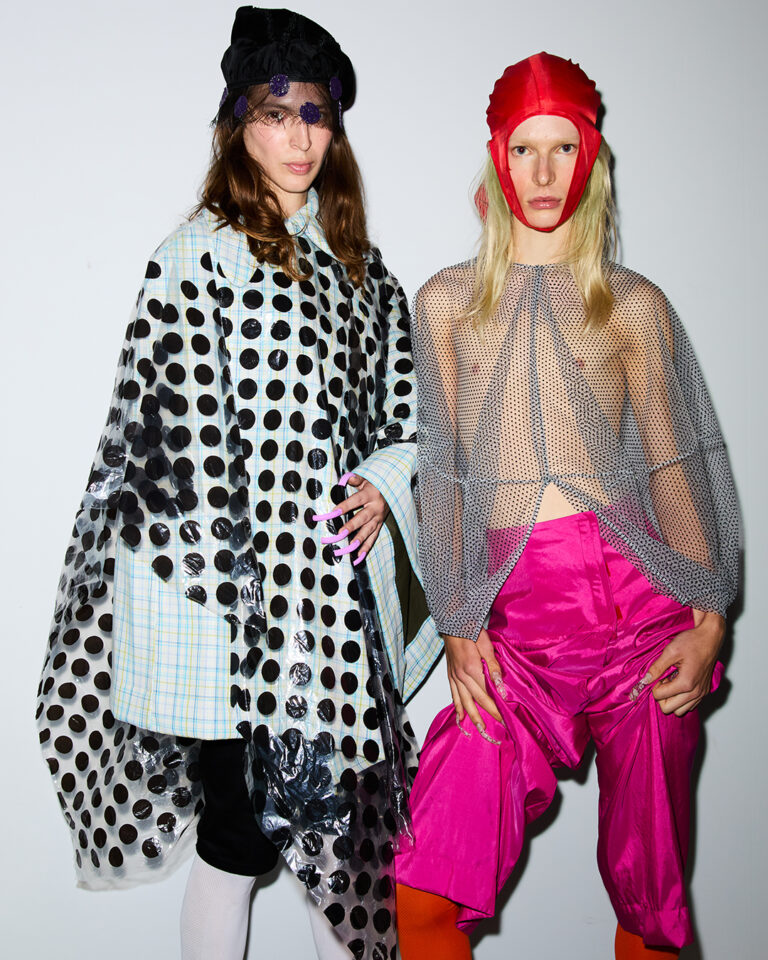
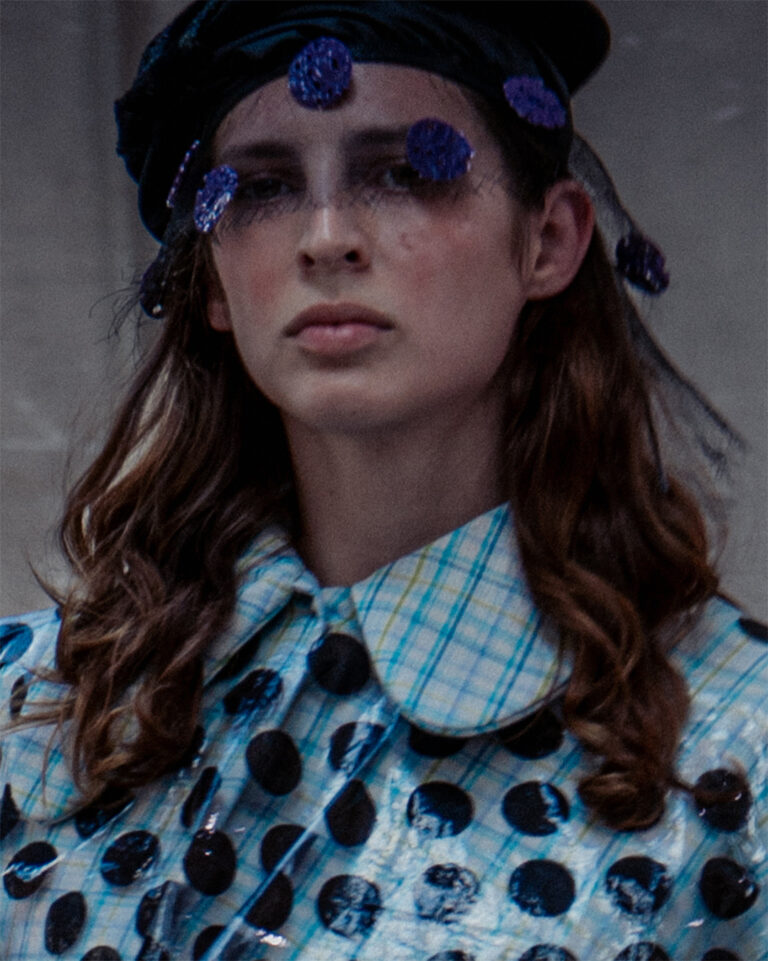
Bella wears couvre-selle, a waterafstotende fiets zadelhoes with attached antique hat with veil and perforated, stiffened, painted purple and coated traditional bobbin lace, and archetypal Dutch Defence cape covered in deadstock cotton plaid with HEMA plastic regenponcho met stippen
The single-use plastic poncho is designed to be worn and discarded. In Nat bij regen, it is given another life, extending the use of a material designed for immediate disposal


twintig,
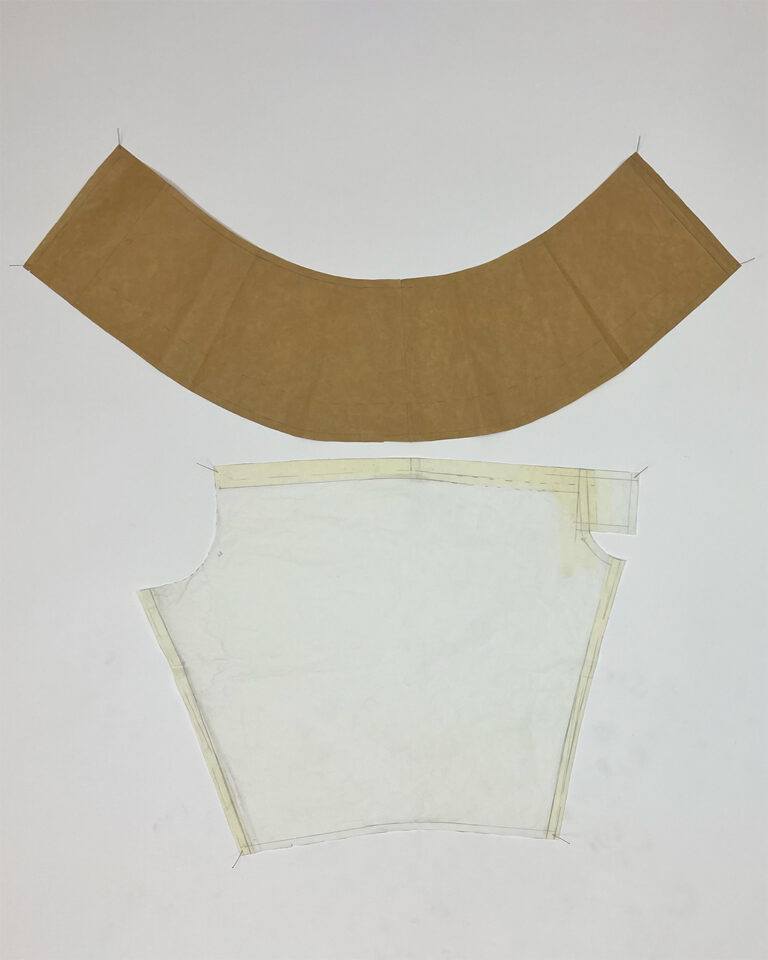
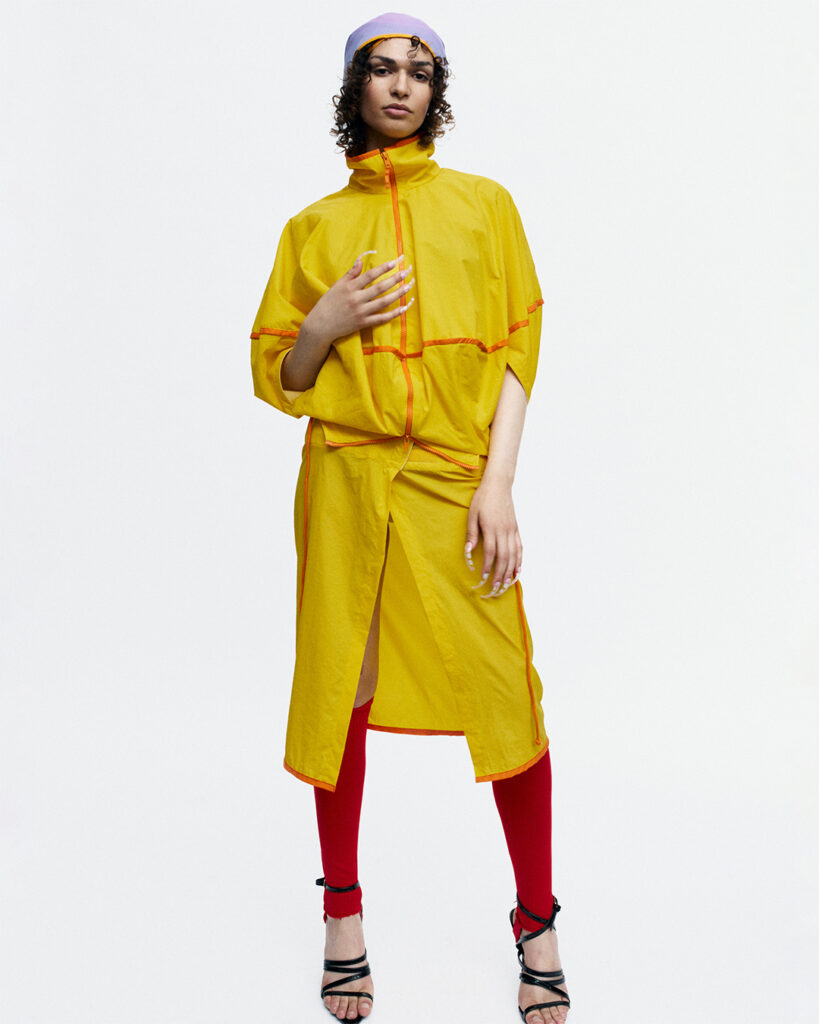
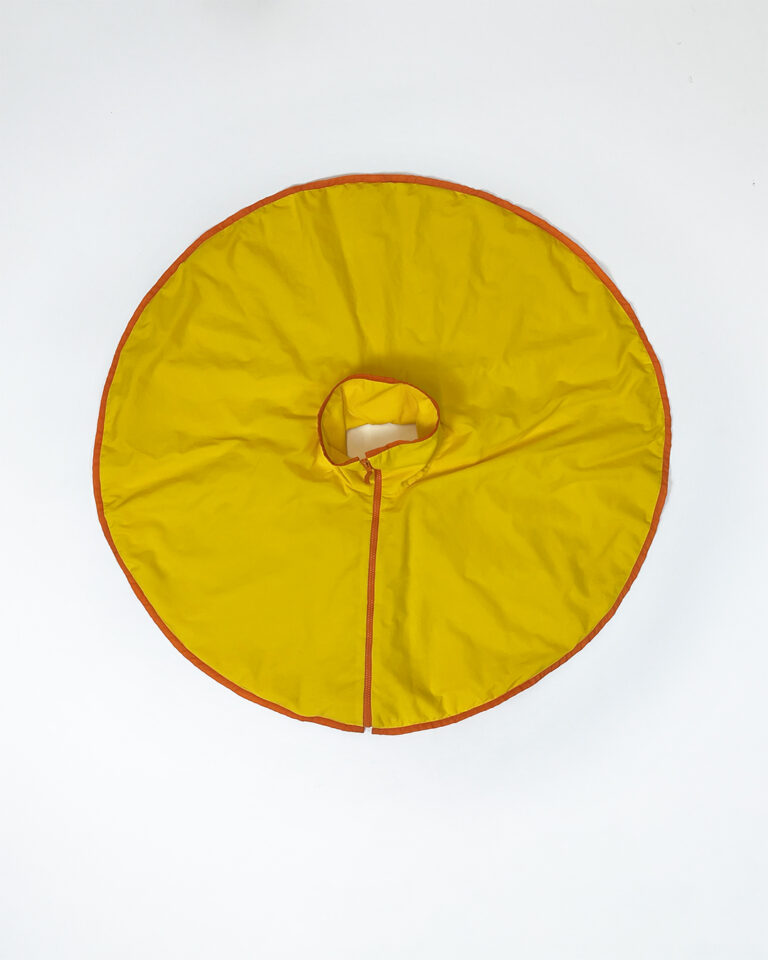
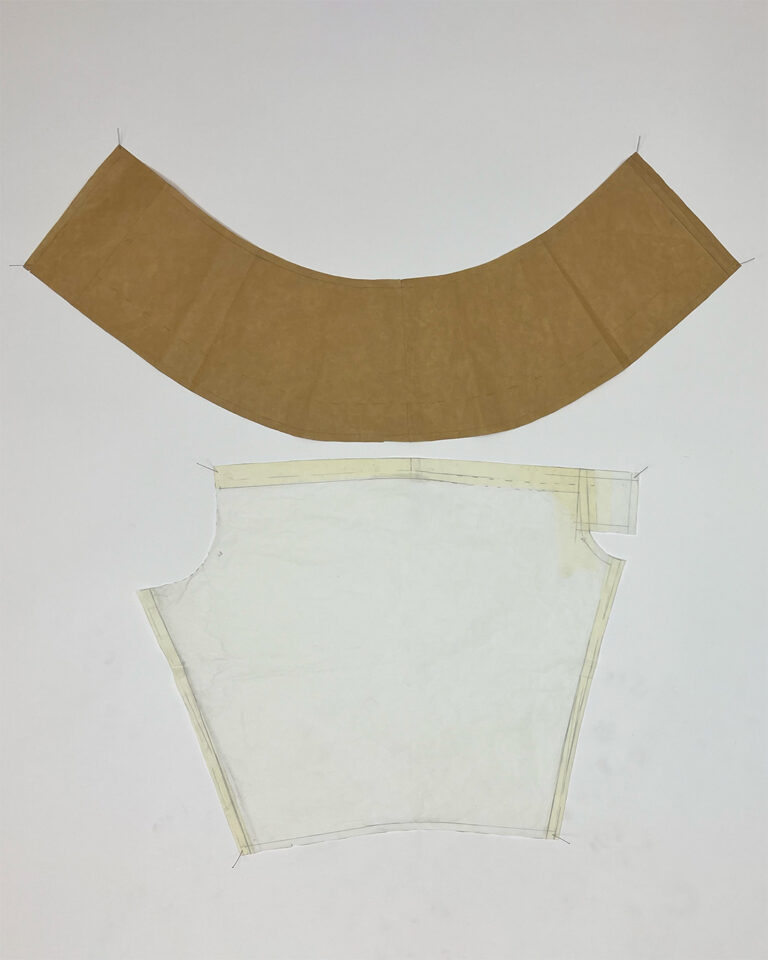
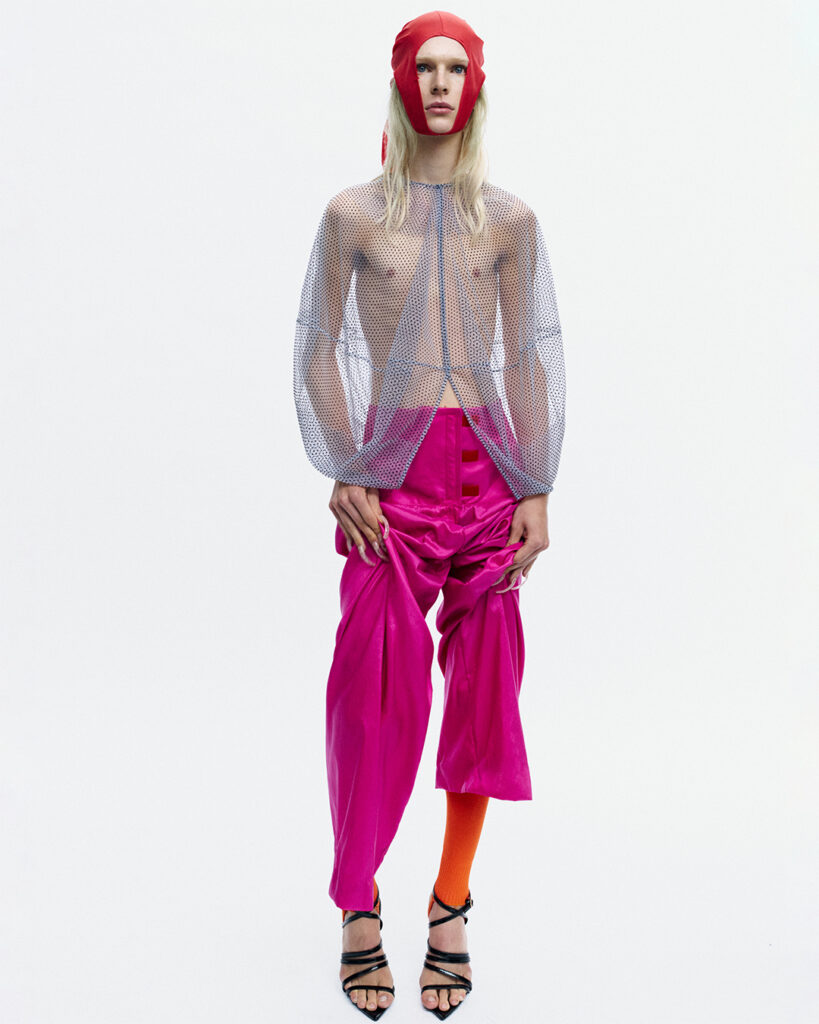
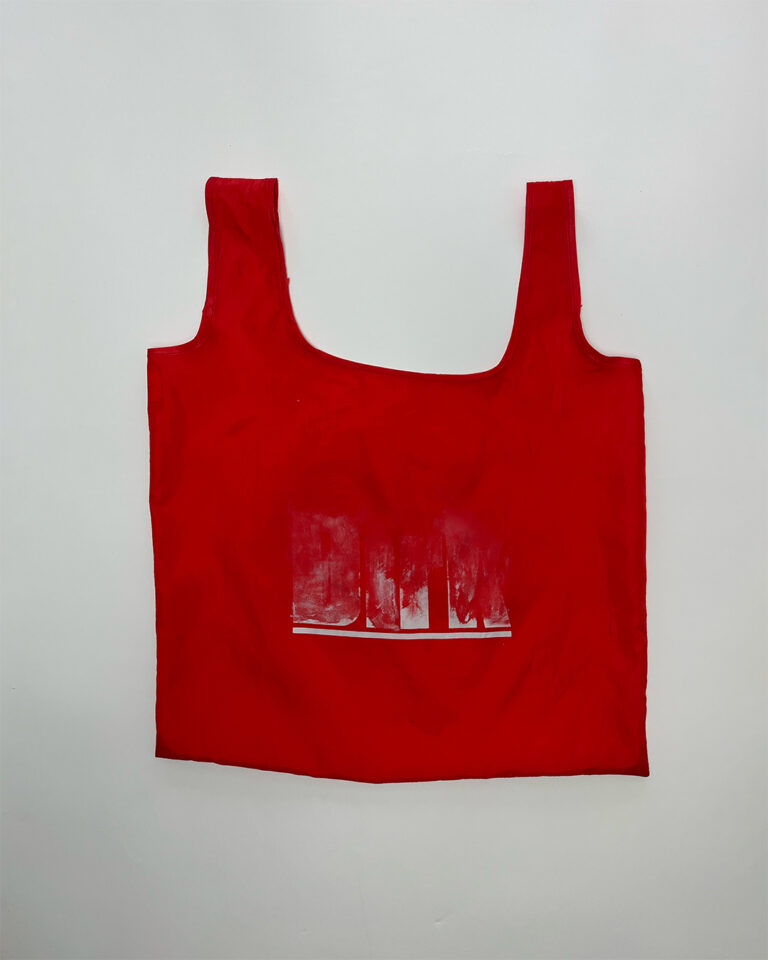
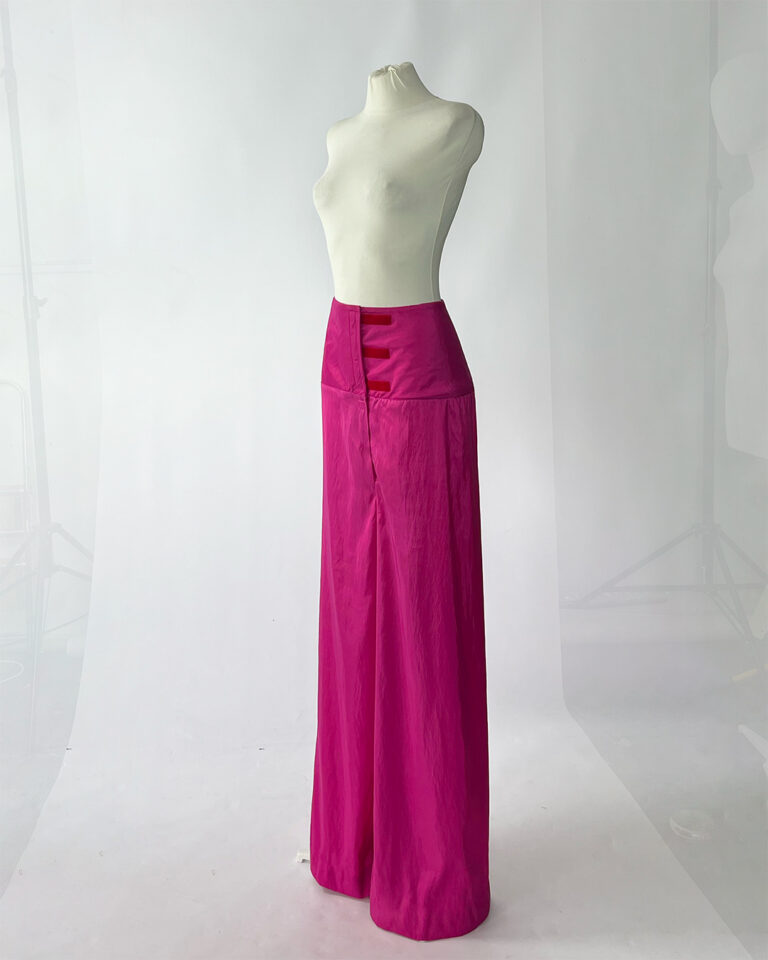
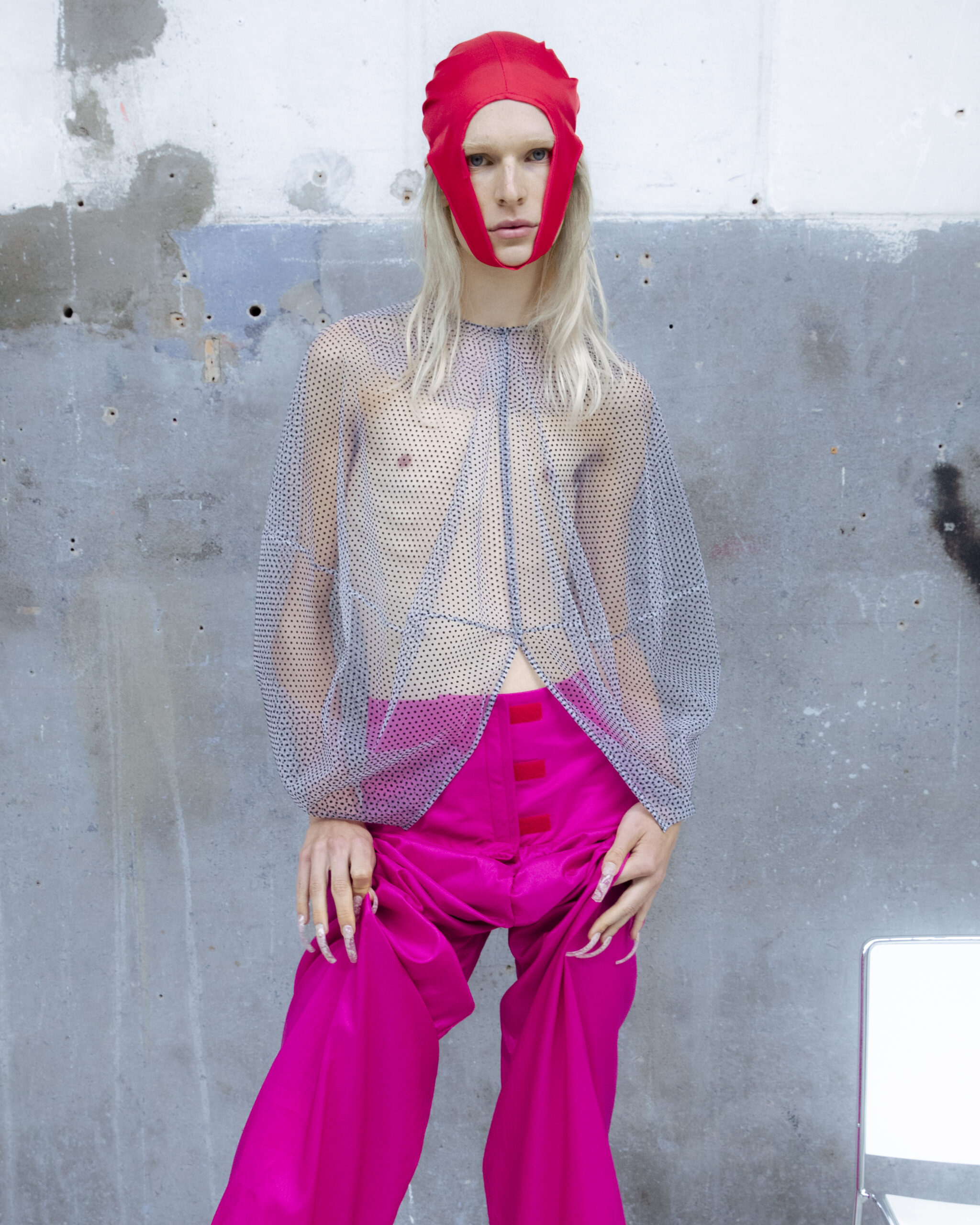
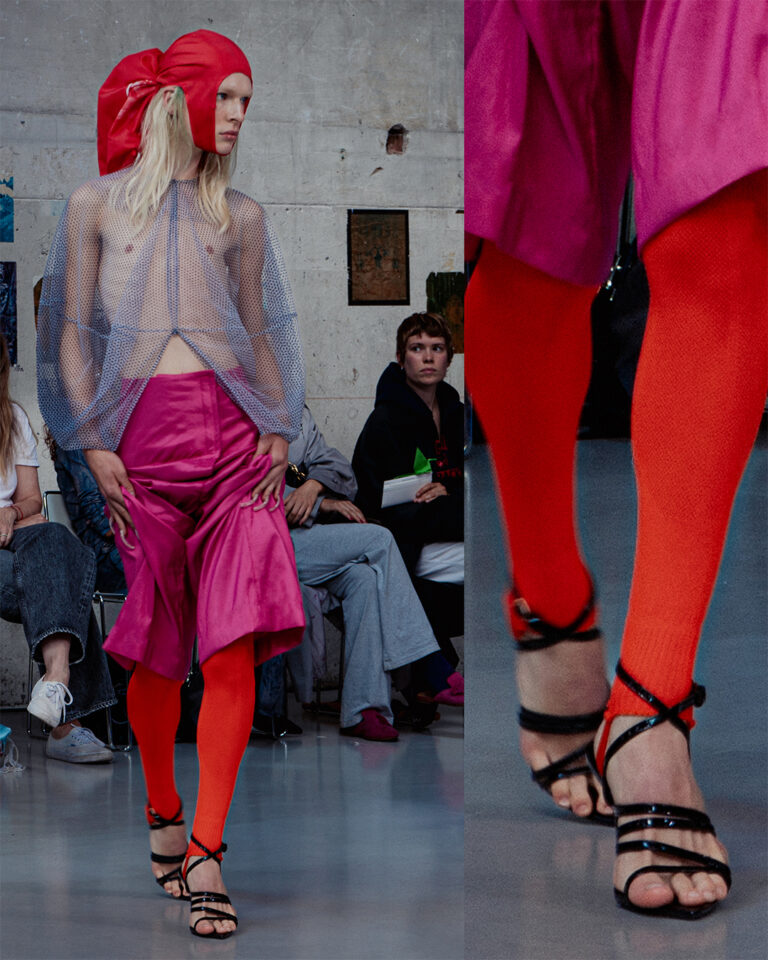
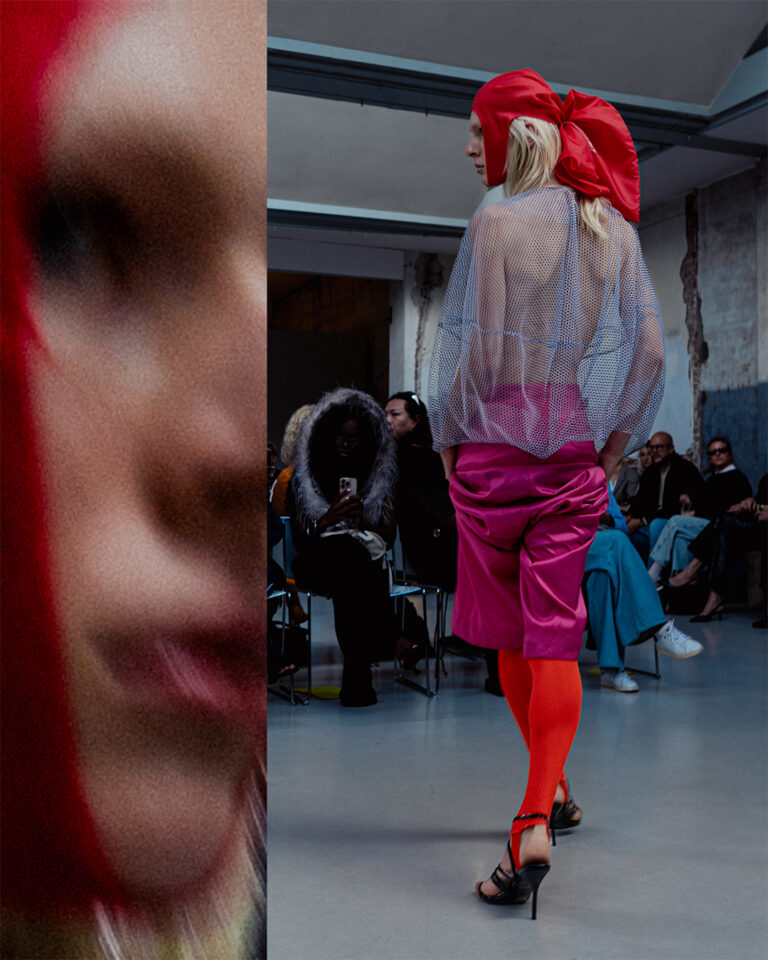
Joppe wears red opbouwbare boodschappentas tas, sheer polka-dor cirkel cape, and pink straight-cut nylon trousers with curved waistband
Fashionunited; Pablo Salvador Willemars springt in de plas
Fantastic Man; NEWSLETTER
Elle
De modeshow {podcast}
Kledingcast
Johndegreef
Yu Masui
styling | Jos van Heel
lookbook photography | Marc de Groot
art direction | Kirsten van de Belt
casting | Michiel van Maaren
choreography | Michiel van Maaren
creative production | Rachid Naas
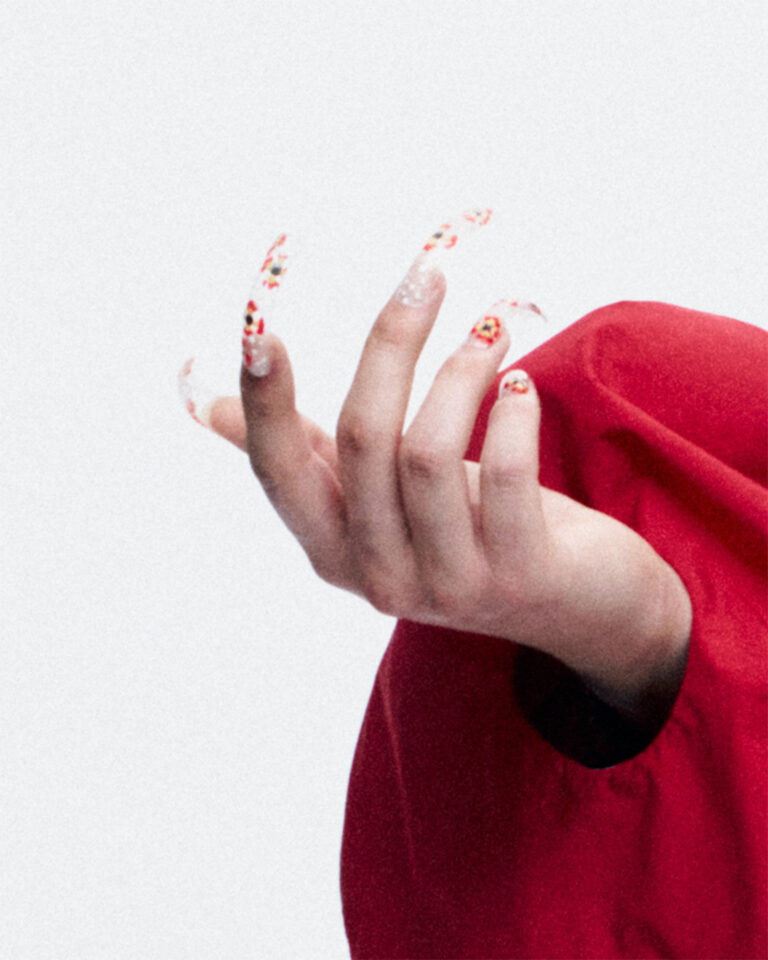
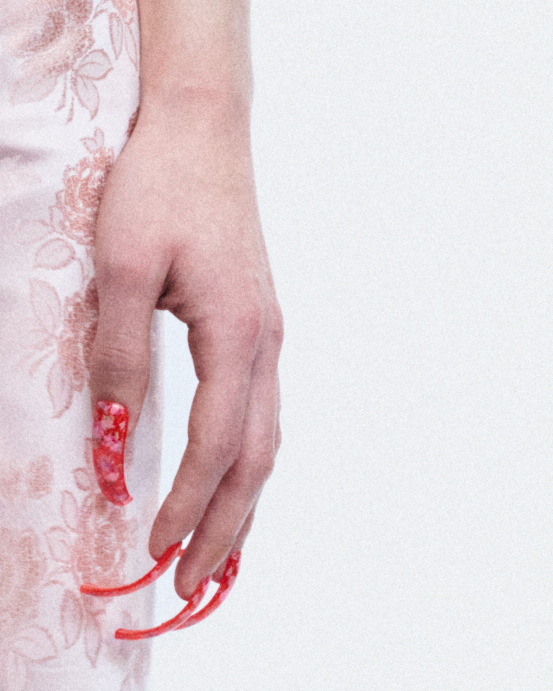
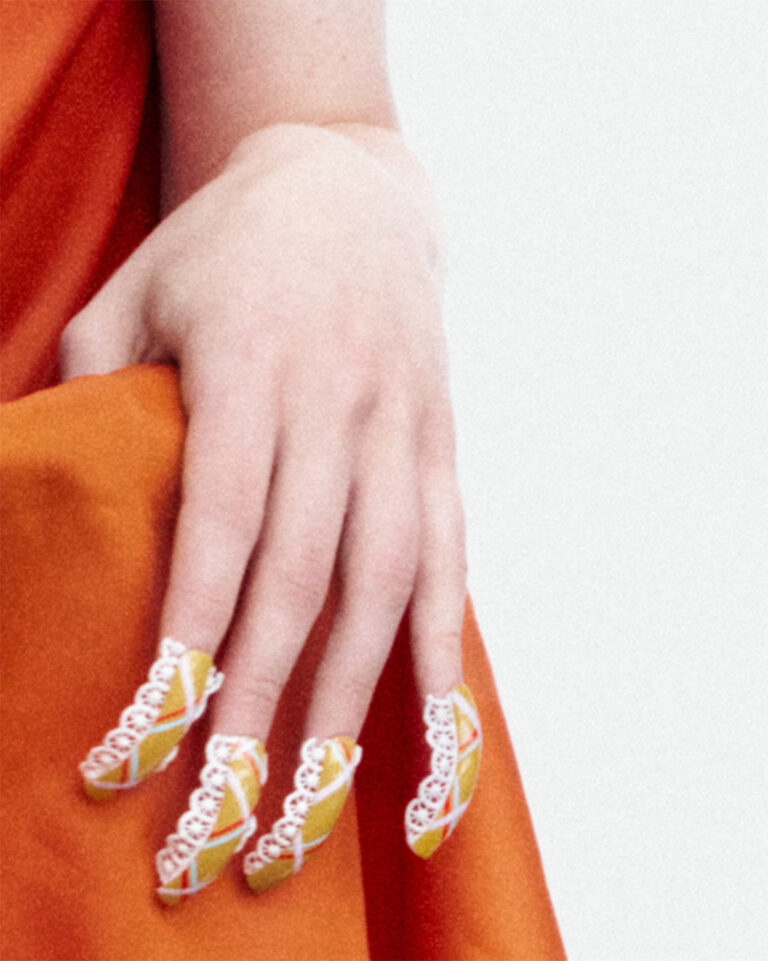
manicurist | Daniel Smedeman
chef de cabine maquillage | Jessie Lefler
using M.A.C cosmetics
chef de cabine coiffure | Nathalie Cairo
using Sebastian Professional
team maquillage | Indra, Dimphy, Tiffany, Beau, Suchika, Alessandro
team coiffure | Alexander, Patrick, Alina, Kaylee, Wendy
sound design | Jim Brady
lighting & sound technician | Stefan Prokop
photography assistant | Jake Dennis
writing | Alberto Bermúdez
doorhost | Laura Hoek
models | Bella, Ivan, Cherry, Annabel, Carmen, Pleuni, Sodes, Kris, Sophie, Dushaika, Miami Franklin, Fadime, Jie, Emma, Bink, Guus, Joppe
atelier team and helping hands | Anna, August, Boris, Charlotte, Daisy, Denzel, Lara, Laura, Lyudmyla, Mai, Marja, Melissa, Shao Jun, Yajing
made possible with the support of
Amsterdam Fashion Week
M·A·C Cosmetics
Sebastian Professional
HEMA
©️Fiep Amsterdam bv; Fiep Westendorp Illustrations
Stichting Restore Kringloop / ACV Groep
Stichting Staphorster Stipwerk
Museum Staphorst
Zeeuws Museum
Looiersgracht 60